This morning, the government has published its plans to reform the private rental sector in the UK.
A white paper published on Thursday morning sets out plans to prevent private landlords from discriminating against their tenants - meaning that private housing providers can no longer place blanket bans on children, pets, or people on benefits renting their property on those grounds.
However, in a move to appease landlords, Michael Gove also looks set to give them the power to request insurance to cover any potential damage caused by pets - as the 2019 Tenant Fees Act caps maximum deposits at five weeks' rent.
Further plans also look to abolish the Section 21 'no fault' evictions - where a landlord can evict a tenant in two months without giving them a reason - delivering on a policy first announced by the government in 2019.
These changes will form part of a new Renters Reform Bill, intended to make private renting more equitable.
The new bill will also extend the decent home living standard to private housing, five years after 309 Conservative MPs voted down plans for rented homes to be made fit for human habitation following the Grenfell Tower tragedy.
This means that homes must now be kept free from serious health and safety hazards, and landlords must keep properties in a good state of repair.
Further changes include the creation of a new Private Renters’ Ombudsman to resolve disputes between private renters and landlords quickly and affordably, without having to go to court; and a new property portal to help landlords understand and comply with their new responsibilities.
Polly Neate, chief executive of Shelter, said: “The Renters Reform Bill is a game changer for England’s 11 million private renters.
"Scrapping unfair evictions will level the playing field. For the first time in a long time, tenants will be able to stand up to bad behaviour instead of living in fear.
“This White Paper promises people safety and security in their home, and it makes clear that landlords need to play by the rules. Gone will be the days of families being uprooted and children forced to move school after being slapped with a Section 21 no-fault eviction for no good reason.
“As these plans move through Parliament, they’ve got to keep their teeth to drive up standards and professionalise private renting. For every renter trapped in a never-ending nightmare of moving from one shoddy rental to the next, the Renters’ Reform Bill cannot come soon enough.”
Levelling Up and Housing Secretary Michael Gove said: “For too long many private renters have been at the mercy of unscrupulous landlords who fail to repair homes and let families live in damp, unsafe and cold properties, with the threat of unfair ‘no fault’ evictions orders hanging over them.
“Our new deal for renters will help to end this injustice by improving the rights and conditions for millions of renters as we level up across the country and deliver on the people’s priorities.”
A brand-new Christmas film is hitting cinemas nationwide next month - and it’s a proper Leeds success story.
Jack Spring directed his first feature film at just 19 years old and has spent the last decade carving out a career in independent film, as well as co-founding Leeds-based production company Shush Films.
His first movie, Destination: Dewsbury, was shot just down the road in - you guessed it - Dewsbury. And after moving to Leeds from Grimsby, Jack became determined to build his business from the city, putting down roots and growing his production company here.
Image: Supplied
Now, after years of working on independent projects, Jack has taken his biggest leap yet with a brand-new Christmas film, Merry Christmas Aubrey Flint.
Set in Yorkshire, Merry Christmas Aubrey Flint follows Aubrey Flint, a reclusive model soldier painter with a lifelong hatred of Christmas, who is sentenced to community service at Willow Lodge - a retirement home on the brink of closure.
Roped into helping with a chaotic production of Charles Dickens' A Christmas Carol, Aubrey clashes with its interesting set of residents...
And the cast is about as star-studded as it gets, featuring Richard E. Grant, John Bradley, Celia Imrie, Adjoa Andoh, Sophia Di Martino, Adrian Rawlins and Kiell Smith-Bynoe.
Image: Supplied
The heartwarming festive comedy will hit cinemas nationwide on Friday 6 November - a huge milestone for a Leeds-based director and production company, taking a homegrown Yorkshire story to audiences across the country.
You just can't beat a proper wholesome British Christmas film, so you can best believe we'll be watching in the cinema, popcorn in hand.
The tallest building in Yorkshire has just opened in Leeds standing at 440ft tall and 45 storeys high
Clementine Hall
Leeds is now home to the tallest building in Yorkshire.
And you'll never believe what it is...it's student accommodation of course.
Created by Fusion Students, the new 633 bed student accommodation building on Merrion Way stands at 134 metres (440 feet) and 45 storeys high, making it Yorkshire’s tallest building, as well as the world’s tallest student only accommodation building.
Boasting jaw dropping, panoramic views of the city, these aren't just your average student flats.
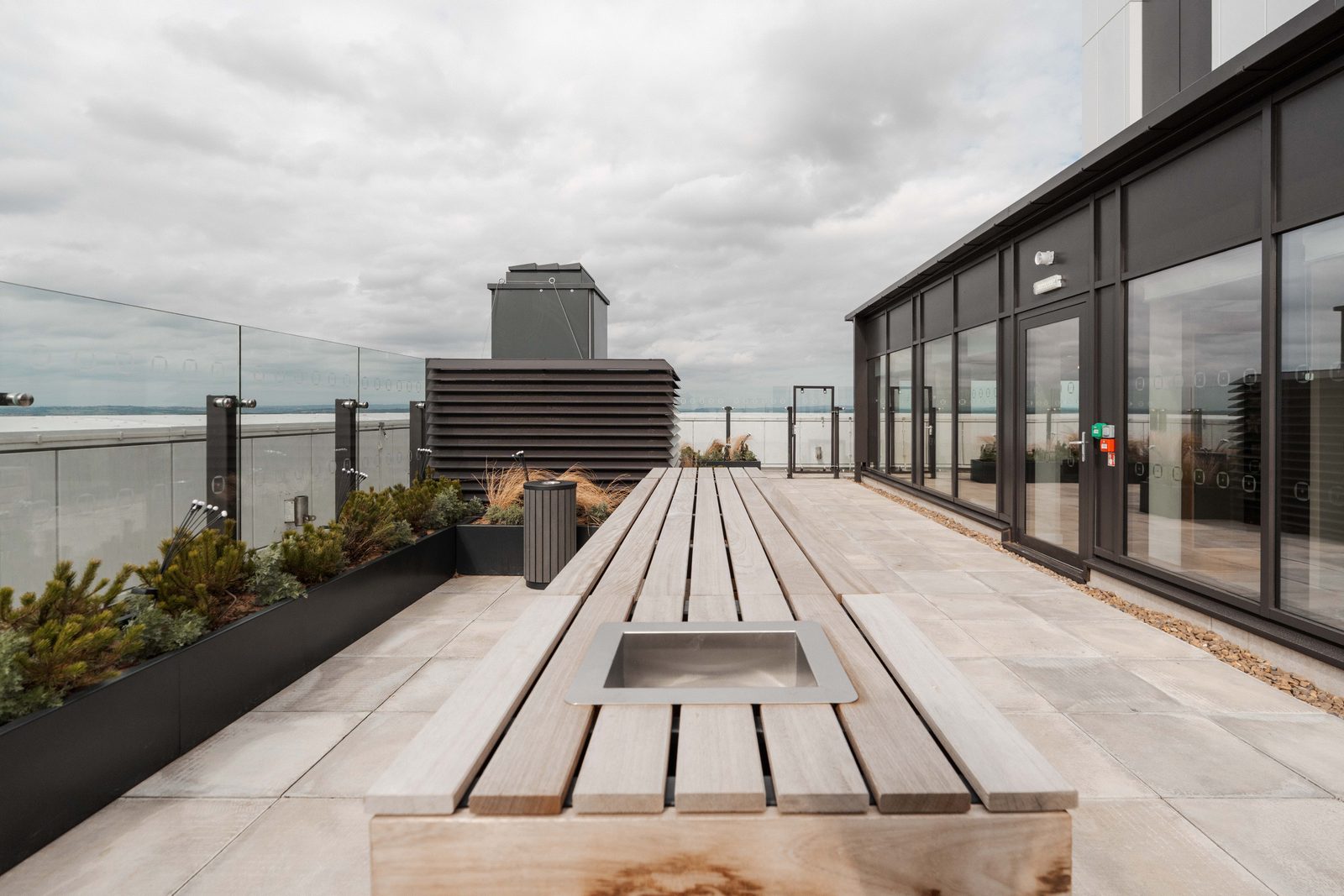
There's a roof terrace, private dining rooms, games room, gym, you name it - they've got it.
Image: Supplied
Lindsay Hamilton, general manager of Fusion Students Leeds said: “I honestly wish I could go back to being a student just so I could live here. It’s such an incredible space, with so much to offer residents.
“You can see how excited they are when they come for a tour, but what’s been really lovely is seeing how much they actually use and benefit from the space once they move in. It’s much more than just somewhere to live, it’s a space that really supports them.”
Image: Supplied
Speaking about the new opening, Laura Kurt, Managing Director for Fusion Students said: “Whilst we’re thrilled to have the accolades of tallest PBSA building and Yorkshire’s tallest building, what we’re really proud about is the incredible building we’ve been able to create for students coming to study in Leeds.
"This is a very special building, carefully designed to provide everything students need to get the most out of their journey through higher education. From industry leading amenities such as recording and photography studios, to wrap around care and support, to make settling into a new city, making friends and leaving with the best outcomes possible, that’s really what Fusion Students Leeds is all about."

 Georgina Pellant -
16th June 2022
Georgina Pellant -
16th June 2022