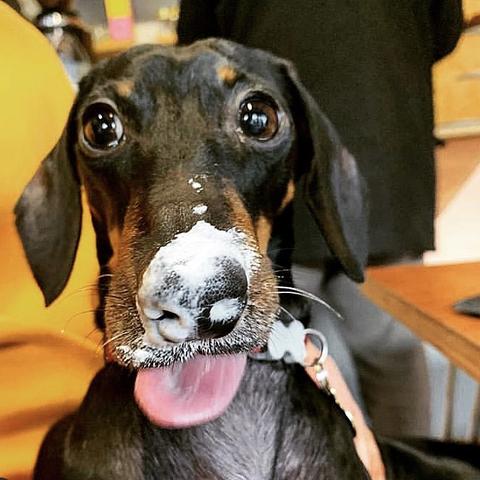
This bakery is so dog friendly, your pup has an entire food and drink menu to choose from.
If you've ever felt guilty for taking your dog out to a cafe and not giving in to those longing eyes as they drool over your cake and coffee, we've found the perfect solution for you.
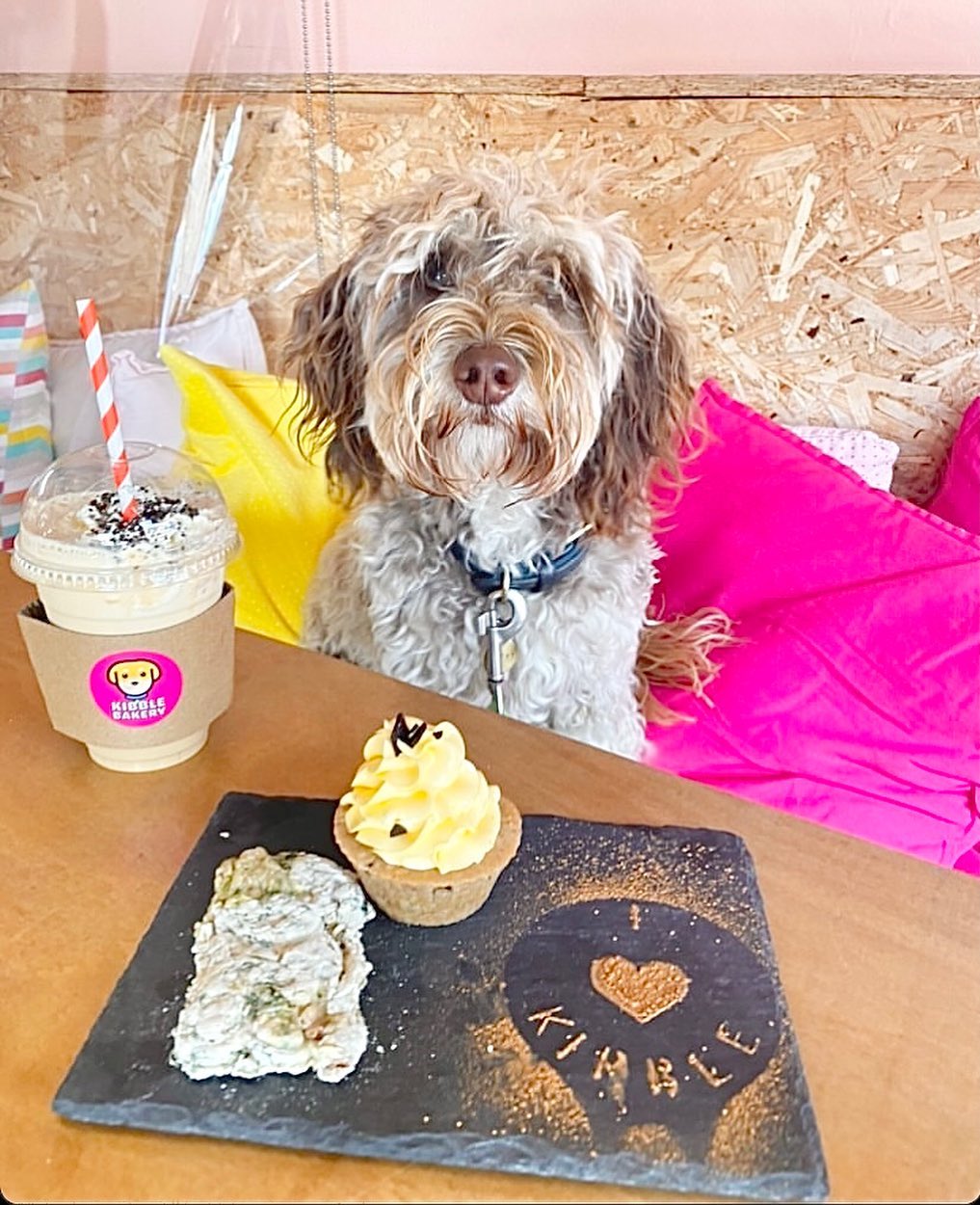
With an entire food and drink dog menu that serves everything from prosecco for your four-legged friend, Kibble Bakery is a multi award-winning cafe that just so happens to be your dog's heaven- they just don't know it yet.
Complete with a contemporary dog shop and aromatherapy-based dog groomers, the Skipton based bakery are equipped to fully pamper your pup and put on a real feast for them too.
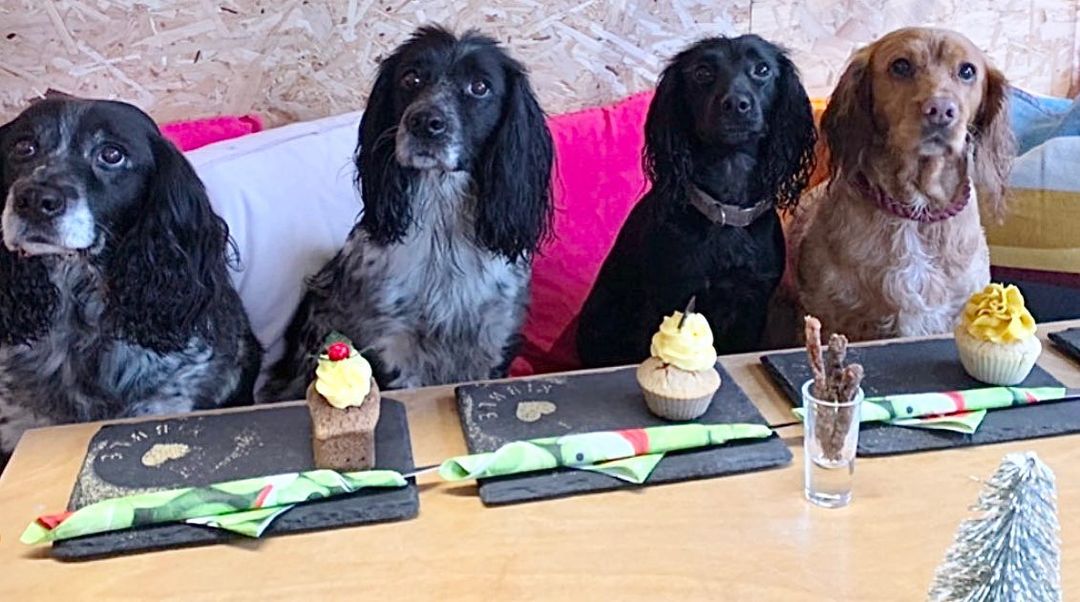
All hand baked, the all natural hound menu is prepared daily by a DEFRA approved kitchen to produce seasonal treats that look just as good as the human equivalent.
Think dairy-free pupcakes, doggy donuts, fresh bone biscuits or ice cream for mains, followed by a slurp of specially made dog-friendly drinks like pawsecco, pupspressos or, in true Yorkshire fashion, doggy tea.
Plus, there's a huge range of brunch options for humans too. Think roast blend coffees and an entire bar of cakes.
Kibble Bakery describe themselves as:
"An interesting, fun, quirky, contemporary, relaxing and warm environment with a splash of curb appeal, that allows you and your dog to relax whilst the team meet your every need. [We also have] that extra special touch of dry dog towels, doggy mats and hooks for your dog leads, allowing you to enjoy some of the best pancakes, waffles, sandwiches, burgers, bagels and cakes in comfort and style."
You can get all your last minute Christmas gifts for all the pups in your life too. / Image: Kibble Bakery
A £1.6m grant has been given by the government to Leeds City Council to help tackle rough sleeping.
The funding has been allocated to Leeds City Council as part of the Government’s national Rough Sleeping Programme.
The overall target is to help rough sleepovers off the streets by Christmas through providing safe accommodation.
The council have said that voluntary organisations and charities will be able to help them reach this target.
The council report said: "This funding will be used for immediate interventions to ensure all those rough sleeping have an offer of accommodation by Christmas and support longer term sustainment of accommodation.
“The initial target is to provide a suitable offer of accommodation for everyone who is rough sleeping by Christmas 2026.
“Providing a path into supported accommodation and independent living is the key objective and sustaining this independent living with, where necessary, ongoing support to prevent any return to rough sleeping and homelessness.”
The government announcement spoke of the scheme: "The programme is intended to support people experiencing rough sleeping.
"People experiencing rough sleeping may have differing entitlements to housing and support depending on their individual circumstances, including their immigration status and eligibility for public funds."
The funding is intended to help provide immediate support for people currently sleeping on the streets, while also helping them access longer-term accommodation and the support needed to maintain independent living.
By working with local charities and voluntary organisations, the council hopes to ensure people are not only offered a place to stay but are also given the help they need to avoid returning to the streets.
M&S launches massive recruitment drive in Leeds with hundreds of jobs available
Emily Sergeant
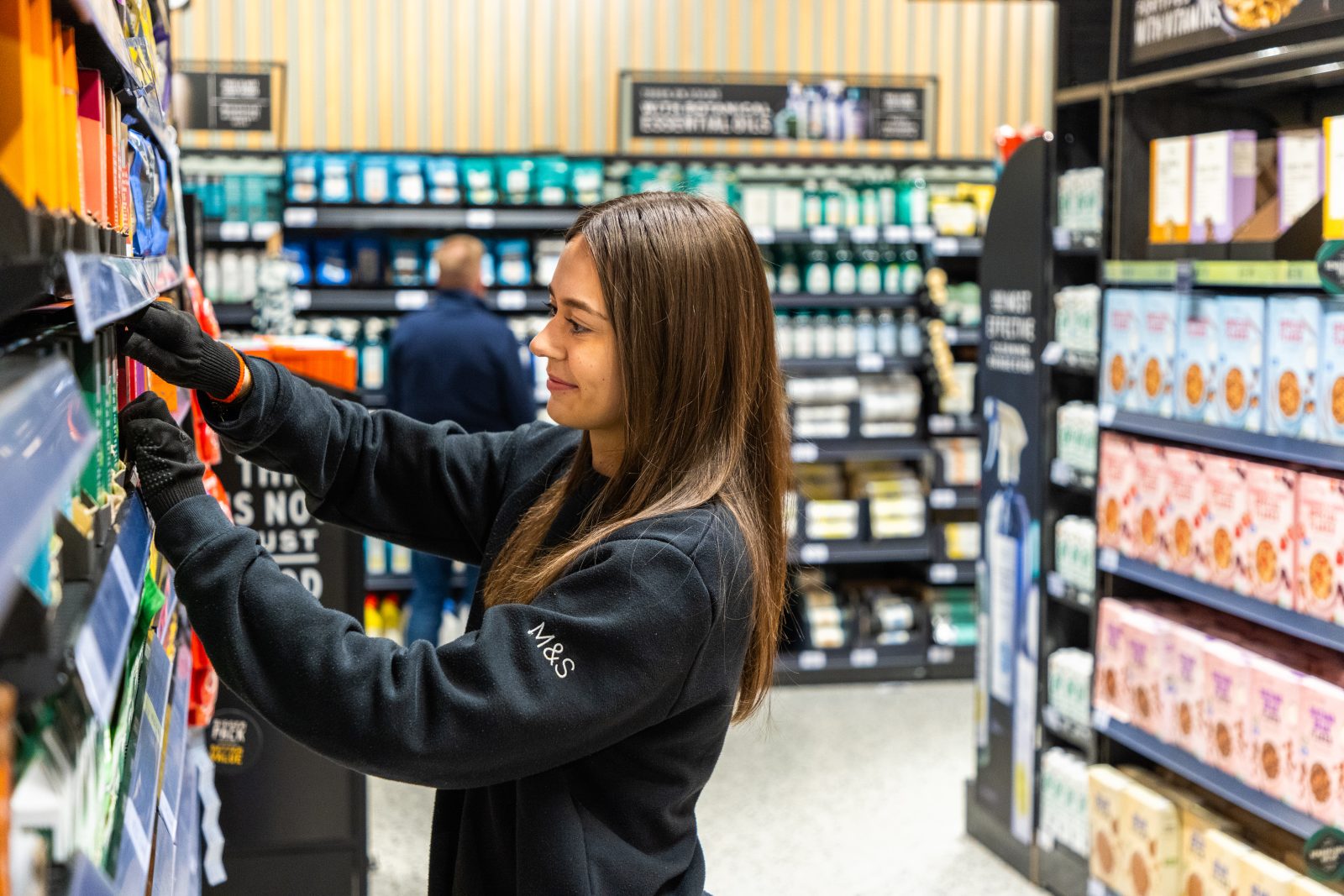
M&S has launched a massive recruitment drive across Yorkshire.
With the festive season fast approaching, and most British stores having already unveiled their Christmas ranges for 2026, one of the country’s largest brands has launched a massive UK-wide seasonal recruitment drives to gear up for what is always one of the busiest times of the year for the retail industry.
M&S has announced it will recruit for plenty of new colleagues across the UK.
As mentioned Christmas is one of the busiest moments of the year for M&S, and seasonal colleagues play a ‘vital’ part in delivering that.
Image: Supplied
New recruits will be tasked with helping M&S deliver a ‘brilliant’ service for customers.
Stores with vacancies span the whole of Leeds - including city centre, Moortown, Crown Point, White Rose Shopping Centre and Pudsey.
M&S says the roles are ‘fast-moving and hands-on’, with colleagues required to work together to make sure customers still get the very best of M&S, even at its busiest.
The roles will pay £13.41 per hour, with successful applicants receiving the training, tools and support needed to get up to speed quickly.
“We can’t wait to welcome over 300 new colleagues to our store teams here in Greater Manchester,” commented Zeba Khan, who is the Regional Manager at M&S.
“As we get ready for our busiest time of year, it’s a great opportunity to join us and help bring a magical M&S Christmas to our customers.
“We have a range of opportunities available, whether joining our city centre flagship or our fresh market-style foodhalls. We’re looking for colleagues who are passionate about delivering great customer service and being part of a team.”
Fancy it then? Applications are now open, and you can find out more and apply on the M&S Christmas careers page here.

 Sophie Smith -
16th December 2021
Sophie Smith -
16th December 2021