There are two elements that make the life of Owen Vincent Madden unique.
One, he didn’t die behind bars. Two, he was from Yorkshire. Pick a mobster from early 20th century New York out of a hat and it’d take you a while to find one who isn’t Italian, Irish or possibly Jewish. Gangsters at that time, in that area, didn’t tend to be from the West Riding of Yorkshire.
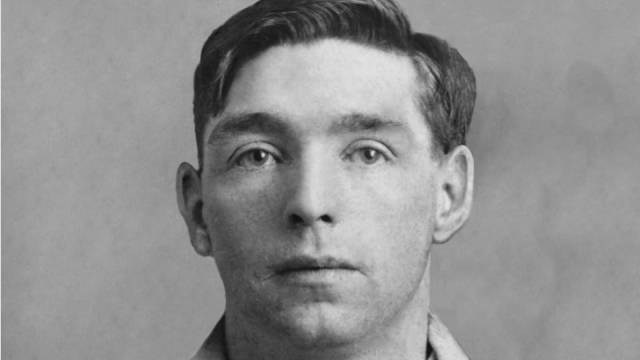
Enter Owney “the Killer” Madden. The mob boss with the most straightforward nickname in history. Born in Leeds on Christmas day 1891 to Irish parents Francis and Mary Madden, he later moved Stateside in 1903, after the death of his father. They settled in the Hell’s Kitchen district of Manhattan, at the time highly violent, and young Owney wasted no time settling in.
Described by pals as “that banty little rooster from hell,” Owney committed his first crime aged fourteen by clubbing and robbing a man of $500. He became a part of, before taking over completely, the Gophers gang where his reputation grew and grew or fell and fell, depending on your moral slant. He earned his nickname after shooting an Italian gang member in the streets. “I’m Owney Madden!” he shouted. “10th Avenue!” No-one came forward as a witness such was the power he had.
With the power, came women, lots of women. It wasn’t unusual to see Owney accompanied by several and he ebbed and flowed through New York’s bars. But he was jealous. So jealous that one time he shot and killed a store clerk called William Henshaw for asking out one of his girls while on board a trolley.
It helped Owney’s rise that he was apparently immortal. On November 6, 1912, he was shot eleven times outside a 52nd Street dance hall by three members of rival gang the Hudson Dusters. Owney refused to identify his attackers to police. “Nothing doing,” he said. “The boys’ll get ’em. It’s nobody’s business but mine who put these slugs in me!” After a week of his release, several members of the Dusters were dead.
Two years later, Owney was sentenced to 20 years at Sing Sing Prison after ambushing and and killing Little Patsy Doyle, a member of the Dusters. But he wasn’t done there. Remarkably, Owney was let out on parole after serving just nine years in 1923.
The world was different. Especially the United States. The Gopher gang had split and Prohibition - the outlawing of manufacture, transportation, and sale of intoxicating liquor — was in effect. Owney made the best of a bad situation by bootlegging. He stuck his finger in nightclubs and show business. He turned a rotting Harlem club at Lenox Avenue and 142nd Street into the famous Cotton Club. He bankrolled the careers of George Raft and Mae West, the former of whom Owney employed as his personal driver. As for the latter, she became his girlfriend. “Sweet, but oh so vicious” is how she later described him.
By the end of the decade, Owney was a millionaire, at the head of a criminal empire that covered boxing, gambling, bootlegging and real estate. He organised a “crime commission,” with Frank Costello and Charles “Lucky” Luciano among others, to expand the business as legitimately as possible, with little to no bad publicity.
On July 7, 1932, Owney was sent back to Sing Sing for parole violations, no doubt a part of New York governor and presidential nominee Franklin D. Roosevelt’s plan to crackdown on corruption in the city. Owney was released the following year. This time, Prohibition was gone but the drive that made Owney a success after his previous release, had faded. Now in his forties and sick from old wounds, he was more of a pain in the arse to the crime syndicate than some fearsome ball-buster.
Depleted and bored, he began visiting Hot Springs, which had acted as an paradise of bootlegging, prostitution and gambling. Owney chatted up a gift-shop clerk, Agnes Demby, the daughter or the local postmaster. On November 26, 1935, they married and moved into a house on West Grand Avenue. Agnes, though not involved, knew of Owney’s connections, prison record, and outlook.
Eventually Owney left New York altogether. It is not exactly clear what cemented this decision. Some believe he may have made a deal with politicians or the likes of Lucky Luciano to oversee mob operations in Hot Springs. Major Leo P.McLaughlin and Municipal Judge Vern Ledgerwood, who ran their own syndicate in Hot Springs, denied that Owney had anything to do with their activities — though it was common knowledge that he set upthe wire service that brought racing results to bookies.
Owney kept a low profile until 1940 when he purchased a share in the Southern Club which was frequently visited by his old and new associates. Six years later, McLaughlin was voted out but local rackets soared. And Owney’s rep reemerged. As a result, he was placed under constant FBI surveillance. In 1961, after a federal investigation found Hot Springs to be the location of the largest corrupt gambling operation in the country, Owney stood before the Senate Committee on Organised Crime. He invoked the Fifth Amendment until the affair was over.
Owney remained in Hot Springs, even as the state government shut down illegal operations. A year later, on April 24, 1965, he died of emphysema.
News
Audio North’s Artist of the Month : Holly Rolfe | May 2026
As you're well aware by now, the North has some of this country's best artists and musicians, so much so, we are showcasing a new one to you every single month.
Meet Holly Rolfe, a Lichfield-born, Leeds-based artist who's music is cathartic, emotive with her stage presence helping create a pure-pop package.
Her singles have captivated audiences online with one song in particular, 'I'll Come Back To You', amassing over 250,000 streams.
She's also focused on uplifting fellow female musicians, something which she has made into a real initiative titled 'Women in Music Presents'.
And if you're wondering why all her outfits have varied in shades of blue when she's featured in videos on Audio North's Instagram account - she explains later on.
An interview with Holly Rolfe | Audio North's Artist of the Month: May
Meet Hilly Rolfe, Audio North's artist of the month for May / Credit: The Manc Group
How did you get into music?
I started busking at 14 after some encouragement from my Mum who was also a busker. Then I started performing at weddings and taking part in gigs.
Every family holiday we used to listen to CDs whenever we'd drive around and play Adele, Robbie Williams, specifically the live albums, Mika too.
Who were some of your musical influences growing up?
Some of my favourite musicians who's music I am inspired by are Mimi Webb and Cian Ducrot. Obviously Harry Styles and Sabrina Carpenter too.
Especially Sabrina and Mimi, I love their fun pop girl energy, I just want to channel that.
Do you want to tell us a little bit more about your recent EP?
On 24 April I released my EP Lost in the Dark (Live in Session), which is a collection of songs that I believe aren't based around streams, but instead it's a passion project.
It means so much to me and it sums up who I am as an artist, the music I want to create and my experience of being a student in Leeds.
You're also part of a group called Women in MusicPresents, please can you tell us more about this?
It's a group created during my final year of university that I made with some friends.
We wanted something that focused around the positives and challenges that being a female artist brings, while uplifting each other with no real headliners at each event, instead we all share the spotlight.
Holly alongside Women in MusicPresents line-up at The Attic in Leeds / Credit: The Manc Group
We've noticed that you like to wear a lot of blue, how come?
I've always been obsessed with blue and when I was starting to brand myself as an artist I thought this colour really compliments me.
And honestly royal blue, navy, baby blue, whatever the shade is I love it.
What are some of your career highlights so far?
My first band gig was at the Piece Hall in Halifax where I got the opportunity to support Cian Ducrot and that's where everything really kicked off.
From there I performed at The Cavern Club in Liverpool, where as well as performing, I also got the chance to admire some of pop music's greatest memorabilia.
I was able to do my debut headline at Headrow House and did another headline show at Hyde Park Book Club too.
Rolfe backstage ahead of her Piece Hall supporting slot and the singer pictured underneath The Domino Club neon sign / Credit: Supplied
What does being an artist in the North feel like for you?
Anything is possible. There's something about the North that is so welcoming and it has helped me become my true self as an artist, performing for northern crowds.
I feel so inspired by artists from here and everyone northern as they all have this determination which is so nice to see, watching people chase their dreams.
And finally now we've learnt more about you, who are some Northern artists you love and want to show off?
Lois. She's incredible and has announced a listening party for her new album later this month.
Also The Wranglers, a country group who I got the opportunity to support at their recent gig at Oporto in Leeds. They just make you want to get up and dance.
Thank you Holly for letting us learn a little bit more about your artistry, we're sure that you're on track to claiming your pop princess crown in years to come.
Featured Images - Artist supplied / The Manc Group
News
Leeds city centre set for hundreds of new flats after council agrees sale of ‘prime’ development site
Clementine Hall
It looks like even more new flats could be popping up in Leeds city centre.
The land in question is located near Leeds' Aire Park development, next to The Adelphi Pub in a prime location smack bang in the city centre.
It's looking like over 240 flats could be built on the site after the council has agreed to sell the coveted plot of land to a housing developer.
The current land that is surrounded by heritage assets has been sold by Leeds City Council to property developer Glenbrook.
A planning application from Glenbrook proposed mostly 246 one and two bedroom apartments in a whopping 24 storey development.
Around 20% of the homes would be classified as affordable housing, being rented out at 80% of the current private market rate.
The application will be discussed when the council's City Plans Panel meets next Thursday 14 May.
A council planning officer’s report said: “The emerging proposals present a significant opportunity to regenerate a prominent vacant brownfield site within the city centre.
“The development would deliver a substantial number of new homes, alongside the provision of some employment opportunities.”
A council decision report when selling the plot back in 2022 said: “It is surrounded by heritage assets in an area undergoing rapid regeneration and is widely considered to be a prime plot capable of supporting a high quality residential development.”
Well then Leeds, what do you make of these plans then?