England will officially enter Plan B restrictions in response to data emerging around the new Omicron variant, the Prime Minister announced in a press conference last night.
Appearing in front of the nation on a live broadcast, Mr Johnson spoke about how the science coming out of both England and South Africa suggests that the new variant is much. more transmissible - and that as a result new measures needed to be introduced.
Appearing alongside Professor Christ Whitty and Sir Patrick Vallance, he said that now was the “proportionate and responsible thing to move to Plan B”.
He added that the reason for this is that it’s become “increasingly clear that Omicron is growing much faster than the previous Delta variant.”
“We can’t yet assume that Omicron is less severe… and it could lead to a big to a big increase in hospitalisations and sadly deaths,” he continued.
The confirmation of the move to ‘Plan B’ comes after the Prime Minister has continued to deny that a Christmas party that broke COVID-19 restrictions took place at Downing Street last December, with many accusing the government of introducing
He said in the conference that he “understands how infuriating it must be” to hear of rules being broken by the people who set them in the first place.
‘Plan B’ was first referenced back in September when the government set out its plan for tackling coronavirus over the winter period, with a set of measures to prevent the NHS “coming under unsustainable pressure”.
But what exactly is Plan B? What are the new measures that are set to be introduced in England? And when do they take effect?
Here’s everything you need to know.
What is ‘Plan B? ‘?
As mentioned, the government outlined a set of measures as part of its Autumn and Winter COVID plan that would be brought in “if the data suggests the NHS is likely to come under unsustainable pressure”.
Those measures are:
Guidance to work from home “if you can”.
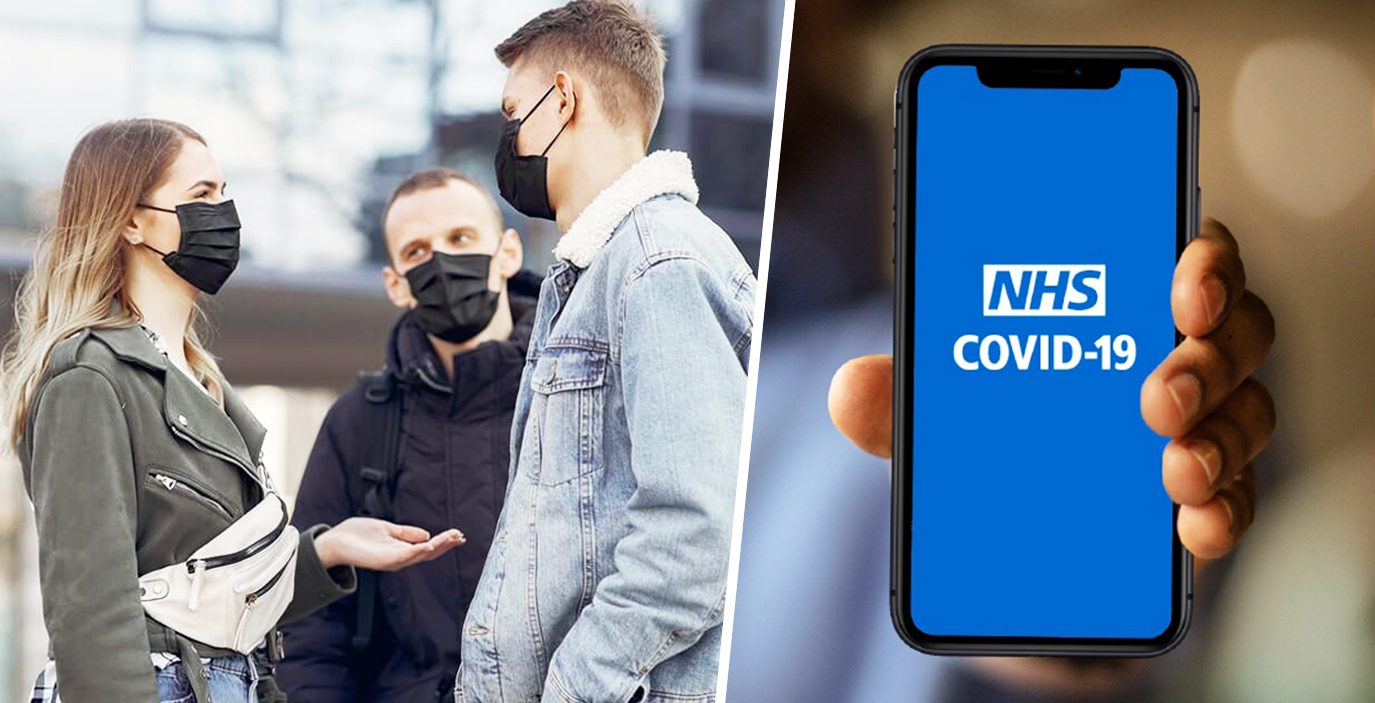
The reintroduction of a legal requirement to wear face masks in “most public indoor venues”, including theatres and cinemas – with exceptions “where it’s not practical, including while eating, drinking, exercising or singing”.
NHS COVID passes for nightclubs, unseated indoor venues with more than 500 people, unseated outdoor venues with more than 4,000 people, and any venue with more than 10,000 people.
Daily testing for people identified as a contact of a COVID-19 case – with isolation required only for people who test positive.
Plan B was drawn up before the Omicron variant emerged, and only applies to England.
When do the measures come into force?
The government had already announced that as of 30 November, the wearing of face coverings would become a legal requirement in shops, banks, post offices, hairdressers, and on public transport in England – but from Friday 10 December, they will be mandatory in “most public indoor venues.”
The reintroduction of the guidance to work from home “if you can” will take effect from Monday 13 December.
NHS Covid Passes will be introduced from Wednesday 15 November.
The measures will be debated in parliament next week, with a vote expected to take place on Tuesday 14 December.
How long will the measures be in place for?
The government says it will keep the data under “constant review”.
Just like it has been throughout the COVD-19 pandemic, there will be a review of the measures after three weeks, but these regulations are set to expire six weeks after implementation.
Taken together, the government says it is “hopeful” these measures will reduce transmission and slow the spread of the Omicron variant, and will continue to urge those eligible to get their boosters jabs when called.
Featured Image – Unsplash | NHS
News
Football Focus cancelled by the BBC after more than half a century
In a fairly big bit of British broadcasting news, Football Focus is ending after more than half a century on our screens.
Announced on Thursday, 23 April, the once flagship show and weekly TV guide staple for countless domestic households is set to be cancelled after 52 seasons' worth of coverage.
With BBC Sport confirming the tough decision in a lengthy statement, the long-running show will be taken off the air at the end of the 2025/26 campaign.
Most programmes like these have seen declining audiences across the board in the era of streaming and digital packages across various platforms, but this is truly the end of an era.
An incredible 52-year journey comes to an end.
Following extensive consideration, BBC Sport has made the difficult decision to say goodbye to Football Focus at the end of this season.
First broadcast in 1974, Football Focus is a testament to the brilliant team who have… pic.twitter.com/bmHQqQdf6J
An official social media post reads: "An incredible 52-year journey comes to an end. Following extensive consideration, BBC Sport has made the difficult decision to say goodbye to Football Focus at the end of this season. "First broadcast in 1974, Football Focus is a testament to the brilliant team who have worked on it over the years and, of course, the audience. The programme has been a staple of the BBC’s football coverage for decades, providing fans with interviews, analysis and stories from across the game ahead of the weekend’s fixtures.
"But changing audience behaviours means fans are now increasingly consuming football content in different ways, and we need to respond appropriately as we face difficult decisions around how the licence fee is spent."
Second only really to Match of the Day (MotD), which first began a whole decade prior to its once equally popular spin-off, Gary Lineker, Manish Bhasin, Alex Scott and others have all enjoyed varying periods hosting the regular weekend watch.
While even MotD has seen steadily dipping viewing figures, not just following the Lineker departure/saga, but ever since YouTube highlights and the social media era.
They go on to add: "Fans are accessing discussion, highlights, analysis and news through digital platforms and on-demand viewing, and as viewing habits continue to evolve, it is right that BBC Sport adapts how it brings football coverage to the widest audiences across television, radio, online and to its extensive social platforms. BBC Sport boasts a strong football rights portfolio and is set to significantly expand its digital output this year, growing content across BBC platforms, as well as a bold new slate of exclusive shows on YouTube.
"Featuring fresh formats, big personalities and more frequent, always-on content tailored for digital audiences, the expansion will bring fans closer to the game than ever before, delivering more high-quality, accessible and engaging football coverage at scale. We will release further details on these plans in the coming months."
Will you miss it? Perhaps more to the point, do you still watch Match of the Day, Soccer Saturday and the like on terrestrial telly here in the UK?
Farmer Copleys bans dogs from popular Tulip Festival after tragic death of beloved pet
Daisy Jackson
Farmer Copleys, which is behind the popular Tulip Festival attraction, has spoken out after the tragic death of a dog who visited last weekend.
The family-run farm has decided to ban dogs (with the exception of service dogs) from its site, after a visitor reported that her beloved springer spaniel Bobby had died just hours after attending the Tulip Festival.
It's believed that Bobby had eaten a tulip bulb or flower, which can be deadly to dogs.
Farmer Copleys has now shared a statement about the incident, writing that the team are 'deeply saddened' by the animal's death.
They stressed that while the exact cause of his death remains unknown, they 'do not wish to take any further risks' and will no longer be permitting dogs at the Tulip Festival.
"The safety and wellbeing of all our visitors and their pets is something we take extremely seriously," Farmer Copleys wrote in a statement shared today.
Customers who are no longer able to attend since the change are welcome to get in touch with the farm directly to discuss a refund.
And assistance dogs are still welcome, but owners will need to sign a disclaimer before taking them into the Tulip Festival.
Farmer Copleys tulip festival is one of the most popular events in Yorkshire every springDogs will no longer be allowed at the Tulip Festival
Farmer Copleys wrote: "We are deeply saddened by the recent incident involving a visitor’s dog following a visit to our Tulip Festival, and our thoughts remain with the owner at this difficult time.
"We must stress while the exact cause of this incident remains unknown, many flowers and plants in outdoor environments can pose risks to dogs if ingested, particularly the bulb, and we do not wish to take any further risk.
"The safety and wellbeing of all our visitors and their pets is something we take extremely seriously. As a precautionary measure, we have made the difficult decision to no longer permit dogs at our Tulip Festival for the remainder of the season.
"In addition, this has further reinforced our decision to close the pick your own area for the remainder of the festival.
"We understand this may be disappointing for some visitors. Any customers who have booked and are now unable to attend due to this change are welcome to contact us regarding a refund at info@farmercopleys.co.uk.
"We are undertaking a full investigation and make a decision on 2027’s season in due course."