According to a new study by Private Rehab Clinic Delamere, Leeds has been named the second-worst city in the UK for dangerous drinking.
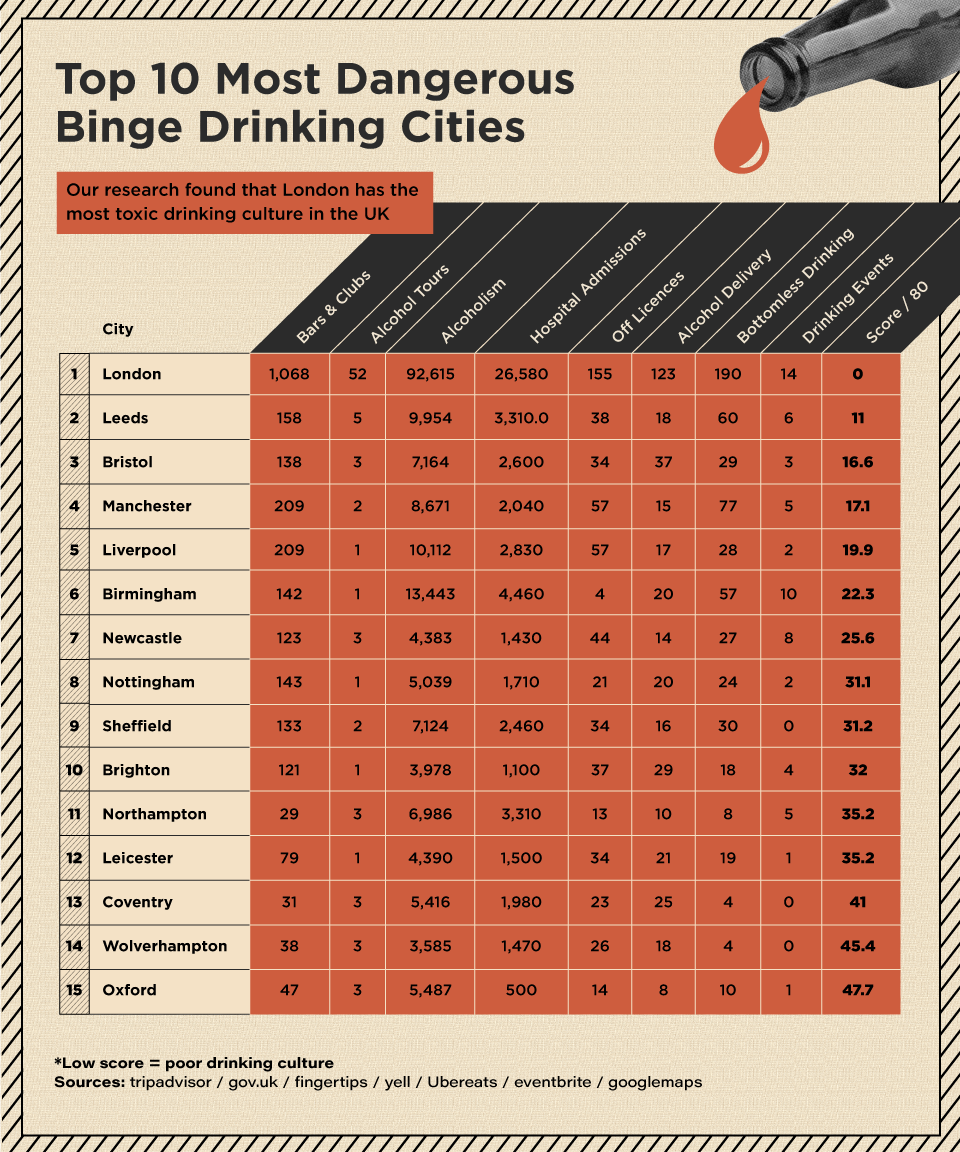
The study ranked each city in the UK out of a possible 80 and the team determined a rate of binge drinking by considering factors like: the number of clubs and bars, alcoholism rates, number of off-licences, alcohol tours and bottomless drinking locations.
Whilst we are fully aware that our bottomless brunch offerings are extensive compared to quite a few other UK cities our size, factors like alcoholism rates are far less likely to be known to the public.
Overall Leeds was given second place as the worst city for drinking culture in the UK, with a score of 11 out of 80.
This was based on a bottomless drinks score of 0.8/10, with 60 recorded locations and events offering free-flowing booze. 3,310 hospital admissions were documented between 2019-2020 and finally, there were 9,954 recorded alcohol dependency cases between 2018-2019.
Completing the top three was Bristol with a score of 16.6 out of a possible 80.
Taking the top spot however was the nation's capital. The research revealed that London had the most dangerous drinking culture in the UK with an overall score of 0 out of a possible 80.
As the most populated city in the country, London had a huge 26,580 alcohol-related hospital admissions recorded between 2019-2020, 190 bottomless drinking locations and 1,068 bars and nightclubs that all contributed to its toxic drinking culture.
The Top 10 Most Dangerous Cities for Drinking Culture
London - 0/80
Leeds - 11/80
Bristol - 16.6/80
Manchester - 17.1/80
Liverpool - 19.9/80
Birmingham - 22.3/80
Newcastle - 25.6/80
Nottingham - 31.1/80
Sheffield -31.2/80
Brighton -32/80
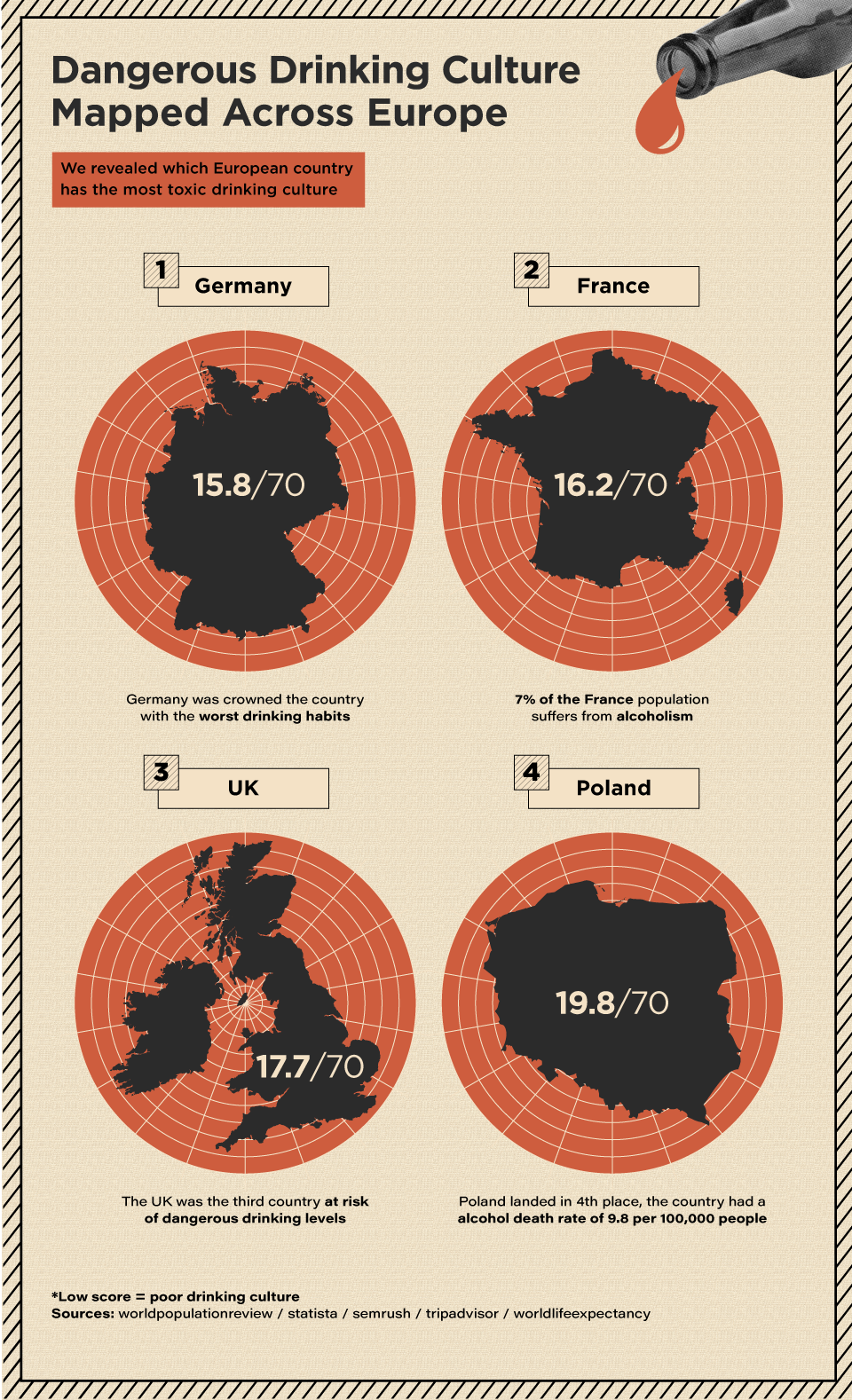
When compared against other countries in Europe, the UK was in the top three "at risk of dangerous drinking levels" with a score of 17.7/80.
Martin Preston, Founder and Chief Executive at Delamere, shared his insight on why binge drinking rates are so high in the UK:
“The coronavirus pandemic caused an alarming spike in binge drinking levels across the UK, the isolation caused many people to turn to drinking high levels of alcohol at home.
Drinking at home, rather than at a pub, removes the need to wait between drinks and also the worry around spending too much money. For example, the average bottle of wine in the UK costs around £6, which is what some glasses of the same wine can cost in pubs and bars.
The endless hours spent at home during the lockdowns meant that 18.1% of people were drinking at a high-risk level. While one in four (22%) of adults had increased their alohol consumption, causing 10% of people to worry about the strain of alcohol on their health.
As well as this, our research found that the top three cities with the highest binge drinking problems had a large number of drinks delivery services, so the need to leave the house to buy alcohol was eliminated.
For more information about drinking culture in the UK and the results of this study, including tips for combatting binge drinking and alcohol dependancy, visit the Delamere website.
Feature Image- Fred Moon, Unsplash
All infographics were supplied by Delamere / JBH
News
Prime Minister Andy Burnham is opening Health and Social Care North in Leeds
Newly-appointed Prime Minister Andy Burnham has shared plans for a brand-new Health and Social Care 'North' in Leeds as one of his first big plans as leader.
Set to be based right here in the city centre, the new Yorkshire base for the Department of Health and Social Care (DHSC) will serve as a Northern hub for the crucial cog in the public sector.
This comes not long after Andy Burnham announced and opened 'No. 10 North' at his previous base over in Greater Manchester, which took barely a week to get up and running.
Headed up by current Health Secretary Yvette Cooper, the initiative will be building on the vision outlined not only by Burnham but on the groundwork laid by her predecessor and now Defence Minister, Wes Streeting.
The new Defence Minister, Wes Streeting, says that social care has been ignored for too long and needs a clear long-term plan.
Mr Streeting, who was Health and Social Care Secretary until earlier this year, reflected on new Prime Minister, Andy Burnham's, first few days in… pic.twitter.com/Udnd1EwcsE
As per a report by LBC, an insider close to Cooper - the Labour MP for Pontefract, Castleford and Knottingley - told the outlet that this big step for the North "will help bring decision-making closer to the communities we serve and strengthen our ability to improve health outcomes across the country."
"She has asked the Department to draw up plans that would complement the plans for Number 10 North on the other side of the Pennines", they continued, "allowing Ministers to work from Quarry House [in LS2] in the North, and strengthening DHSC operations in other parts of the country."
With confirmation now coming that the old 'Quarry on the Hill' has been chosen as the satellite station for the soon-to-be-overhauled Department, the selection makes sense given its current government operations.
As well as being a major headquarters for the Department for Work and Pensions (DWP), it also has offices reporting to DHSC, NHS staff and other parts of the civil service.
In addition, it's also worth noting that the PM has just announced another big change to the education sector, too, essentially trying to redress the balance between "academic and technical" training.
Great news for everyone looking to seek out solid and hopefully more stable careers across the nation.
Building on Leeds' existing offices, the idea is that this will ensure more considered development across more regions and specific communities, West Yorkshire being just one of them.
Many localities still understandably feel like they fall foul of being somewhat overlooked, especially up in this part of the country.
But, as alluded to above, the hope is that this continued sense of devolution and efforts to work more directly with local governments should help bridge the gap between Whitehall, Westminster and the rest.
As the PM said in his first speech at his new Northern premises, he said a big part of his ethos is about "putting power in every postcode" and making a change from things just feeling "like an argument with people in the centre of government and people having a to and from all of the time."
While official opening dates etc for Health and Social Care North are still yet to be revealed, the former Mayor of Greater Manchester has insisted that he will be working from No.10 North at least once a week. What do you make of it all, Leeds?
The Government has announced ‘fundamental’ changes to the UK’s education system
Emily Sergeant
The Government will unveil a fundamental change to the education system today with the launch of new prestigious technical educational routes.
Andy Burnham says he is 'determined' to put technical education on an equal footing with the traditional academic path to ensure there are no so-called 'dead ends' for young people coming out of the education system by providing them high-quality alternative routes that are valued and respected by students, parents, and employers alike.
The new pathways will provide 14-year-olds with 'valuable' early access to technical skills, work experience, and connections with local employers.
Building on successful local initiatives - such as the MBacc, launched by Andy Burnham in Greater Manchester when he was Mayor - the new technical routes will mean young people can develop the technical knowledge and skills needed to progress in areas like engineering, healthcare, and digital technology.
It will aim to 'skill them up' with the specific knowledge and capabilities that local employers need.
The Government has announced 'fundamental' changes to the UK's education system / Credit: MChe Lee (via Unsplash) | Wikimedia Commons
So, how will it all work then? Well, when students enter Year 10, they will have the chance to combine core academic subjects - including English, Maths, and Science - with a high-quality technical education that’s linked to the jobs available in their area.
During these courses, students will be able to spend time with employers and gain valuable real-world experience.
Regional mayors, local leaders, schools, colleges, and employers will work together to shape these new technical education pathways, rather than relying on a one-size-fits-all system.
To support this, the Government says it will prioritise funding towards high-quality technical education and practical routes into work, and will also change the way school performance is measured so that inspectors recognise the schools support young people to develop the skills, experience, and confidence employers want.
This way, no matter whether young people choose university, an apprenticeship, further education, or direct entry into a skilled profession, they will able to see a clear route from education into employment.
"For too long in this country, students have been told that you must take the academic path to do well and to be respected," explained Prime Minister Andy Burnham.
"The whole school system has been built around it and that has let down young people seeking technical qualifications.
"I want an education system based on parity between academic and technical which gives all young people a clear path in life.
"From today, Britain will value the hard hat every bit as much as the graduation cap."