Hyde Park Picture House is the latest in Leeds to show its support for the people of Ukraine.
The cinema will be donating ticket sales of a range of movies to the UNHCR Refugee Agency Emergency Appeal, which aids Ukrainians that are forced to flee their homes in search of shelter and safety.
Image: Hyde Park Picture House (HPPH)
The showings will highlight a selection of Soviet 60s movies alongside more contemporary films that feature Ukrainian talent or storylines, as well as raising money for the cause.
All movies will also be shown either as a socially distanced or reduced capacity showing. The first being a distanced screening of Wings on Sunday 20th March at 3.30pm inside Leeds University Union.
Wings. / Image: HPPH
The picture house had initially planned to host a Soviet 60’s screening season but decided in light of Russia’s invasion of Ukraine this could no longer go ahead as planned.
Instead, they have revised the schedule and plan to donate all proceeds to help Ukrainian refugees in need.
Hyde Park Picture House explained that:
"This screening of Larisa Sheptiko‘s Wings was originally part of the Soviet 60's season, alongside three other Russian and Armenian-language films from the 1960s, in collaboration with Klassiki.
"In light of Russia’s invasion of Ukraine, this season is now no longer able to go ahead as planned. However, we have decided to go proceed with our screening of Wings, for two reasons. Firstly, Larisa Shepitko was a Ukrainian director, and her work is an important part of the cultural heritage of a country now under assault. And secondly, we've agreed with Klassiki to donate all the ticket sales to the UNHCR emergency appeal."
Olga. Image: HPPH
Olga, a movie about a young gymnast with Olympic-potential leaves Kyiv just as Ukraine experiences unprecedented political turmoil, will be shown at Leeds University Union on Sunday 3 April 2022 at 3.40pm with a reduced capacity.
The film follows the life of Olga, who is a distant bystander, as her mother, an investigative journalist, challenges a brutal regime. A subtle, tensely handled tale of exile reflecting the pressures on young athletes, the clash between the personal and the political, and Olga’s search for who she is and what she is prepared to sacrifice.
Meanwhile, We and Our Mountains, "one of the most storied of the USSR’s so-called “national” cinemas, which remains relatively unknown abroad" will be shown at 3.30pm the following weekend on Sunday 15 May 2022- another of the Soviet 60s season that was due to be shown but was cancelled in light of current events.
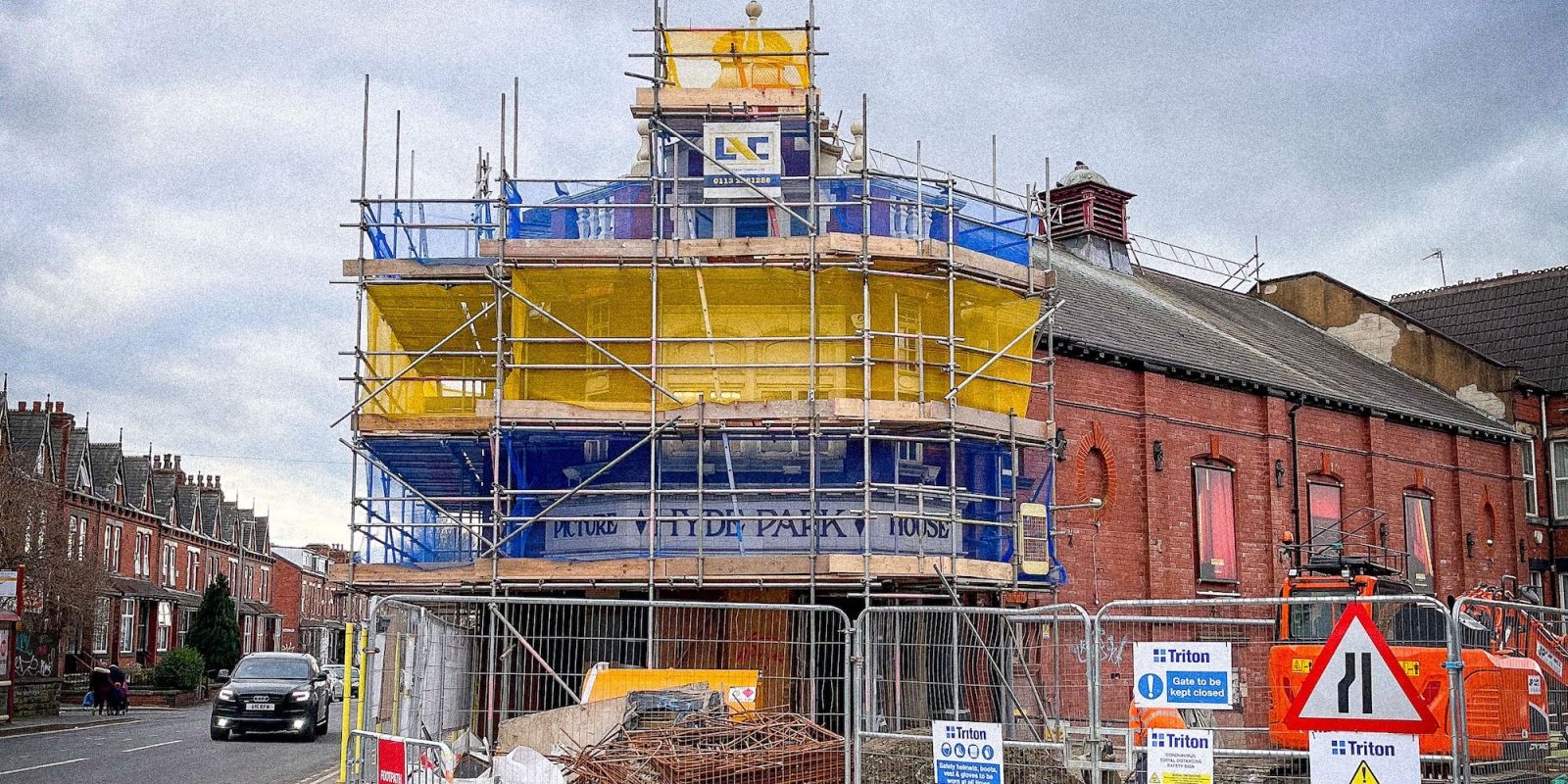
Hyde Park Picture House in its current scaffolded state is presented in the colours of the Ukrainian flag to show its support.
A new analysis has revealed a list of the noisiest cities in the UK, and Leeds makes the list.
From blaring sirens and car horns, to house parties, barking dogs, and loud neighbours, escaping the noise of a city can feel almost impossible – even in your own home.
No matter whether you live in the hustle and bustle, or you’re out in the sleepier suburbs, noise can keep you up at night, disturb your peace, and lead to frustration.
But just how loud is Leeds compared to the rest of the UK? In a bid to get to the bottom of it, Alpine Hearing Protection has done some research to compile a top 10 list.
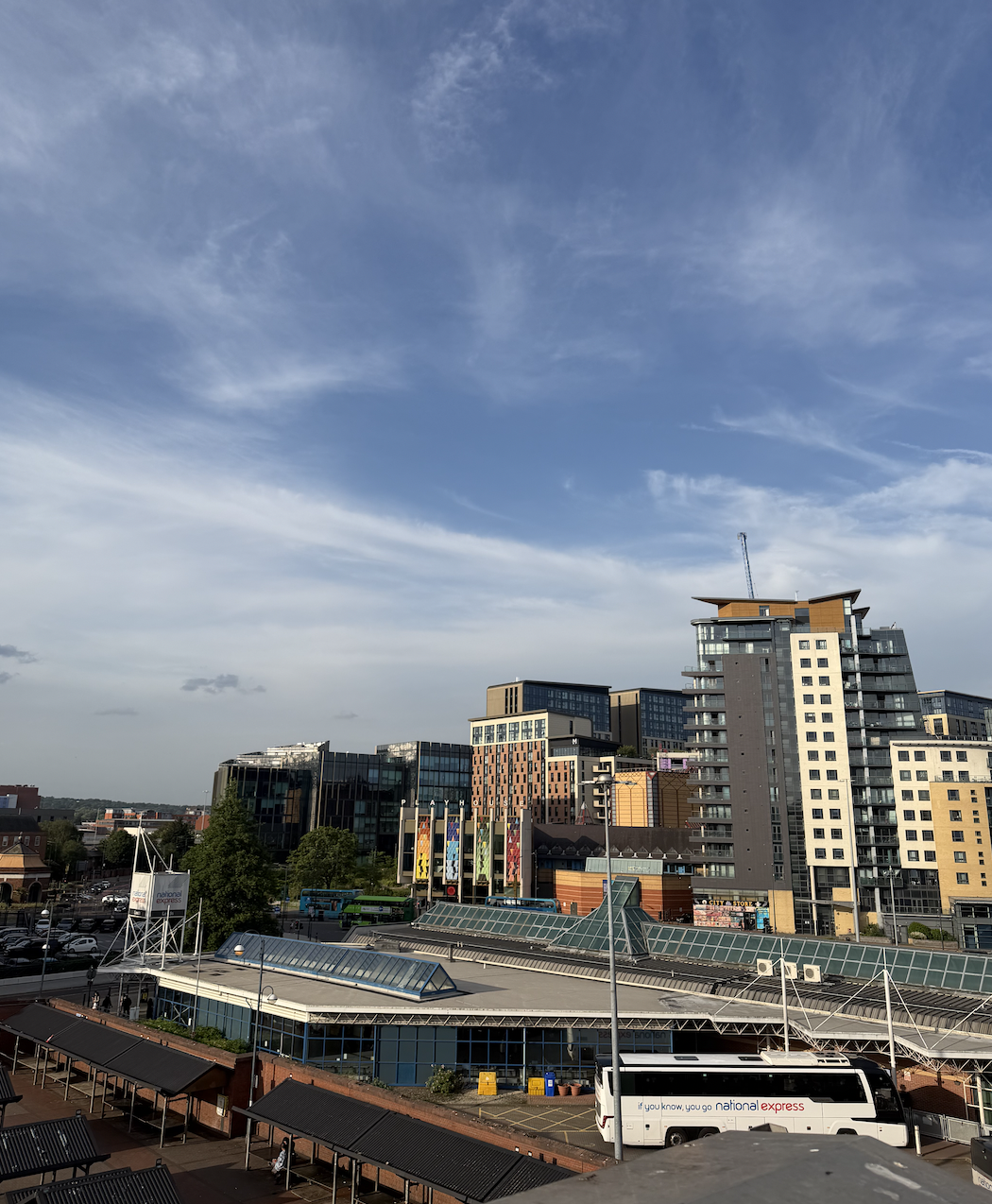
Well, Leeds came in at number 6 just underneath London.
Taking top spot is Salford, followed by Portsmouth and Manchester. So it's safe to say that them lot over in Greater Manchester are a rowdy lot, but we already knew that.
The reason Salford has found itself at the top of the list, according to the research, is because it sits at the intersection of several major transport and urban hubs, with major motorways running through or around the city including the M60, M61, and M62.
Major rail routes also run through the city – including via Salford Crescent – which sees 16 million passengers every year, and also leads to Manchester Airport.
But the difference being that Mancunians are noted as one of the many reasons why the city is so loud – with residents making 5,301 noise complaints across Manchester between January 2024 and January 2025, and Hulme identified the loudest area with 304 complaints.
Top 10 noisiest cities in the UK
Salford
Portsmouth
Manchester
Southampton
London
Leeds
Stoke-on-Trent
Wakefield
Newcastle upon Tyne
Bradford
So, why is Leeds so loud then? It's got to be a combination of our booming nightlife, busy roads and never ending road works, if we had to guess.
Leeds City Council to unveil new action plan aimed at ending homelessness
Clementine Hall
An ambitious new action plan for how to end homelessness is set to be presented by Leeds City Council this month.
Leaders of Leeds Council are expected to sign off on a partnership-led roadmap on Wednesday 18 November which outlines how the city will support the government's new homelessness strategy.
The strategy sets out a national ambition to make homelessness rare and non-recurring through a shift from crisis intervention to prevention and requires local authorities to set annual targets and local delivery plans.
In response to the strategy, Leeds has developed two new action plans which sit alongside the council’s existing Homelessness and Rough Sleeping Strategy 2023-2028.
The action plans provide a refresh, building on what has worked while responding to the changing housing market and patterns of need.
The approach to homelessness will move beyond responding once it occurs, towards earlier identification with integrated intervention and sustained support.
The new action plans are being introduced alongside the national Rough Sleeping Programme, for which Leeds has received £1.6million of funding.
Councillor Mary Harland, Leeds City Council's deputy leader and executive member for communities and community safety, and Councillor Asghar Khan, executive member for housing and hubs, said: “Since publishing our five-year Homelessness and Rough Sleeping Strategy in 2023, we have placed universal and targeted prevention at the heart of our approach, alongside work to maximise access to suitable accommodation.
"This has included identifying people at risk earlier, providing accessible housing advice and financial assistance, helping people to sustain their tenancies, and working with private landlords and housing providers to increase rehousing opportunities.
“This activity has provided strong results, but we know that there is more to be done as demand increases and the context that we are working in changes.
“The existing strategy has been reviewed against the national plan and remains strongly aligned in ambition and principles. Our new action plans will build on that foundation, responding to changing pressures and strengthening delivery where needed.
“Through earlier intervention, collaboration, stronger partnership working and targeted support, we will work hard through our partnerships to reduce the need for crisis responses and improve outcomes for residents at risk of homelessness.”

 Sophie Smith -
17th March 2022