A striking Leeds mural has been carefully restored back to its former glory.
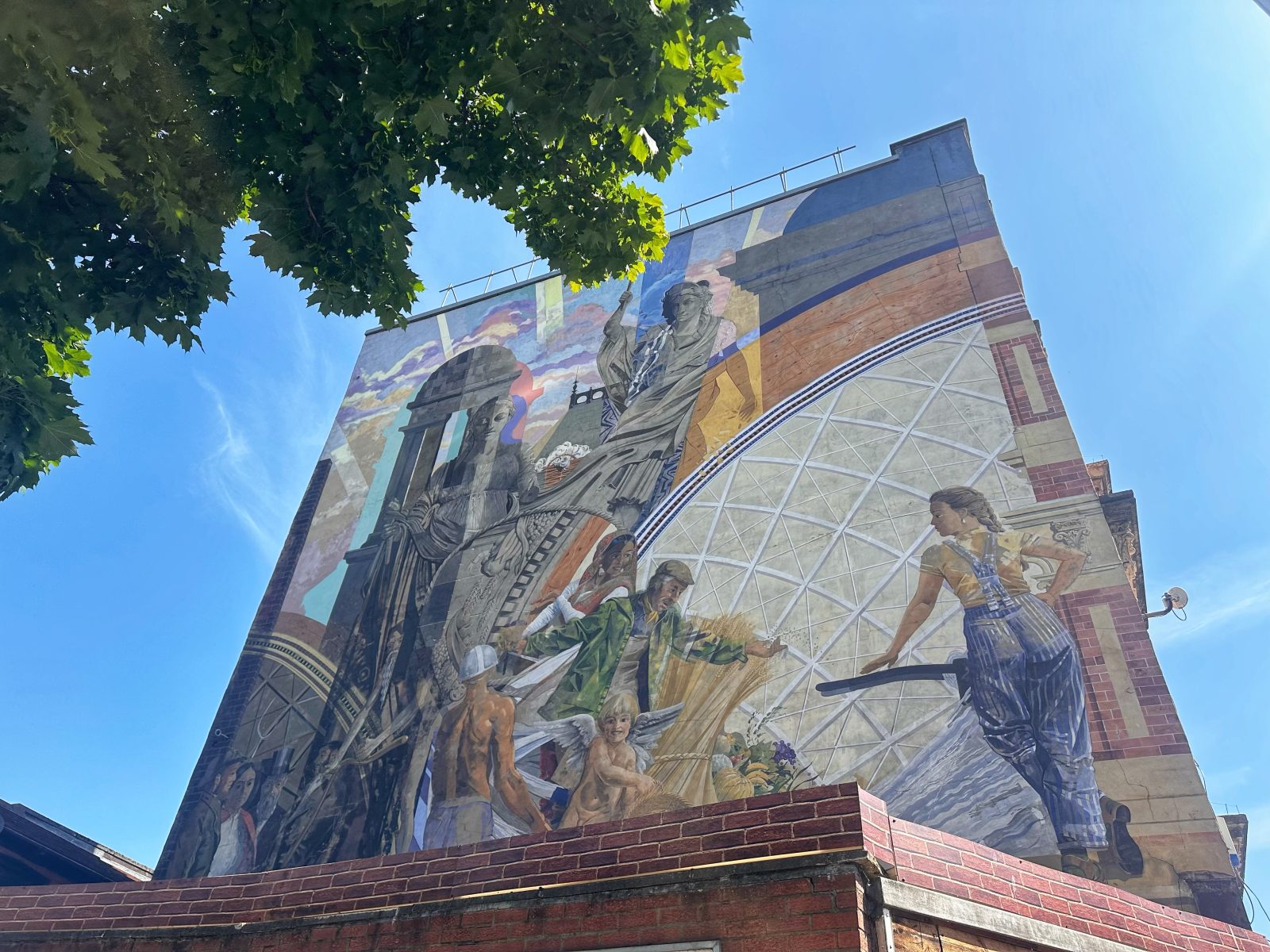
The 'Cornucopia' is one of Leeds' most beautiful murals, situated across from the iconic Corn Exchange in it stands at an impressive 32 feet high depicting the goddess Cornucopia – a symbol of abundance and prosperity.
It was originally commissioned by the late Graeme Willson and has been a popular landmark in Leeds city centre since its unveiling in 1990, when it also won the Leeds Award for Architecture and the Environment.
And now, the mural has been fully restored bringing it back to its former glory.
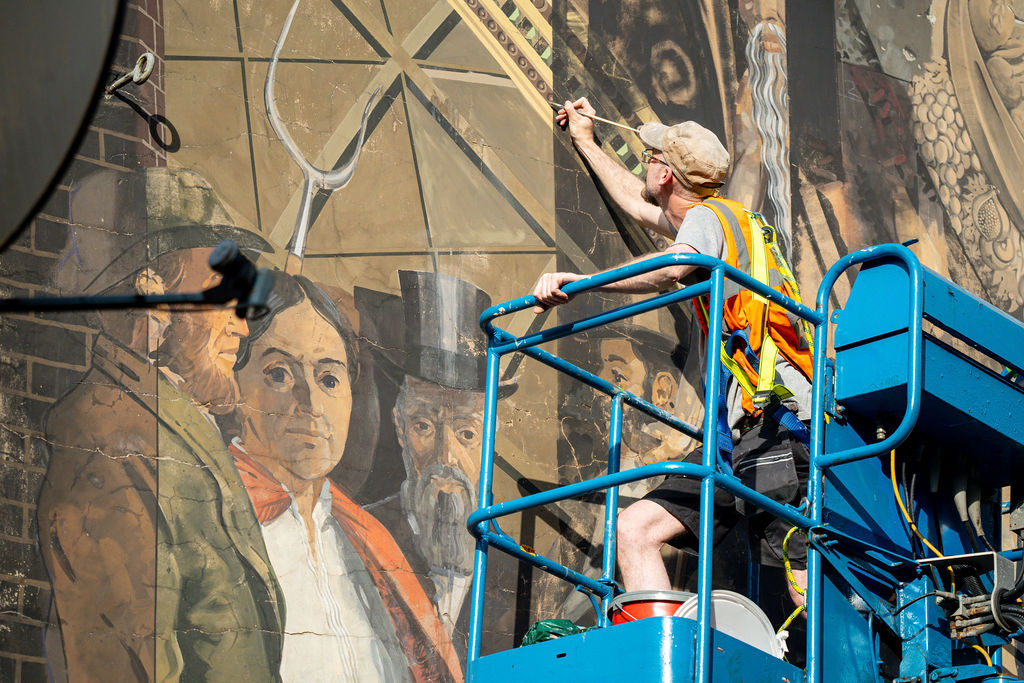
Artist Ralph Replete restoring the much-loved Cornucopia mural in Leeds city centre Credit: Simon Dewhurst
The restoration has been supported by Leeds City Council and funded by Yorkshire-based property developer and investor Rushbond, which owns the neighbouring Grade I listed Leeds Corn Exchange, in partnership with Leeds Civic Trust.
The specialist restoration work has been undertaken by local artist Ralph Replete, who carefully hand-cleaned the mural. The artwork was then sympathetically retouched using the same specialist mineral paint originally used by Graeme Willson.
Jonathan Maud, Chairman of Rushbond, said: "‘Cornucopia’ was a wonderful gift to the city from the former owners of Leeds Corn Exchange, and it deserved to be given a respectful refresh. Thanks to our incredible partners, including the team at Blue Rinse who were most accommodating in giving us access to the mural, and the meticulous work of Ralph Replete, everyone can once again enjoy this beautiful work of public art.
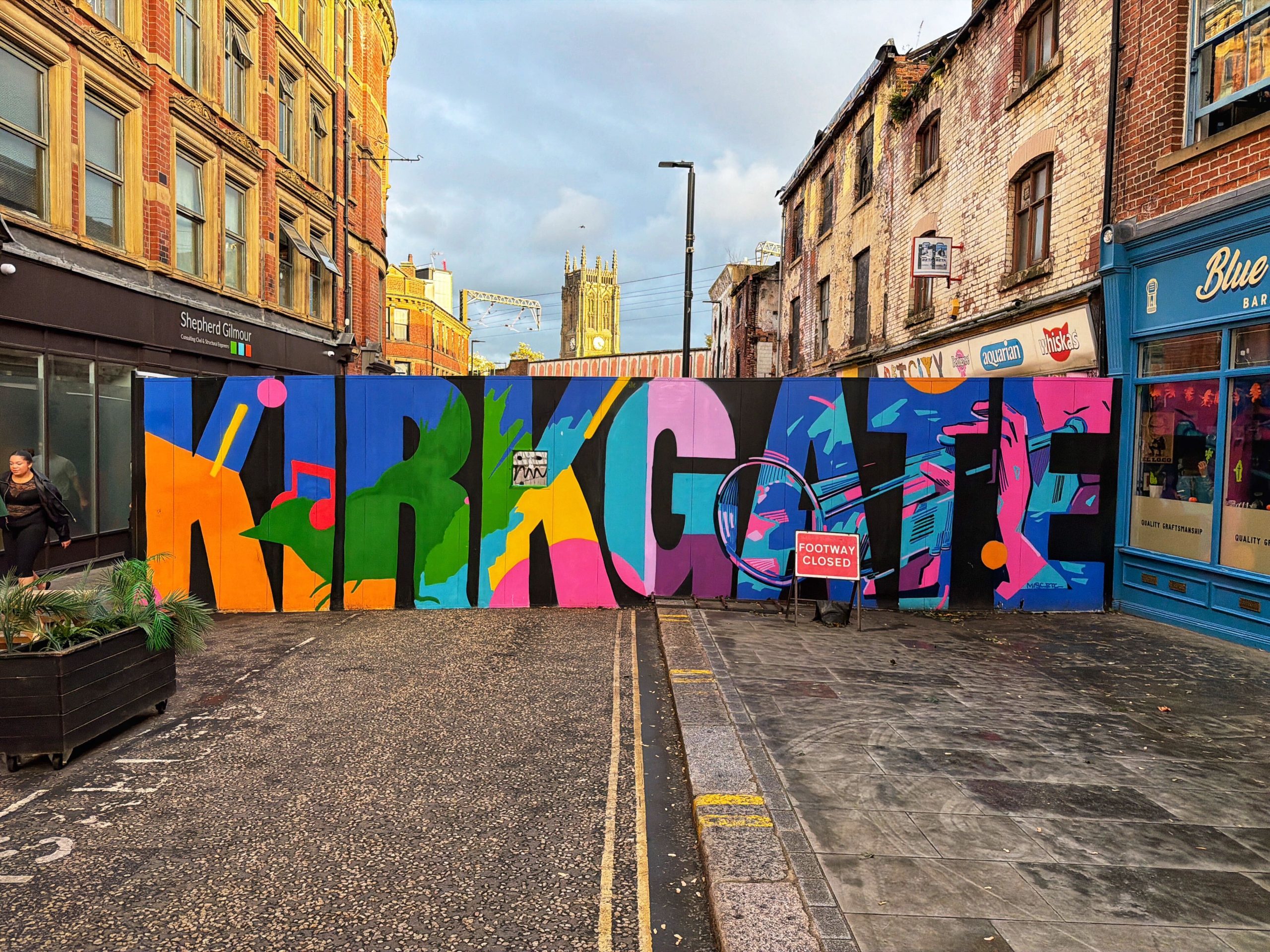
"‘Cornucopia’ is an important part of Leeds’s cultural heritage and I’m delighted that the many thousands of people who come to Leeds Corn Exchange and Kirkgate every year will once again be greeted by a cultural landmark that reflects both the area’s independent, commercial, creative identity and the true spirit of Leeds.”
The tiramisu hype lives on, and this time it's coming to Leeds.
It really does feel like the traditional Italian dessert has taken the world by storm as of late.
Everything from tiramisu cups and tiramisu coffees have been popping up all over our feed, and now tiramisu in drawer form is popping up in the city centre.
Misu Tiramisu is an independent business that began at Manchester's Christmas Markets and quickly became one of the most popular operators, all thanks to its miniature tiramisu ‘drawers’.
Images: The Hoot Leeds
The individually portioned and colourfully packaged desserts quickly became one of town’s top puddings, and owners Aleem and Aishah went on to launch a stand inside the Manchester Arndale too.
And now they’re branching out again in Leeds inside Trinity shopping centre for a two month residency.
You’ll find all their delicious flavours of handmade tiramisu, including classic, pistachio, chocolate, Biscoff, mango, and lemon - they'll also have some gluten-free tiramisu on offer as well, so no one has to miss out.
Images: The Hoot Leeds
Misu Tiramisu owners Aleem and Aishah spent a year refining the recipe for their tiramisus after a trip to Milan, first launching with their first market stall in Sale.
Misu Tiramisu is now open inside Trinity shopping centre opposite Boots Opticians and Pop Specs.
They're open every day of the week for you to get your tiramisu fix, from 9am to 8pm Monday to Saturday and from 11am to 5pm on a Sunday.
And trust us Leeds, they're just as delicious as they are adorable.
Fossilised 320-million-year-old fish found in Leeds’ Roundhay Park
Clementine Hall
A prehistoric fish fossil has been unearthed at Roundhay Park in Leeds.
The fascinating prehistoric skull bone of a coelacanth fish was discovered by a geologist at Roundhay Park earlier this year.
It is thought the creature was frozen in time aeons ago, during an era when the park was submerged under a vast tropical lagoon.
The remarkable discovery has now been kindly donated to Leeds Museums and Galleries and added to the natural sciences collection at Leeds Discovery Centre.
Image: Leeds City Council
The Leeds fossil was found by Ru Smith of the Yorkshire Geological Society during a reconnaissance walk he was carrying out ahead of a planned field excursion in the north Leeds park.
Describing the moment he made the discovery, Ru said: “There’s a layer of rock in the park which dates from around 320 million years ago, from a time before the breakup of the continents, when what is now the park would have been situated close the Equator and under the warm waters of a tropical lagoon. West Central Africa would be a good place to find similar environments in the present.
“There’s a bed of freshwater mussels called Carbonicola at one level in the rock, and opening a piece of shale from this bed in my hands I saw something unusual – a distinctive skull bone of a large fish. I knew straight away this was something different and very rare."
The bone was verified byexperts as belonging to a coelacanth older than those found elsewhere in Yorkshire, making it the oldest fossil coelacanth discovered in the region.
Ru added: “Coelacanths are pretty amazing fish and it’s just very cool to think that at one time, you could have been standing in Leeds and watching them swim around above a bed of mussels in Roundhay Park.
“That’s really the wonder of geology, looking at the rock and time travelling in the imagination to what was a very different world.”