Bad news for all those who partake but a big win for public health as disposable vapes are officially set to be banned in England and Wales next year.
After reports first began circulating back in January , retailers stocking disposable vapes will have until the summer to remove them from the shelves.
The legislation was handed down by the Department for Environment, Food and Rural Affairs (DEFRA) on 23 October, with ratification in England and Wales coming on Thursday; it is expected that Scotland and Northern Ireland will follow suit.
Local councillors had already called for the ban earlier this year due to the ‘environmental impact’ and it has remained a priority for Public Health England virtually ever since the advent began.
Announcing the impending ban this week , DEFRA confirmed that what they have labelled as an “extremely wasteful and blight our towns and cities” – not to mention a gateway substance for non-smokers and children – will finally be banned by June 2025.
Image: The Manc Group
In addition to a marked increase in users who have never even smoked before, it is estimated that around 9% of the British population now enjoy vaping and that the popularity among young people is alarming and only increasing.
The Minister for Public Health and Prevention, Andrew Gwynne said: “It’s deeply worrying that a quarter of 11-15-year-olds used a vape last year and we know disposables are the product of choice for the majority of kids vaping today.
“Banning disposable vapes will not only protect the environment but importantly reduce the appeal of vapes to children and keep them out of the hands of vulnerable young people.”
Meanwhile, Circular Economy Minister Mary Creagh, who announced the new law on Wednesday, added: “This is the first step on the road to a circular economy, where we use resources for longer, reduce waste, accelerate the path to net-zero and create thousands of jobs across the country.”
69% of those who responded to the consultation were in favour of doing away with disposable vapes which are not only a public health risk but a massive detriment environmentally, as plastic, lead, and mercury leaching into waterways and/or other habits to harm wildlife is a prevailing concern.
The usual type of vape pens bought from off-licenses and most major retailers cannot typically be recycled, meaning that they usually end up in landfill or being incinerated, which also poses a fire risk due to their lithium-ion batteries and can cause poor air quality.
Despite still being a hugely profitable industry, the government is also set to introduce a landmark Tobacco and Vapes Bill , first submitted in September of this year, set to be the biggest public health intervention in a generation.
In theory, it aims to protect young people from nicotine addiction and pave the way for a smoke-free UK by 2030 – banning disposable vapes is just the latest in the comprehensive nationwide plans.
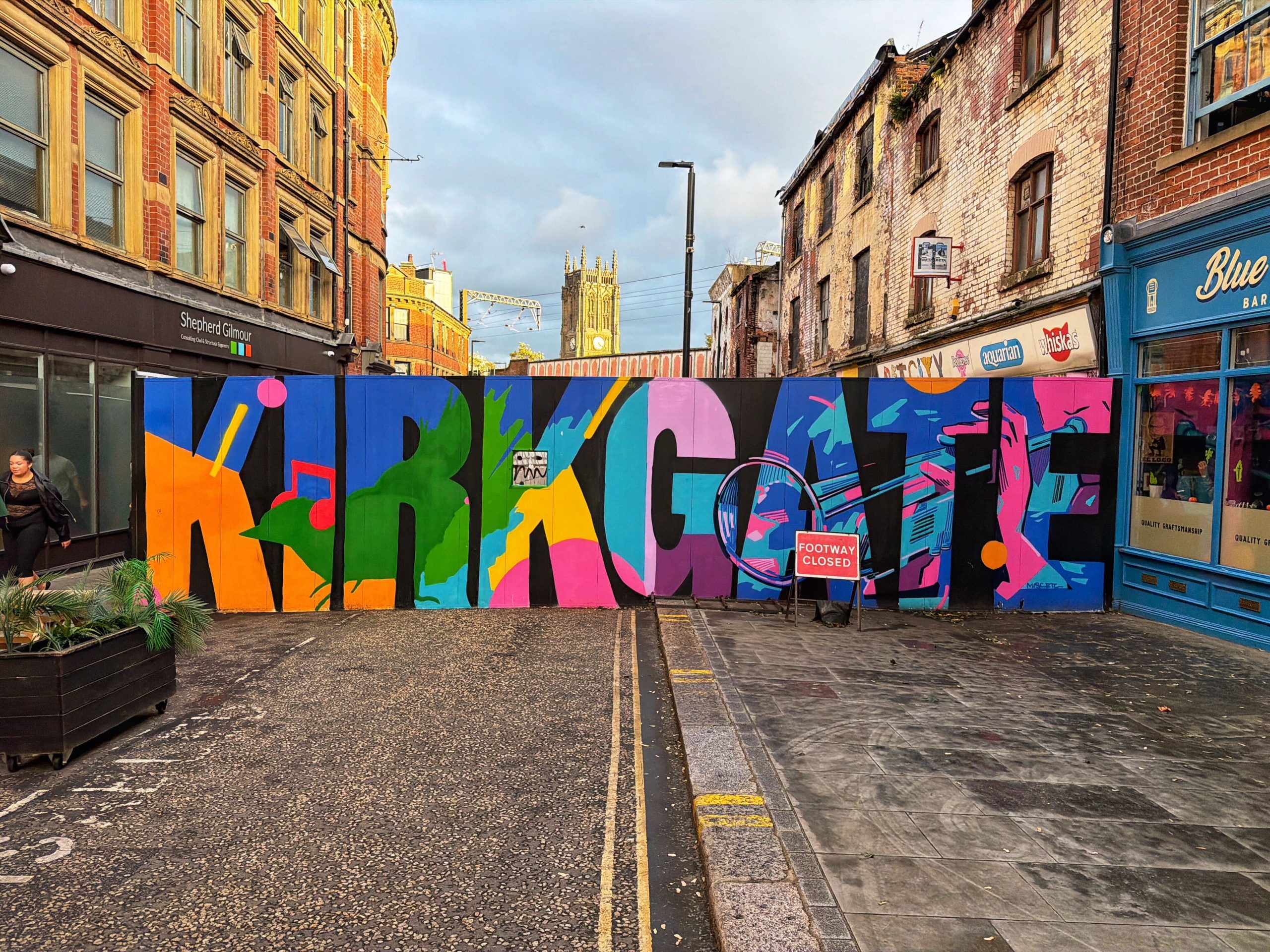
Work to stabilise buildings on Lower Kirkgate was set to begin this week, but has now been delayed.
Back in 2024, Lower Kirkgate in Leeds city centre was closed following the partial collapse of a building, leaving one of the city's oldest streets inaccessible.
Since then, the street has remained closed while plans were developed to address the structural issues affecting the buildings.
Last week, almost two years after the initial incident, the council confirmed that a contractor had been appointed to carry out the work and was due to start this week.
Image: The Hoot Leeds
However, this work has now been delayed due to the contract awards awaiting finalisation.
The buildings are privately owned, but Leeds City Council says it will step in to carry out the stabilisation work to prevent further deterioration and protect the historic properties.
A spokesperson for Leeds City Council said: “We are pleased that, following months of careful planning and preparation, we are now in a position to begin stabilising these privately owned buildings.
“A contract is being awarded for the work and is expected to take around 20 weeks to complete.
"Work was provisionally due to start on Monday this week but some legal documentation relating to the contract award still has to be finalised and we anticipate that it will begin before the end of the month.
“It should be stressed that the situation on Lower Kirkgate is not of the council's making, with the owners of the buildings allowing their condition to deteriorate over many years and then failing to take the necessary steps to address the resultant structural issues.
“By stepping in and carrying out this work itself, the council will be able to arrest the deterioration of important heritage assets on one of Leeds’s oldest streets. As always, we thank the local community for their continued patience and support.”
We can't wait to see this area of town back up and thriving again.
The UK Government has announced £100 fines for ‘antisocial behaviour’ on public transport
Emily Sergeant
The Government has today announced plans to tackle antisocial behaviour on public transport.
In a bid to crackdown on loud music, littering, vaping, and other threatening behaviour on buses and trains, guidance was issued by the Government today for local authorities to prosecute and even issue fines of up to £100.
For many, playing audio out loud on public transport – also known as ‘loudcasting’ – has become one of modern life’s most irritating parts of the daily commute, but now, a new national campaign is aiming to encourage rail passengers, in particular, to ‘share the carriage, not the noise’ to improve the journey experience for all.
This will include reminders of the rules in place on the rail network and, if a passenger refuses to stop when asked by authorised rail staff, they can be removed from the train at the next station or face fines up to £1,000.
On buses, however, the powers for authorities were already made possible by the Bus Services Act 2025, meaning all local transport authorities in England are able to set and enforce their own rules.
Authorised officers – including transport safety officers and the police – will be responsible for enforcement, rather than bus drivers themselves, and they will be tasked with a three-step approach to deal with incidents. They will need to:
Engage with the person
Explain the rules and their impact on other passengers
Take enforcement action if they refuse to comply
“We’ve all been on the train when someone starts blasting music or videos from their phone,” commented Prime Minister Andy Burnham.
“It gets on your nerves and can quickly spoil the journey, so we’re launching a nationwide campaign reminding passengers to use headphones on trains. On top of that, we’re giving local leaders new powers to tackle loud music, vaping and littering on buses.
“It’s a simple thing, but one that will make journeys that little bit better for all of us.”
Ben Plowden, Chief Executive at the Campaign for Better Transport, added: “Antisocial behaviour is not just irritating, it can be a real deterrent to people using public transport – especially people with different accessibility requirements.
“If these new powers are properly and visibly enforced, they should help everyone feel safe and comfortable on public transport and enjoy the ride.”

 Danny Jones -
25th October 2024