Those at a private school are twice as likely to have been encouraged to apply to a Russell Group university compared to state school students.
A new report from social mobility group Zero Gravity, has found that there's far more than meets the eye in the difference between state and private schools.
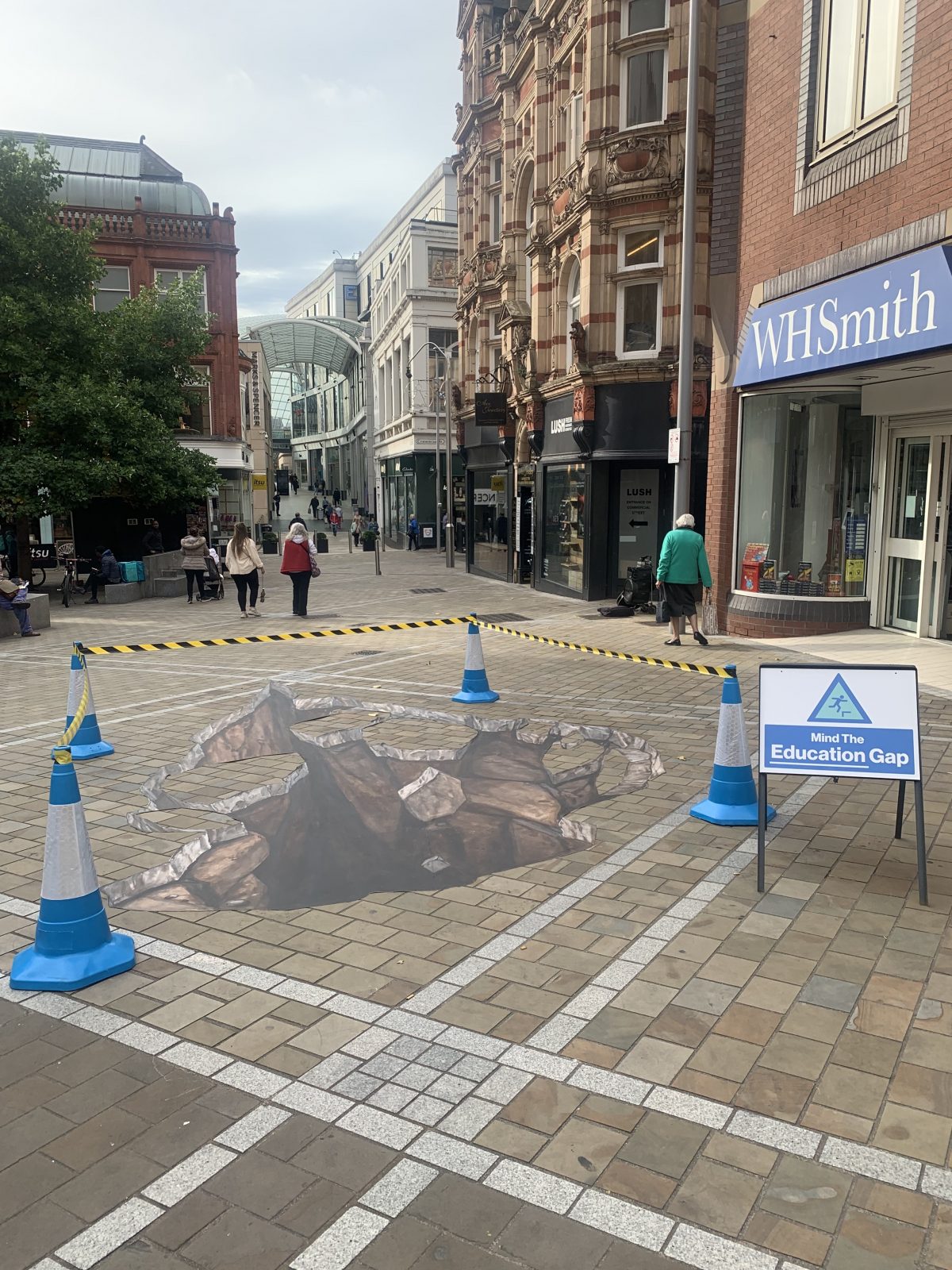
After an interactive art piece hinting at the report's findings in Leeds last week, the report is finally ready to go public.
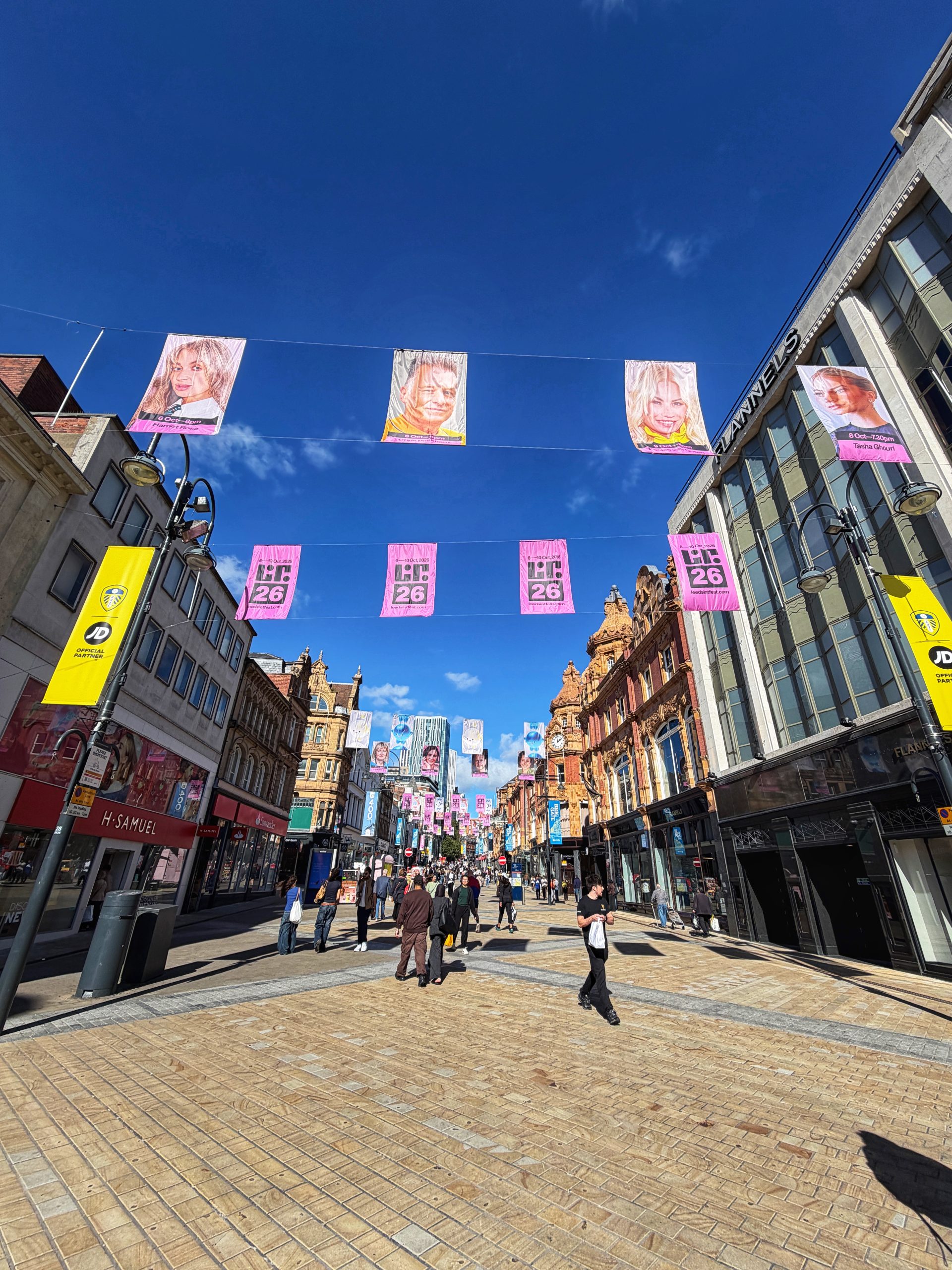
Mind The Education Gap was installed on Lands Lane in Leeds city centre last week. / Image: The Hoot Leeds
The study has found that, "in line with popular belief, the power of networks often starts at home", finding that almost two thirds of students from middle class backgrounds (64%) believe their family has the knowledge to assist them with their university application, whereas 43% of those from working class backgrounds had the same opinion.
One important finding is the knowledge to help with a university application gap narrows to 8% when comparing state educated with private school students, which the reports explains as a suggestion "that the affluence of family members is more important in driving perceptions of direct family support than school type".
The study also found that networking was significantly different, depending on what school students attended. Compared to state school students, private school students are:
More than twice as likely to know an accountant (7% v 16%)
Twice as likely to know a doctor (13% v 25%)
Four times as likely to know a lawyer (8% v 36%)
Seven times as likely to know a banker (2% v 14%)
Seven times as likely to know a politician (2% v 14%)
Students at private schools are also 24% more likely to imagine themselves attending a Russell Group university and 59% of state educated students worry they wouldn’t have the same economic support as others at university, compared to 6% of privately educated pupils, according to the Zero Gravity report.
Joe Seddon, Founder and CEO of Zero Gravity issued the report after being inspired by his own experience of transitioning from a state school to applying and attending the University of Oxford.
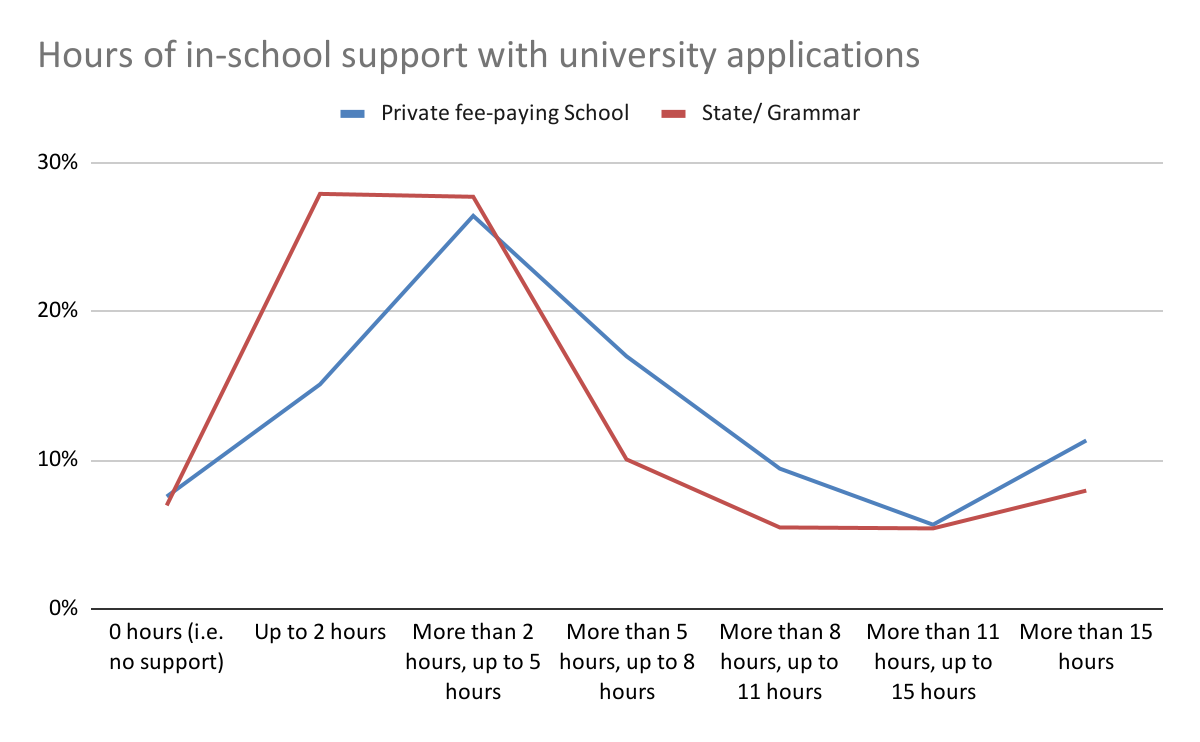
"It may surprise some fee-paying parents that the level of in-school support with university applications reported by state school pupils is mostly in line with that received at private schools (see below). Beyond a handful of aberrations, state school pupils are receiving on average no less contact time than their fee-paying peers. " - Zero Gap Report
Determined to ensure social mobility doesn't reflect on other students, Joe founded Zero Gravity, a mentoring platform that has aided over 3000 students from low-income backgrounds in their university application process and beyond, stating: "we’re now mentoring these students into the UK’s leading graduate employers across finance, law, professional services, and technology - ensuring our members are defined by their potential, not by a postcode lottery."
After conducting its own report, the company can reveal that access to a professional network is a strong predictor of a student’s likelihood to apply and win a place at elite universities.
"Talent is spread evenly, but opportunity is not." Joe explains in the Foreword of the report.
"This fact of life is so embarrassingly obvious that it often goes unsaid. However, things don’t have to be this way. Western societies have evolved dramatically over the past two centuries to spread opportunities more widely and open access to elite institutions."
The study concludes that "until access to a professional network is no longer determined by birth, geography or education, the link between background and opportunity will not be broken [...] but the way things are is not the way things have to be."
Zero Gravity is just one example of a social-led enterprise that's striving to close the gap of networking, knowledge and expectation between state and private schools.
So far this year, 78% of Zero Gravity students have won a place at their first-choice university, so that "both talent and opportunity can be evenly spread."
New regulations are set to be put into place as part of the Briggate Action Plan.
Proposals for the plan, aimed at making some of the city centre’s busiest areas safer for everyone, received a huge amount of support during a public consultation last year.
Since then, the council have been drawing up the necessary regulations and signage, with the new rules now due to officially come into place over the next few months.
Once implemented, the action plan will mean a requirement to walk bicycles and e-bikes within the city centre’s pedestrianised shopping area from 10.30am until 8pm every day.
That means no surprise bicycles will try and run you over as you're doing your shopping, hooray!
The action plan will also introduce prohibitions around certain street trading activities in targeted areas, including mobile street traders.
Extended restrictions will be put into place during major city centre events including Leeds Pride, Light Night Leeds and the Leeds Christmas Market.
Anyone breaking the new rules could be given a £100 Fixed Penalty Notice.
A spokesperson for Leeds City Council, said: “The city centre welcomes hundreds of thousands of visitors each year, and our aim is for every one of them to have the best and safest possible experience of Leeds.
“Through this action plan, we’ve taken important and meaningful steps to address issues which the public have consistently told us were impacting their enjoyment of the city centre whilst also creating potential safety issues for shoppers and pedestrians.
“With these new regulations in place, our hope is that both day-to-day visits and major events will now be even more enjoyable, successful and welcoming.”
The new restrictions on pedlars are expected to be in place from Thursday 1 October, with restrictions on bikes in pedestrianised areas due to be in place by the end of the year.
Everything you need to know about the Government’s new digital ID alternative for alcohol sales
Emily Sergeant
Licensed venues across England and Wales now have the choice to be able introduce digital proof of age for alcohol sales alongside physical.
Instead of having to hand over physical ID that contains personal information, such as names and home addresses, customers now have the choice to simply provide confirmation that they are 18 or over on their phone - helping to better protect privacy and personal safety in the process.
This means that, no matter whether you're buying a drink at your favourite pub, heading to a festival, or enjoying a night out at a concert, you won’t need to worry if you've left your ID at home.
According to the Government, this new change will benefit businesses greatly too, as certified digital services are able to check that an ID is genuine and belongs to the person presenting it much easier than the alternative can, which therefore helps to reduce the risk of any fake or borrowed IDs going undetected.
Well, according to the Government, it could be as simple as a customer showing a QR code for staff to scan, or tapping their phone against a compatible reader, where staff will then receive a clear confirmation on their device that the customer has passed the age check.
This change follows a 2024 Government consultation where it was reported that 72% of respondents supported the use of digital identities for age verification when buying alcohol.
Digital Government Minister Stephanie Peacock reiterated that 'it will remain an individual or business’ choice whether to use or adopt [digital ID]' and that physical ID will 'still remain a valid way' for customers to prove their age.
"This groundbreaking change in the law will mean you do not need to carry a physical ID, nor hand over sensitive personal information such as your name or address just to prove your age, allowing everyone to feel safer on a night out," she concluded.

 Sophie Smith -
11th October 2022
Sophie Smith -
11th October 2022