According to a new study by Private Rehab Clinic Delamere, Leeds has been named the second-worst city in the UK for dangerous drinking.
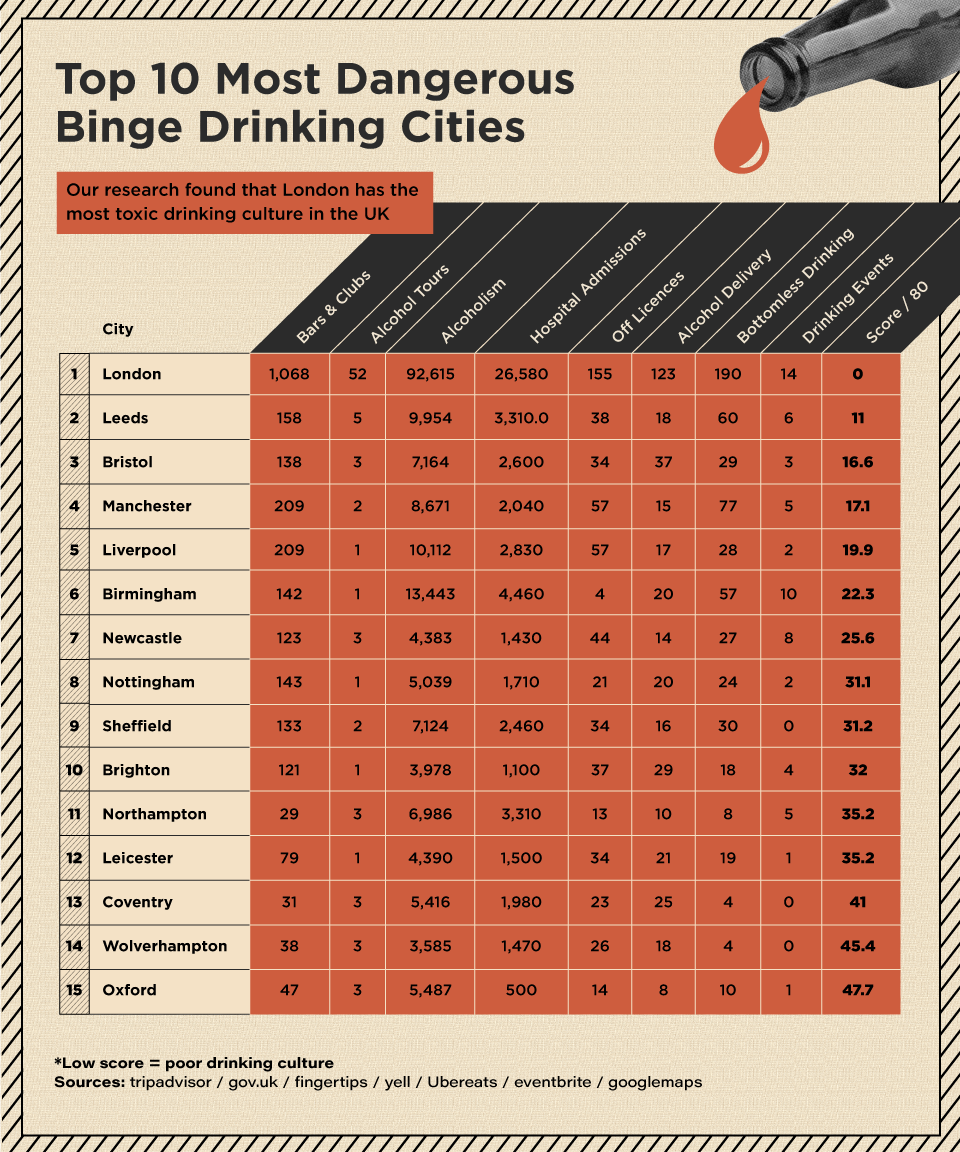
The study ranked each city in the UK out of a possible 80 and the team determined a rate of binge drinking by considering factors like: the number of clubs and bars, alcoholism rates, number of off-licences, alcohol tours and bottomless drinking locations.
Whilst we are fully aware that our bottomless brunch offerings are extensive compared to quite a few other UK cities our size, factors like alcoholism rates are far less likely to be known to the public.
Overall Leeds was given second place as the worst city for drinking culture in the UK, with a score of 11 out of 80.
This was based on a bottomless drinks score of 0.8/10, with 60 recorded locations and events offering free-flowing booze. 3,310 hospital admissions were documented between 2019-2020 and finally, there were 9,954 recorded alcohol dependency cases between 2018-2019.
Completing the top three was Bristol with a score of 16.6 out of a possible 80.
Taking the top spot however was the nation's capital. The research revealed that London had the most dangerous drinking culture in the UK with an overall score of 0 out of a possible 80.
As the most populated city in the country, London had a huge 26,580 alcohol-related hospital admissions recorded between 2019-2020, 190 bottomless drinking locations and 1,068 bars and nightclubs that all contributed to its toxic drinking culture.
The Top 10 Most Dangerous Cities for Drinking Culture
London - 0/80
Leeds - 11/80
Bristol - 16.6/80
Manchester - 17.1/80
Liverpool - 19.9/80
Birmingham - 22.3/80
Newcastle - 25.6/80
Nottingham - 31.1/80
Sheffield -31.2/80
Brighton -32/80
When compared against other countries in Europe, the UK was in the top three "at risk of dangerous drinking levels" with a score of 17.7/80.
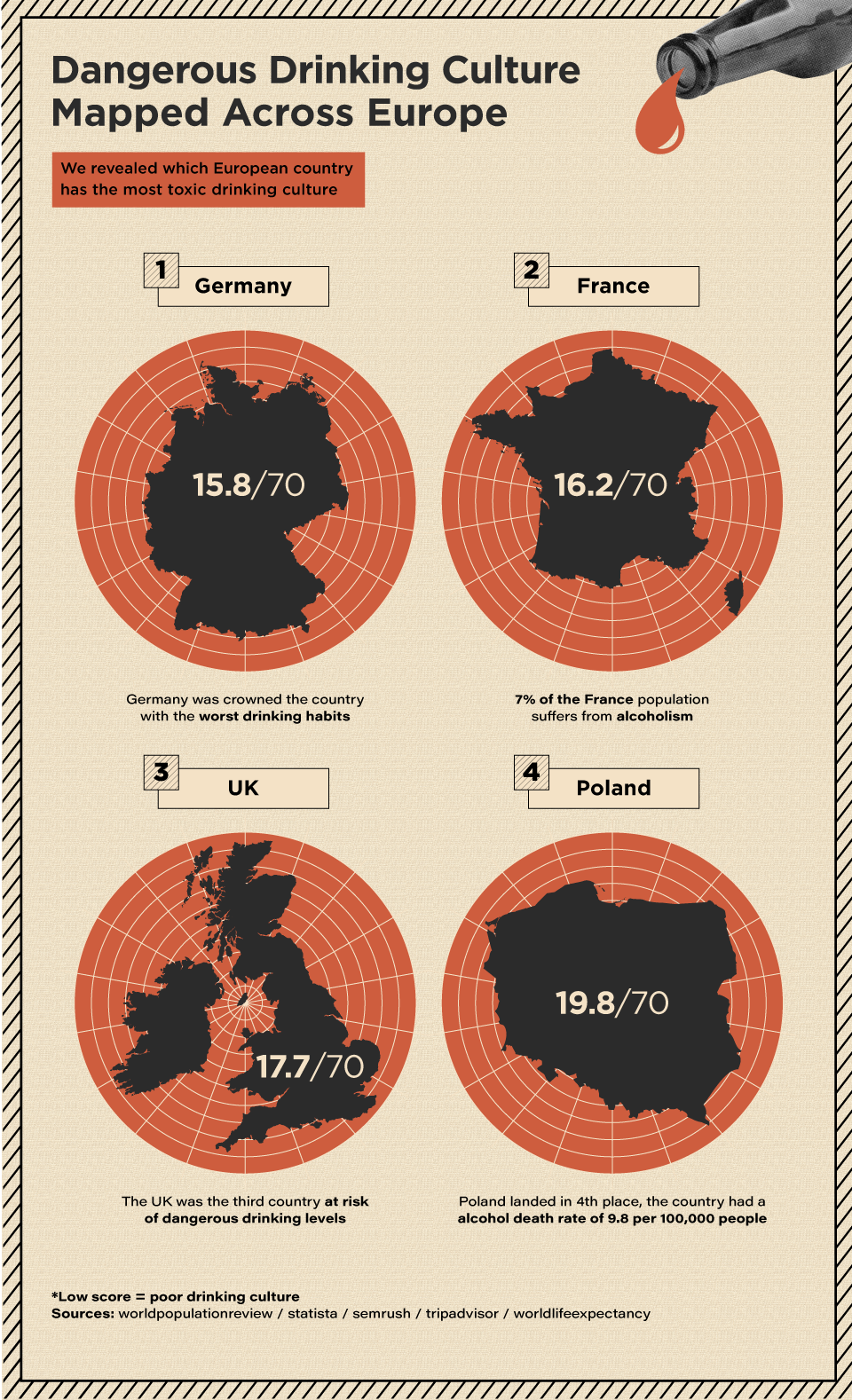
Martin Preston, Founder and Chief Executive at Delamere, shared his insight on why binge drinking rates are so high in the UK:
“The coronavirus pandemic caused an alarming spike in binge drinking levels across the UK, the isolation caused many people to turn to drinking high levels of alcohol at home.
Drinking at home, rather than at a pub, removes the need to wait between drinks and also the worry around spending too much money. For example, the average bottle of wine in the UK costs around £6, which is what some glasses of the same wine can cost in pubs and bars.
The endless hours spent at home during the lockdowns meant that 18.1% of people were drinking at a high-risk level. While one in four (22%) of adults had increased their alohol consumption, causing 10% of people to worry about the strain of alcohol on their health.
As well as this, our research found that the top three cities with the highest binge drinking problems had a large number of drinks delivery services, so the need to leave the house to buy alcohol was eliminated.
For more information about drinking culture in the UK and the results of this study, including tips for combatting binge drinking and alcohol dependancy, visit the Delamere website.
Feature Image- Fred Moon, Unsplash
All infographics were supplied by Delamere / JBH
News
Beloved late night Leeds cocktail bar The Maven announces permanent closure
"After years of late nights, strong cocktails, and incredible stories; The Maven will close its doors"
It's a sad day for the Leeds night life scene, as a beloved speakeasy bar has today announced that it will be closing its doors for good.
The Maven has been a firm favourite for many years with those looking to enjoy some experimental and expertly made cocktails.
Hidden behind an unassuming door at the top of Call Lane, it was a great spot to visit if you were looking for something that little bit special.
Announcing the news to their social media, The Maven said: "From the bottom of our hearts we thank you for being our guests over the years and promise that until then, we'll do our best to give you the best nights out on Call Lane."
The Government wants the public to help decide if children should be banned from social media
Emily Sergeant
Should there be a minimum age to access social media? Should children be banned all together? The Government is asking the public to help decide.
In case you missed it earlier last month, the Government announced a social media crackdown in a bid to keep children safe amid rapid technology changes – with Prime Minister Keir Starmer saying he was looking to take ‘immediate action’ to make the online world safer for young people.
The new measures announced included a crackdown on ‘vile’ illegal content created by AI, as well as ‘fast action’ to shut a legal loophole and force all AI chatbot providers to abide by illegal content duties in the Online Safety Act or face the consequences of breaking the law.
It was also hinted at that setting a minimum age limit for social media – which Australia famously became the first country to do so last year – could be on the cards, and also the restricting of other harmful features like infinite scrolling.
The Prime Minister insisted that ‘no platform gets a free pass’.
And now, it’s your turn – parents, guardians, and young people across the UK are being urged to shape the country’s next steps on children’s digital wellbeing, as the Government has today (2 March 2026) opened what is said to be the the world’s most ambitious consultation on social media.
The consultation will aim to gather insights from the public on how to keep children safe online across social media, AI chatbots, and gaming platforms.
The Government has launched a consultation on banning social media for children / Credit: Julian Christ (via Unsplash)
“Millions of parents across the country worry about what social media is doing to their children’s sleep, concentration, and mental health,” the Government said in a announcing the launch of the consultation.
Many parents and campaign groups have called for an outright ban on social media for under-16s, however, others – including leading children’s charities like UNICEF – have warned that a blanket ban could drive children towards ‘less regulated’ corners of the internet, or leave teenagers unprepared for when they do come online.
This is why the Government says its consultation ‘looks beyond a ban’ and instead covers a full range of options – from curfews, to the impact of chatbots and gaming.
It also asks the questions about how any new rules would work in practice, in a bid to make sure they are effective.
On the social media side of things, three main questions are being posed in the consultaion:
Should there be a minimum age for social media, and if so, what age would be right?
Should platforms be required to switch off addictive features that keep children hooked late into the night – like infinite scrolling and autoplay?
And whether mandatory overnight curfews would help children sleep better, and what age they should apply to?
Speaking on the launch of the consultation today, Education Secretary Bridget Phillipson said: “Technology is fundamentally changing childhood. Used well, it can open up new opportunities for learning, creativity and connection, but only if we get the balance right.
“That is why we want to hear directly from parents, teachers and young people about how we strike that balance and give children the very best childhood in a digital age.”
Technology Secretary Liz Kendall added: “We know parents everywhere are grappling with how much screen time their children should have, when they should give them a phone, what they are seeing online, and the impact all of this is having.
“This is why we’re asking children and parents to take part in this landmark consultation on how young people can thrive in an age of rapid technological change.”
The consultation is now live, and you can have your say here.