A new study has revealed the most ‘unreliable’ train operators in Britain, and it’s pretty grim reading for us northerners.
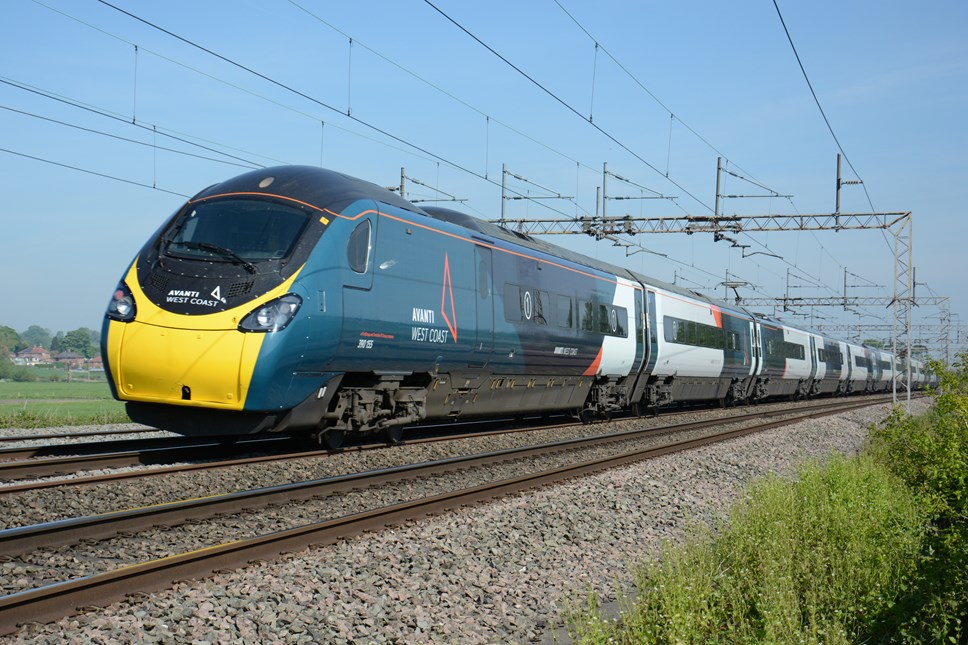
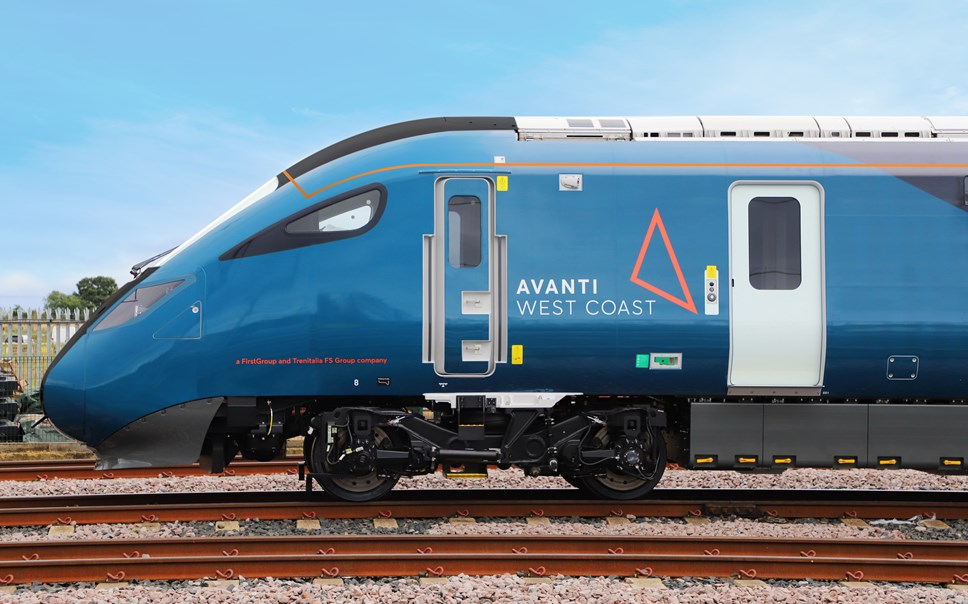
That’s because, in what likely doesn’t come as that much of a shock to the millions of people who regularly travel by train across the country, Avanti West Coast has claimed the not-so-coveted top spot on the list compiled by travel deal site Tripplo.
We all know that public transport can be tricky to rely on, right?
Image: Avanti
But, in a bid to find out which train companies are considered to be the most unreliable of them all, the Tripplo team analysed data from the Office of Rail and Road between January 2021 and September 2023 to find the percentage of train journeys that were either cancelled, or delayed by 15 minutes or more, from different rail operators.
Coming out on top was Avanti, as it was found to have a massive 15.36% of its trains cancelled or delayed on average between the analysed time frame, and that works out to just over one in six trains not arriving when expected.
Image: Avanti
These delays amounted to a staggering 1,289,833 minutes of delays, or in other words, passengers using Avanti services lost a total of 895 days of journey time because of delays.
The other North West representative on the list is TransPennine Express, which claimed seventh place within the top 10, and had an average of 9.29% of its services cancelled or delayed within the analysed timeframe.
Other train operators appearing in the top 10 include Hull Trains, London North East Railway (LNER), Cross Country Rail, and Grand Central Rail.
Image: Network Rail
Avanti being crowned Britain’s most unreliable comes after it was controversially awarded a long-term contract to operate the West Coast Main Line back in September of last year.
Before this, the company had previously been given until 1 April 2023 to continue running the route from London to Glasgow, but had been told that it needed to “drastically improve” its services if it was to stand any chance of having the contract extended further beyond that date, due to its chaotic past since taking over from Virgin in December 2019.
Despite many customers continuing to voice discontent with level of services during this time, the Department for Transport (DfT) still went on to award Avanti another six-month contract extension from the start of April onwards, after it deemed “significant improvements had been made since October”.
Following DfT reviews, once again, Avanti’s long-term contract to operate the line was subsequently awarded in mid-September 2023.
A brand-new Christmas film is hitting cinemas nationwide next month - and it’s a proper Leeds success story.
Jack Spring directed his first feature film at just 19 years old and has spent the last decade carving out a career in independent film, as well as co-founding Leeds-based production company Shush Films.
His first movie, Destination: Dewsbury, was shot just down the road in - you guessed it - Dewsbury. And after moving to Leeds from Grimsby, Jack became determined to build his business from the city, putting down roots and growing his production company here.
Image: Supplied
Now, after years of working on independent projects, Jack has taken his biggest leap yet with a brand-new Christmas film, Merry Christmas Aubrey Flint.
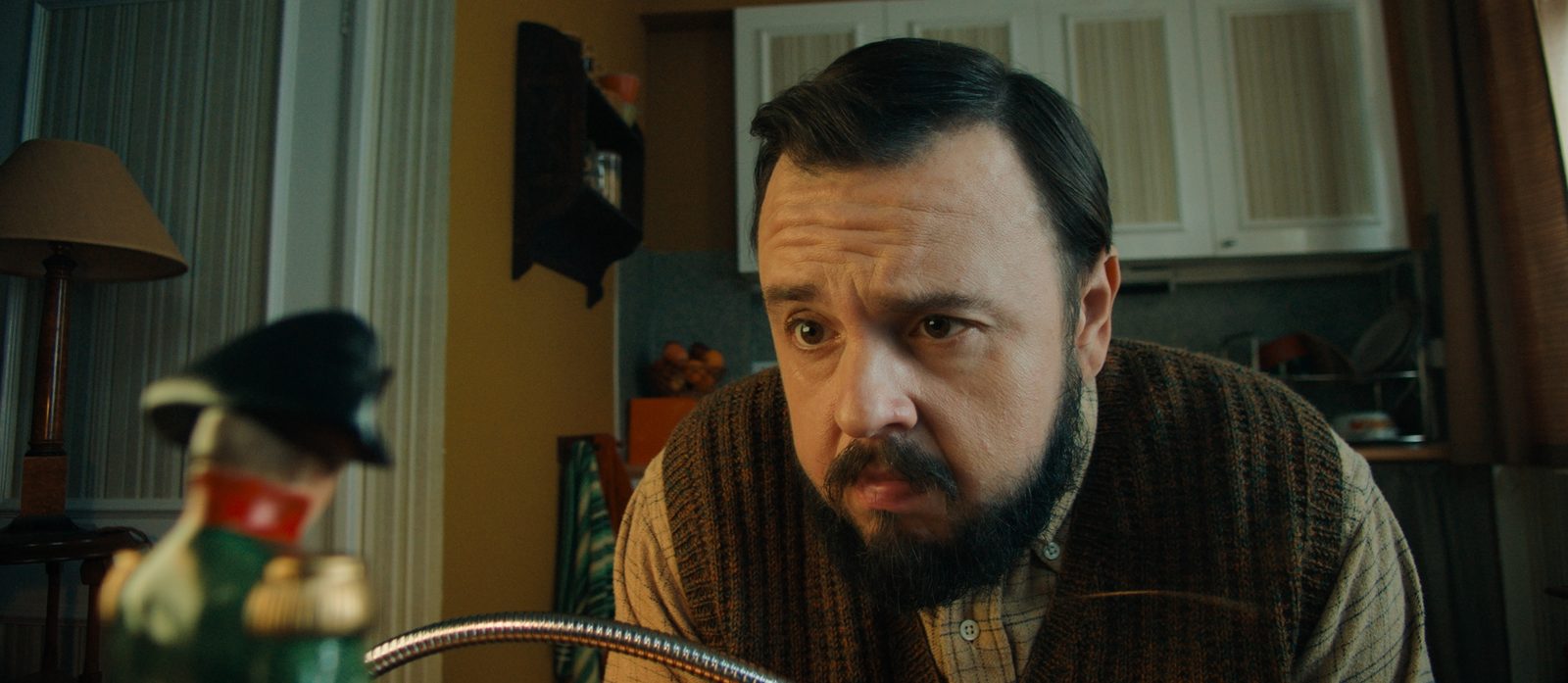
Set in Yorkshire, Merry Christmas Aubrey Flint follows Aubrey Flint, a reclusive model soldier painter with a lifelong hatred of Christmas, who is sentenced to community service at Willow Lodge - a retirement home on the brink of closure.
Roped into helping with a chaotic production of Charles Dickens' A Christmas Carol, Aubrey clashes with its interesting set of residents...
And the cast is about as star-studded as it gets, featuring Richard E. Grant, John Bradley, Celia Imrie, Adjoa Andoh, Sophia Di Martino, Adrian Rawlins and Kiell Smith-Bynoe.
Image: Supplied
The heartwarming festive comedy will hit cinemas nationwide on Friday 6 November - a huge milestone for a Leeds-based director and production company, taking a homegrown Yorkshire story to audiences across the country.
You just can't beat a proper wholesome British Christmas film, so you can best believe we'll be watching in the cinema, popcorn in hand.
The tallest building in Yorkshire has just opened in Leeds standing at 440ft tall and 45 storeys high
Clementine Hall
Leeds is now home to the tallest building in Yorkshire.
And you'll never believe what it is...it's student accommodation of course.
Created by Fusion Students, the new 633 bed student accommodation building on Merrion Way stands at 134 metres (440 feet) and 45 storeys high, making it Yorkshire’s tallest building, as well as the world’s tallest student only accommodation building.
Boasting jaw dropping, panoramic views of the city, these aren't just your average student flats.
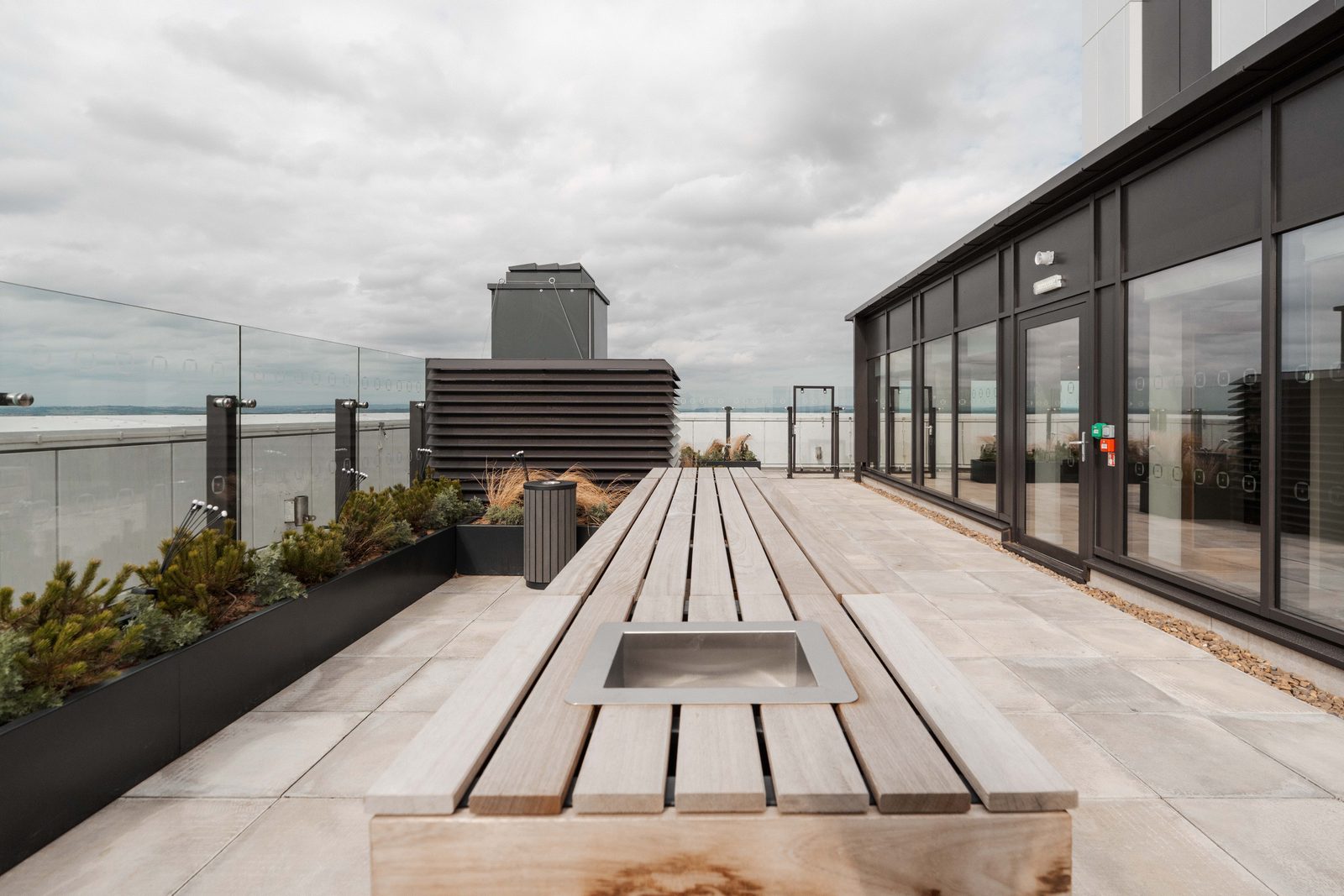
There's a roof terrace, private dining rooms, games room, gym, you name it - they've got it.
Image: Supplied
Lindsay Hamilton, general manager of Fusion Students Leeds said: “I honestly wish I could go back to being a student just so I could live here. It’s such an incredible space, with so much to offer residents.
“You can see how excited they are when they come for a tour, but what’s been really lovely is seeing how much they actually use and benefit from the space once they move in. It’s much more than just somewhere to live, it’s a space that really supports them.”
Image: Supplied
Speaking about the new opening, Laura Kurt, Managing Director for Fusion Students said: “Whilst we’re thrilled to have the accolades of tallest PBSA building and Yorkshire’s tallest building, what we’re really proud about is the incredible building we’ve been able to create for students coming to study in Leeds.
"This is a very special building, carefully designed to provide everything students need to get the most out of their journey through higher education. From industry leading amenities such as recording and photography studios, to wrap around care and support, to make settling into a new city, making friends and leaving with the best outcomes possible, that’s really what Fusion Students Leeds is all about."

 Emily Sergeant -
8th April 2024
Emily Sergeant -
8th April 2024