People in the UK have now donated over £100 million to help refugees fleeing Ukraine, it has been revealed.
The money has gone to the Disasters Emergency Committee (DEC), a government-backed fundraising appeal launched by a group of 15 UK charities.
These charities have clubbed together to provide aid to those fleeing their home country.
The impressive £100 million total – which has been accumulated over four days since the launch of the appeal – is said to include “generous” donations from the Queen, the Prince of Wales, and the Duke of Cambridge, as well as hundreds of thousands of members of the British public.
The amount raised is equivalent to more than £1 million per hour.
The DEC said the funds are already being used by charities in Ukraine and at its borders to give people food, water, medical assistance, protection and trauma care.
The DEC said the funds are already being used by charities in Ukraine and at its borders to give people food, water, medical assistance, protection and trauma care.
“This amazing show of support for people fleeing the conflict has meant that we have been able to start spending money straight away to help more people,” said Jo Kitterick, head of supporter engagement at the Catholic Agency for Overseas Development – which is one of the charities involved in the committee.
“I want to thank everyone who has donated to help us support them in their moment of greatest need,” she added.
Ms Kitterick said the charities part of the committee are currently setting up safe centres with beds, food and washing facilities inside Ukraine and on its borders.
Transport, information, psychological support, and child-friendly spaces are also being provided.
The Disasters Emergency Committee (DEC) was set up amid growing concern for civilian welfare following Russia’s invasion of Ukraine after it was estimated that up to four million people could flee Ukraine due to the conflict.
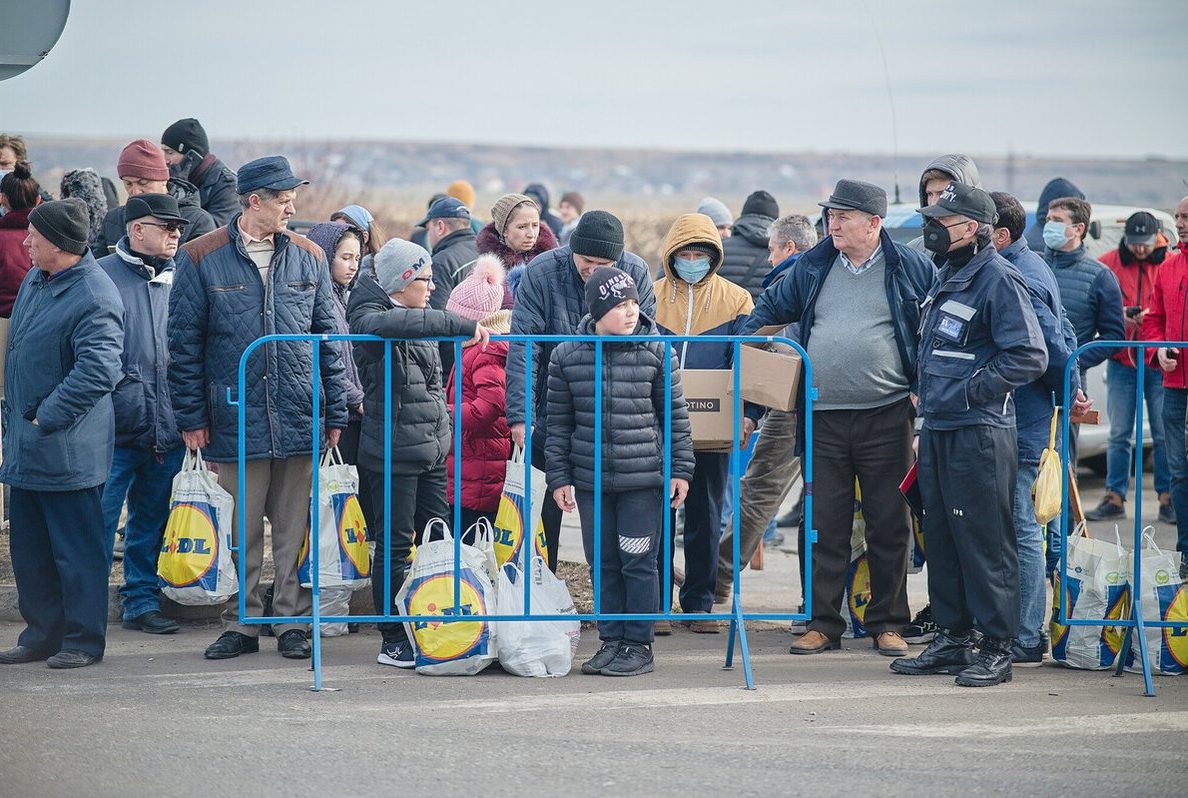
Brits have now donated more than £100 million to the DEC providing aid to refugees fleeing Ukraine / Credit: DEC (via Twitter)
The DEC said that people fleeing Ukraine are in desperate need of food, water, medical assistance and protection.
Many refugees are being forced into hiding to stay safe.
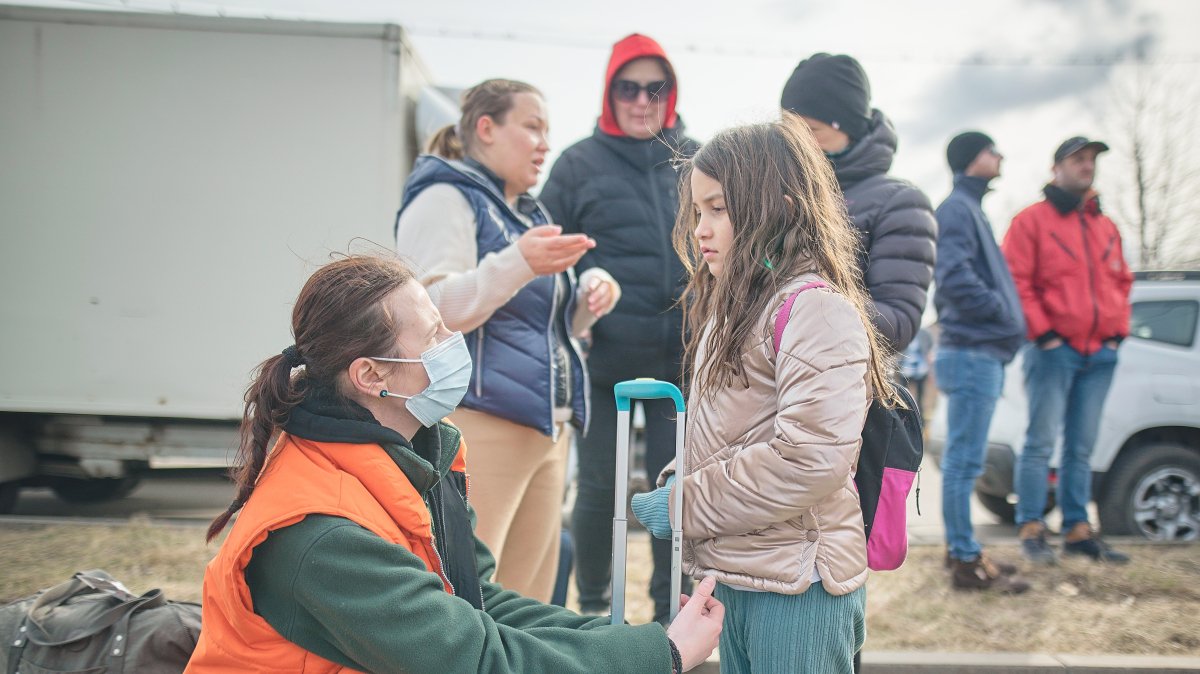
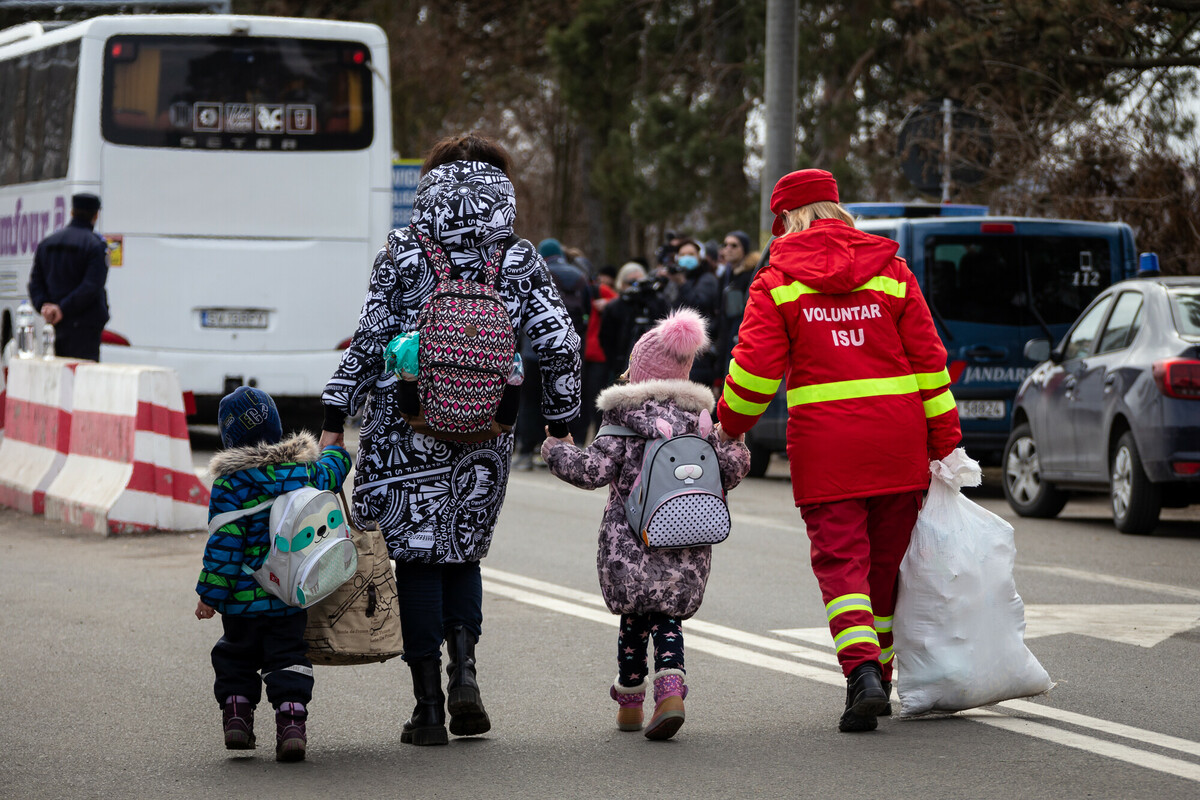
“The majority crossing the borders are women and children arriving with only what they can carry,” the DEC added.
Giving an insight into the current situation from the perspective of someone on the ground, Andrew Morley – chief executive of World Vision International, who has recently returned from Siret on the Romanian border – explained: “We support children in countless crises across the world, including those I have recently visited such as Syria and the DRC, but I have never seen a more heartbreaking situation.
“All the children I met were crossing the border in tears, with pain and fear in their eyes.
“They were lost and scared.
“They need the basics, simple, practical help [and while] our staff have been present in this area for decades and there on the ground to deliver it, we need financial support to do this.”
The DEC said that people fleeing Ukraine are in desperate need of food, water, medical assistance and protection / Credit: DEC (via Twitter)
The DEC’s 15 member charities are – Action Against Hunger, ActionAid UK, Age International, British Red Cross, CAFOD, CARE International UK, Christian Aid, Concern Worldwide UK, International Rescue Committee UK, Islamic Relief Worldwide, Oxfam GB, Plan International UK, Save the Children UK, Tearfund, and World Vision UK.
Appeals for public donations to the committee are currently being broadcast on various UK news channels, with every pound donated by the British public set to be matched by the government up to the value of £20 million.
The DEC has stressed that monetary donations are needed as opposed to specific items, which are often challenging to transport and not always relevant.
You can find more information and donate via the DEC here.
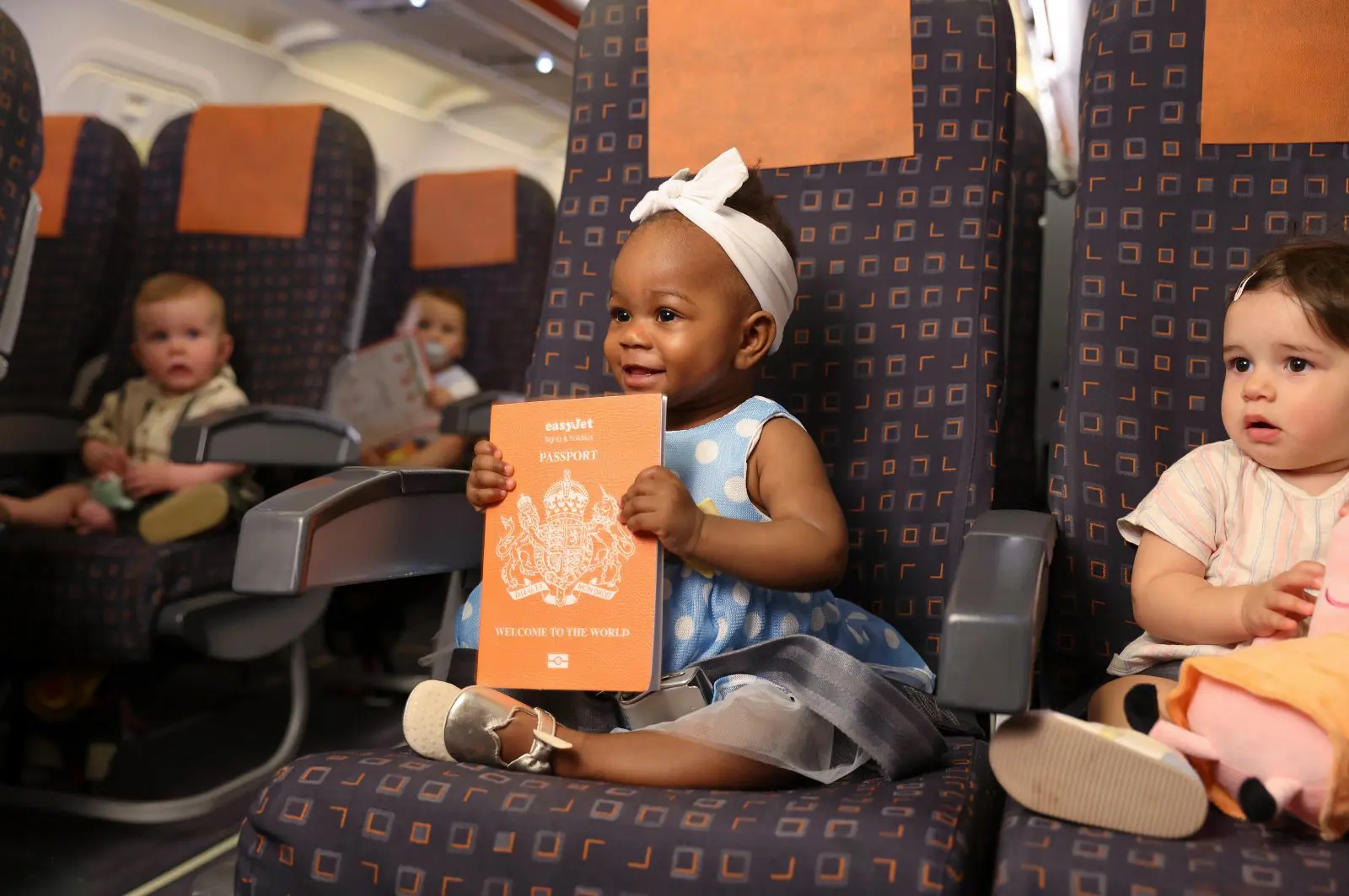
EasyJet has announced a new scheme where the airline will cover the cost of a baby’s first passport, allowing young families to take those memorable first holidays.
The company has announced that it will pay for a child’s passport (£66.50) when parents book an EasyJet holiday, making it a little easier to start those travel adventures sooner.
Research conducted by the airline and easyJet Holidays has found that 75% of parents agree the move would make a holiday with a baby feel a bit more affordable.
Their surveys also found that four in five parents believe a baby’s first holiday is a landmark family moment, and more than half called it one of their proudest parenting milestones.
But parents also said that they needed an average of four attempts to get an approved passport photo of their baby (have you tried making a newborn follow instructions…?).
easyJet holidays has reported – even this early in the year – a 10% increase in infants travelling this year compared to 2025.
And now, the thought of a holiday with your newborn is more tempting than ever, with the offer to get a free passport for your baby from easyJet.
To claim it, and save £66.50, you can use the code FIRSTPASSPORT until 26 November – find out more HERE.
easyJet Captain Kate West, said: “We carry millions of families across Europe every year, and we know that travelling with a baby brings a whole series of exciting firsts.
“We want to make travel as easy and accessible as possible for everyone, including young families, so they can enjoy all the experiences and memories that travel can bring.
“We hope that covering the cost of a baby’s first passport goes a small way towards making that first family adventure a little easier and gives our youngest travellers a warm welcome to the world.”
Stuart Wright, Customer Director at easyJet holidays, said: “Travel has a unique way of bringing families together, and a baby’s very first holiday is often one of those moments parents remember for years to come.
“By covering the cost of a baby’s first passport, we’re helping more families start making those memories that little bit sooner.”
Leeds City Council granted £1.6m to tackle rough sleeping by Christmas
Clementine Hall
A £1.6m grant has been given by the government to Leeds City Council to help tackle rough sleeping.
The funding has been allocated to Leeds City Council as part of the Government’s national Rough Sleeping Programme.
The overall target is to help rough sleepovers off the streets by Christmas through providing safe accommodation.
The council have said that voluntary organisations and charities will be able to help them reach this target.
The council report said: "This funding will be used for immediate interventions to ensure all those rough sleeping have an offer of accommodation by Christmas and support longer term sustainment of accommodation.
“The initial target is to provide a suitable offer of accommodation for everyone who is rough sleeping by Christmas 2026.
“Providing a path into supported accommodation and independent living is the key objective and sustaining this independent living with, where necessary, ongoing support to prevent any return to rough sleeping and homelessness.”
The government announcement spoke of the scheme: "The programme is intended to support people experiencing rough sleeping.
"People experiencing rough sleeping may have differing entitlements to housing and support depending on their individual circumstances, including their immigration status and eligibility for public funds."
The funding is intended to help provide immediate support for people currently sleeping on the streets, while also helping them access longer-term accommodation and the support needed to maintain independent living.
By working with local charities and voluntary organisations, the council hopes to ensure people are not only offered a place to stay but are also given the help they need to avoid returning to the streets.

 Georgina Pellant -
7th March 2022
Georgina Pellant -
7th March 2022