If you want to know the secret to long life, who better to ask than the oldest person in the UK?
The UK's oldest man has revealed his long life secret this week, and it's one we can all get on board with. Not yoga, not meditation, no, according to John Tinniswood the real key to a long life is having a good chippy tea on a Friday night.
Mr Tinniswood is celebrating his 109th birthday this week and has just received his ninth telegraph from Her Majesty the Queen. He's joked he could “get a couple hundred quid” for his letter on eBay, which we expect would pay for quite a few more chippy teas. Not a bad hustle.
Speaking to ITV Granadaa, he said that his secret to living a long time was a Friday chippy tea and not overdoing it.
Born in Liverpool in 1912, he now lives in Southport in a retirement home and is rather nonchalant about his significant age. However, to the rest of us it's quite a feat.
“Always try never to exceed what you can normally do,” John told ITV Granada.
“Otherwise you’re going to injure yourself either physically or mentally, so always stay within your limits of what you can do.”
The great granddad has seen so much in his life, living through the sinking of the Titanic, two world wars and was already in his fifties when The Beatles launched to fame with their first hit single, Love Me Do
John’s carers also spoke to ITV and praised his wit, with one affectionately adding: “He doesn’t want a fuss [and] in previous years he’s said being in his hundreds is no different to being in his 90s or 80s.”
“He’s a pleasure,” she concluded.
Asked what advice he would give to anyone looking to live a life as long as his, John said: “Well, that would be rather impudent in a way.
"Each do as he wants.”
Feature image - ITV Granada.
Trending
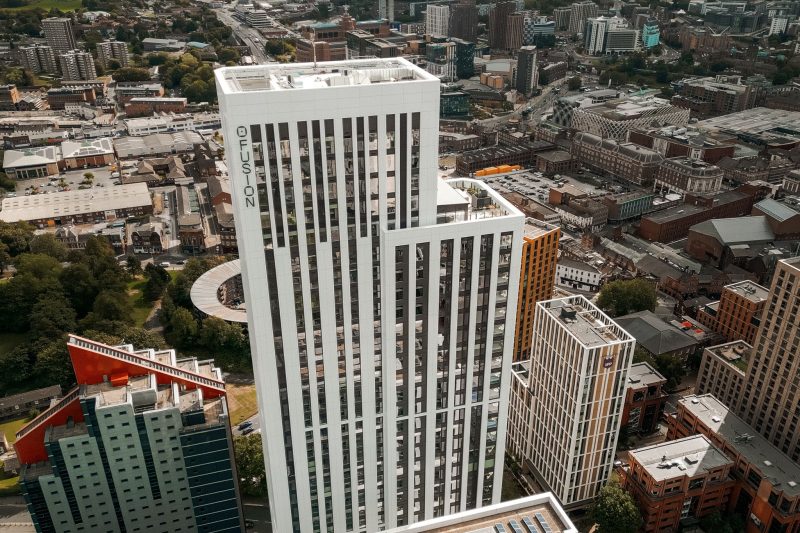
Leeds has been named one of UK’s ‘loneliest’ cities with high percentage of people living alone
According to new research, Leeds has been named one of the ‘loneliest’ in the UK due to the number of single occupants.
Living alone used to be seen as somewhat of a short-term ‘phase’, often between living in family homes or house shares, but today it’s a completely different story, as solo living is fast becoming a defining feature of urban Britain.
From high-rise studio flats, to compact commuter apartments, single-occupancy living is reshaping the character of many UK cities.
While for some, living alone simply represents independence and flexibility, for others it’s more a case of necessity – with wider demographic data apparently showing single-occupancy linked to student populations, delayed family formation, career mobility, and rising house prices that make shared living less practical.
Image - Ben Elliot ( via Unsplash )
But, with all things considered then, which towns and cities in the UK have the most solo occupants? The ‘loneliest’ cities, if you will.
A new study by Tarotoo set out to identify where solo living is most concentrated across the UK, with researchers analysing 58 cities, examining the number of studio and one-bedroom homes listed for sale or rent per 10,000 residents using Rightmove data – and it was Salford over in Manchester that came out on top.
Salford topped the ranking with a striking 158.08 single-occupancy homes per 10,000 people, which is more than double the figure of the city in second place, and also vastly ahead of the national average.
Leeds came in fifth place with a score of 50.62, standing out as one of the largest cities in the top tier.
Other northern cities in the top 20 include Lancaster at fourth place, and outside the top 20 is where you’ll find other northern cities like Liverpool, Chester, York, and Sheffield.
At the opposite end of the ranking, Newport records just 2.59 single-occupancy homes per 10,000 people, which is the lowest figure in the study, and it’s then followed by Glasgow (3.29), Swansea (3.78), Dundee (4.33), and Stoke-on-Trent (4.51).
The Government wants the public to help decide if children should be banned from social media
Emily Sergeant
Should there be a minimum age to access social media? Should children be banned all together? The Government is asking the public to help decide.
In case you missed it earlier last month, the Government announced a social media crackdown in a bid to keep children safe amid rapid technology changes – with Prime Minister Keir Starmer saying he was looking to take ‘immediate action’ to make the online world safer for young people.
The new measures announced included a crackdown on ‘vile’ illegal content created by AI, as well as ‘fast action’ to shut a legal loophole and force all AI chatbot providers to abide by illegal content duties in the Online Safety Act or face the consequences of breaking the law.
It was also hinted at that setting a minimum age limit for social media – which Australia famously became the first country to do so last year – could be on the cards, and also the restricting of other harmful features like infinite scrolling.
The Prime Minister insisted that ‘no platform gets a free pass’.
And now, it’s your turn – parents, guardians, and young people across the UK are being urged to shape the country’s next steps on children’s digital wellbeing, as the Government has today (2 March 2026) opened what is said to be the the world’s most ambitious consultation on social media.
The consultation will aim to gather insights from the public on how to keep children safe online across social media, AI chatbots, and gaming platforms.
The Government has launched a consultation on banning social media for children / Credit: Julian Christ (via Unsplash)
“Millions of parents across the country worry about what social media is doing to their children’s sleep, concentration, and mental health,” the Government said in a announcing the launch of the consultation.
Many parents and campaign groups have called for an outright ban on social media for under-16s, however, others – including leading children’s charities like UNICEF – have warned that a blanket ban could drive children towards ‘less regulated’ corners of the internet, or leave teenagers unprepared for when they do come online.
This is why the Government says its consultation ‘looks beyond a ban’ and instead covers a full range of options – from curfews, to the impact of chatbots and gaming.
It also asks the questions about how any new rules would work in practice, in a bid to make sure they are effective.
On the social media side of things, three main questions are being posed in the consultaion:
Should there be a minimum age for social media, and if so, what age would be right?
Should platforms be required to switch off addictive features that keep children hooked late into the night – like infinite scrolling and autoplay?
And whether mandatory overnight curfews would help children sleep better, and what age they should apply to?
Speaking on the launch of the consultation today, Education Secretary Bridget Phillipson said: “Technology is fundamentally changing childhood. Used well, it can open up new opportunities for learning, creativity and connection, but only if we get the balance right.
“That is why we want to hear directly from parents, teachers and young people about how we strike that balance and give children the very best childhood in a digital age.”
Technology Secretary Liz Kendall added: “We know parents everywhere are grappling with how much screen time their children should have, when they should give them a phone, what they are seeing online, and the impact all of this is having.
“This is why we’re asking children and parents to take part in this landmark consultation on how young people can thrive in an age of rapid technological change.”
The consultation is now live, and you can have your say here.