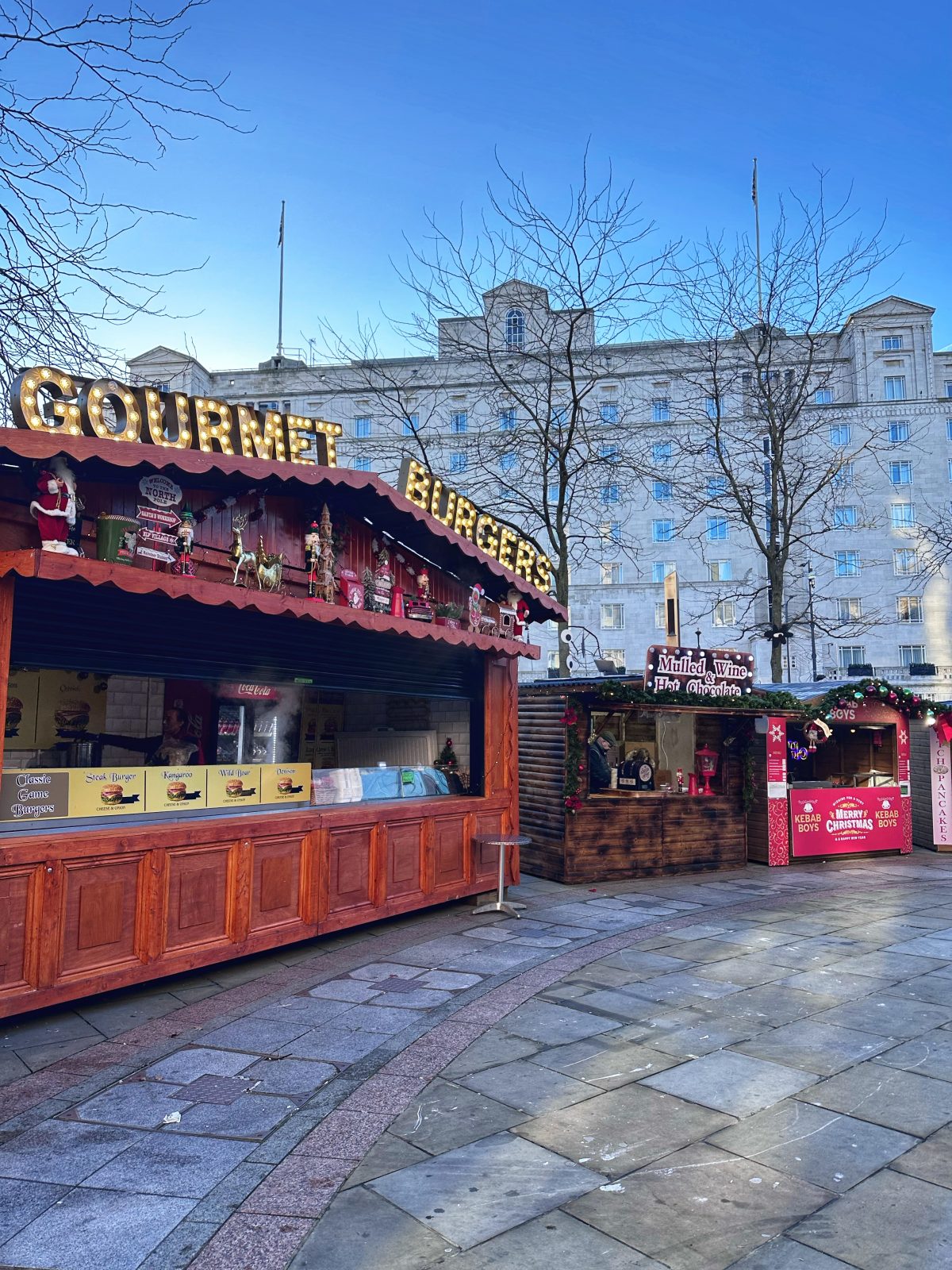
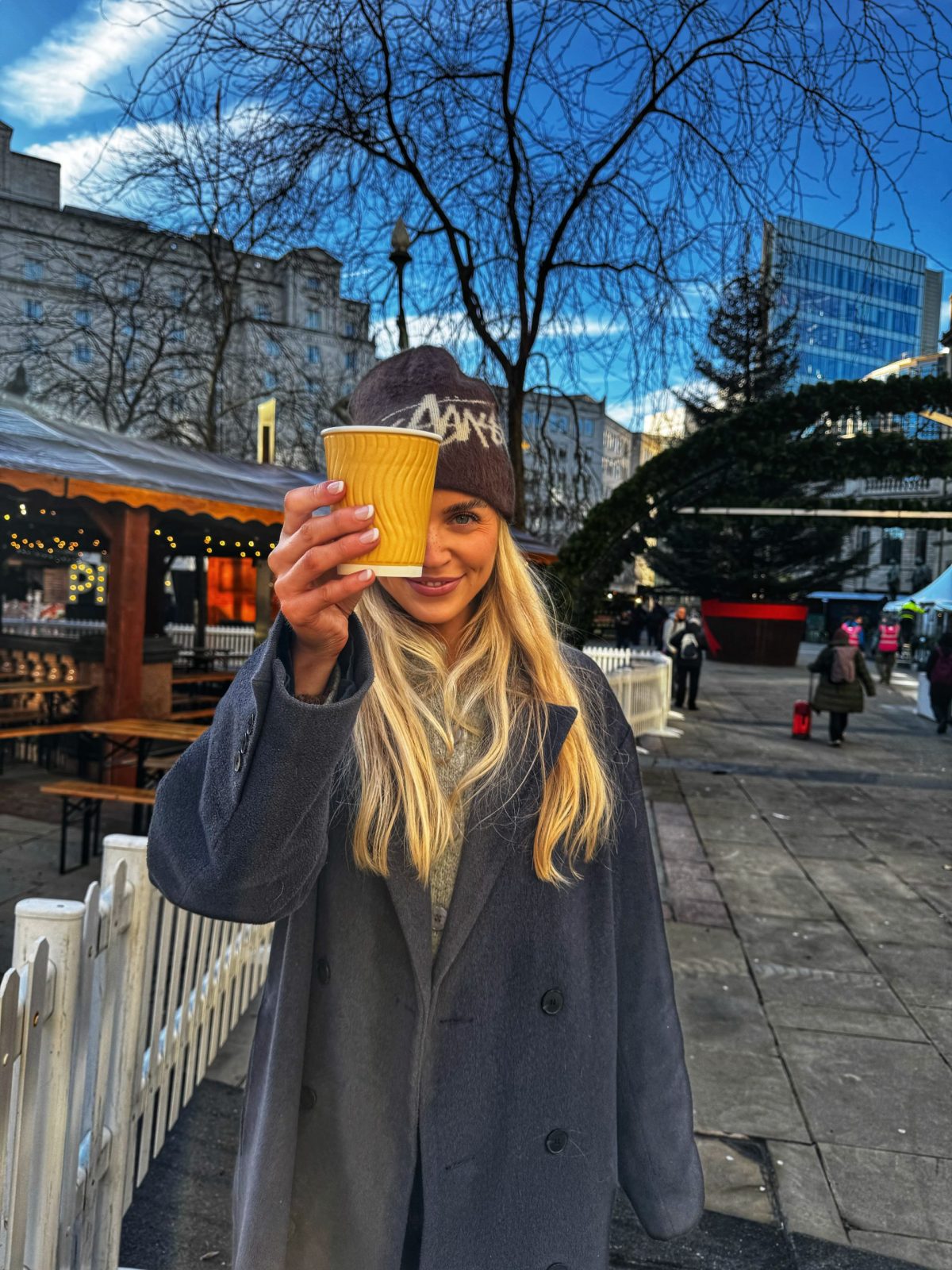
A hunt for a new operator of the Leeds Christmas Market on City Square has begun.
Cast your mind back to 2023 and the welcome return of Leeds' Christmas Markets on City Square.
The operators at that point were awarded a three-year contract to produce the market until 2025.
Now that that's been and gone, if you can believe, a search for a new operator to take on the next three-year period has begun.
The market on City Square which is most famous for its food offerings and unique gifts is a completely different entity to the council-run 'Ice Cube at Christmas' attraction on Millennium Square and Cookridge Street.

Images: The Hoot Leeds
A council report said: “The Christmas Market is an important footfall driver for the city centre at a key time of year for retail and hospitality businesses. The additional footfall and associated spend supports the city centre economy.
“The continuation of the Leeds Christmas Market will allow the Council to build on the previous three years, where the market has been re-established in the city centre.
"This is an opportunity to build on the overall quality of the Christmas Market and continue to promote Leeds as an attractive visitor destination at Christmas time, encouraging day trips as well as driving overnight stays.”
The new contract period would run until 2029 with the option to extend for one year beyond that.
We'll keep you updated as and when we know more, and we do profusely apologise for mentioning the C word in January.
It's fantastic news for our city as Leeds has been crowned one of the best cities in the UK for foodies.
It's news that we've been pretty certain of for some time, but it's still nice to be recognised isn't it?
It comes from a new study carried out by credit card brand Aqua who analysed 30 major UK cities across a range of dining and social media metrics, including cuisine variety, restaurant availability, meal affordability, Michelin recognition and TikTok hashtag volumes.
Coming in at number on was, of course, London.
Images: The Hoot Leeds
With 47 cuisines, 22.5 restaurants per 10,000 residents and 81 Michelin-starred establishments, the capital unsurprisingly continues to dominate the UK’s culinary scene.
But in at number two was our glorious city of Leeds, supported by the highest restaurant density in the study, with 38.5 establishments per 10,000 people, and strong affordability compared with cities in the south.
Images: The Hoot Leeds
We will absolutely take that.
Other northern spots to feature on the list include Sheffield and Bradford in sixth and eighth place.
The top ten UK cities for foodies are:
London
Leeds
Nottingham
Edinburgh
Wolverhampton / Leicester
Sheffield
Birmingham / Glasgow
Bradford / Swansea
Preston
Milton Keynes
Here in Leeds we've got so many fabulous food spots, with new openings cropping up every month it's hard to keep track.
From the multi award-winning Bavette Bistro in Horsforth to the highly acclaimed indie Bundobust that started off in Leeds - you certainly won't find yourself hungry or at a loss for somewhere to eat here.
From Hope to Hardship: Small Island Brings Windrush Stories to Leeds Playhouse
Declan Kelly
An emotional journey of dreams and displacement.
Leeds Playhouse’s latest production brings a vital and often underrepresented chapter of British history powerfully to the stage.
Small Island, directed by Olivier Award-winner Matthew Xia, serves as a compelling microcosm of the migrant experience during the Windrush generation, placing memory, dreams, empire, and entitlement firmly at its core.
This bold and deeply affecting staging expands Andrea Levy’s celebrated novel into a rich, immersive theatrical experience that feels both epic in scope and strikingly intimate. Moving fluidly between Jamaica and postwar London, the production captures the dislocation, resilience, and quiet courage of those who arrived with hope, only to be met with hostility and exclusion.
Image: Supplied
Hortense and Gilbert’s pursuit of dignity and opportunity is portrayed with warmth and nuance, while Queenie’s compassion and Bernard’s unease reflect a nation grappling with profound social change. The play weaves together multiple narratives shaped by the Windrush era, each driven by a desire for a better life, and each revealing the emotional and physical toll of that journey.
What sets this production apart is its remarkable balance between sweeping historical scope and emotional intimacy. The lilting rhythms of calypso infuse the piece with moments of joy and nostalgia, while stark staging and visual contrasts underscore the bleak realities of 1940s Britain. The parallel lives of the characters highlight the shared struggles faced by many Caribbean migrants of the time.
Image: Supplied
One of the most striking elements is the rotating house in Act Two, which becomes a powerful visual metaphor for division and displacement, physically embodying the discomfort and fractured realities of the characters’ lives. Meanwhile, the use of projection reminiscent of archival broadcast footage transports the audience across continents, deepening the sense of time, place, and lived experience.
At times, the play is harrowing, bringing the struggles of the Windrush generation into sharp focus and leaving the audience in disbelief at the treatment endured. There are moments so charged that you feel compelled to respond to challenge, to question, to intervene. Yet amid the hardship, there remains a strong sense of warmth and the enduring promise of hope. Bronte Barbe delivers a compelling performance as Queenie, portraying her compassion with sincerity and strength.
Image: Supplied
However, the standout performance comes from Anna Crichlow as Hortense, offering a powerhouse portrayal that beautifully captures a character driven by ambition, resilience, and deep self-respect.
For those who may have only briefly encountered the Windrush generation in education, this production feels especially vital. It not only illuminates the trials and tribulations faced by a generation but also resonates with ongoing conversations about migration and belonging today.
There is a force in its vision that allows the audience to feel both the physical and emotional realities of the story. Though it does not shy away from bleakness, it ultimately offers connection, reflection, and a reminder of the enduring human capacity for hope.
Image: Supplied
Overall, Small Island is a captivating and emotionally rich production from start to finish. The cast skillfully balances moments of humour with deeply moving scenes, creating a theatrical experience that lingers long after the final curtain. The stories it tells of resilience, injustice, and aspiration feel more relevant than ever.
Theatre continues to act as a powerful lens through which we can better understand both our history and our present, and this production stands as a compelling reminder of why these stories must continue to be told.
Running at Leeds Playhouse, Quarry Theatre until 28 March and you can get your tickets here.