A bird's-eye view of Leeds, Sheffield, and Yorkshire
X
UK News
Who was the infamous Wakefield ‘shark puncher’ Paul Sykes?
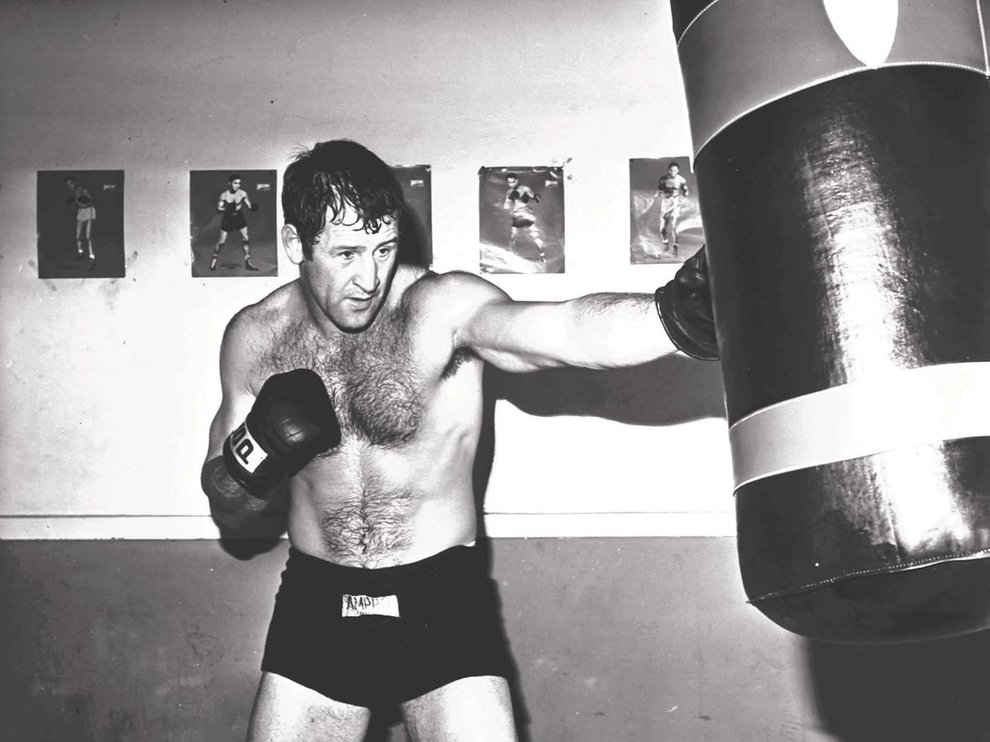
A championship-caliber weight lifter, heavyweight boxer, accomplished author and highly educated college graduate (accomplished in prison), Sykes was not a man to be messed with.
He's one of Britain's most notorious criminals and has been described as more fearful than the Krays, but how much do you really know about Yorkshire's infamous hard man?
It's been said before that Paul Sykes, or 'Sykesky', was so tough that even Britain's most notorious prisoner Charles Bronson didn't want to fight him.
Known for single-handedly winning fights with big groups of men and - as a viral video revealed - punching sharks, Sykes developed a fearsome local reputation in his hometown and beyond.
He first took up boxing at the age of 7 at the Robin Hood and Thorpe Amateur Boxing Club, impressing tutors with his advanced skill. This combined with his size and ability made him a formidable opponent, even as a young child.
However, he also began drinking around this age - setting himself on the wrong track and doing his first prison stint at the tender age of 17.
https://www.youtube.com/watch?v=1fjC3zQu9ds
A championship-caliber weight lifter, heavyweight boxer, accomplished author and highly educated college graduate (accomplished in prison), Sykes was not a man to be messed with.
Still, many of his achievements were marred by his getting into trouble and he spent the majority of his final years in 18 different UK prisons.
Sykes' adult life regularly featured alcohol abuse, petty robberies and violent crimes, however during a brief period of rehabilitation between 1978 and 1980 he fought ten bouts as a professional boxer - ending the career of American boxer David Wilson after just one fight.
As one of Britain's most notorious criminals he's featured in many books on UK prisoners, including the 2018 prison expose Get Behind Your Door, in which Sykes is referred to as a man that punched like "greased lightning".
Throughout the book, author Patsy Manning tells stories of Sykes' life on the inside and outside including a tale of one night they visited London nightclub Rebecca's together.
He writes: “The four of them rushed towards Paul, all throwing punches and Paul started to throw punches of his own dead fast.
“They had to be because he was up against four geezers who could have a bit of a fight under normal circumstances.
“Any ordinary man would have had no chance on his own, but Paul was no ordinary man.
“His punches were like greased lightning."
Apparently, it wasn't the first time he'd taken on multiple men at once and emerged victorious.
Image taken from book Sykes: Unfinished Agony by Jamie Boyle
According to another book The Guv'nor, this time by author Lenny McLean, Sykes also took on four bouncers in his hometown of Wakefield and caused their British title fight to be canceled.
He wrote: “A week before the off, Sykes went into a club in Wakefield where he lives, got well p***** and had a ruck with four doormen.
“He did them all but one of them got lucky and put a cut above his eye that took eight stitches to pull together.”
For years, Sykes was classed as one of the country's most dangerous prisonerss and was frequently moved for committing violent acts against both prison and police officers.
Released from HMP Hull in 1990, he went on to work as a debt collector for Wakefield businessman Dennis Flint, often travelling to Spain for work.
It was around this time that producer Roger Greenwood followed him around Yorkshire as he filmed the documentaryPaul Sykes: At Large.
In one popular clip that often does the rounds online, Sykes says Wakefield is "the best little city on earth" and talks pretty casually about punching sharks as if there's nothing to it.
"How do I know? I've been everywhere else. I'm here now, right on the family patch," he snarls to the camera.
"I'm the only man in history of mankind that's swum across the straight of Johor, to avoid the police."
"Nobody's ever done it before, not because of the currents, nothing like that; it's sharks. Not shark-infested but none of the locals go paddling or swimming."
"Sharks'll have a look at me and think yeah I know how to do them, you punch them right in the f***ing earhole and they swim off."
Sykes passed away in 2007 from liver cirrhosis and pneumonia aged just 60 years old after a impressive criminal career.
If you'd like to learn more about him, you can watch the full documentary on Youtube here.
UK News
Here’s the full list of 125 ‘everyday essentials’ you’ll soon be able to get cheaper in the UK
Crisps, biscuits, avocado, and chewing gum are just a few of the items that are soon set to be available for cheaper in the UK.
First announced by Chancellor Rachel Reeves last week, the Government has now published a list of more than 100 of key items that are set to see targeted cuts to tariffs, alongside uprating mileage rates for the first time in 15 years and reducing VAT.
It covers a wide range of ‘everyday essentials’ – from fresh fruit and vegetables, oil and baked goods, to chocolate, sauces, and soft drinks.
“The war in Iran isn’t our war, but one we will need to respond to,” Chancellor Reeves commented.
“My priority is keeping prices down for households and businesses. That’s why we’re freezing fuel duty, increasing the mileage rate for the first time in 15 years and slashed VAT temporarily this summer to help reduce the cost of days out.”
Crisps and fresh fruit are two of the items set to see targeted tariff cuts / Credit: Esperanza Doronila | Jonas Kakaroto (via Unsplash)
Full list of 125 ‘everyday essentials’
Garlic
Gherkins
Aubergines
Sweet peppers
Other peppers (capsicum/pimenta)
Olives (fresh/chilled)
Olives (for oil production)
Olives (frozen)
Plantains (fresh and dried)
Bananas (fresh and dried)
Limes
Citrus fruits (various)
Avocados
Fresh figs
Dried figs
Other fresh fruits
Frozen fruits
Dried apricots
Dried apples
Dried peaches/nectarines
Dried pears
Dried papaya
Mixed dried fruit
Mixed nuts
Mixed fruit and nuts
Green tea
Buckwheat
Fonio
Quinoa
Olive oil (extra virgin)
Olive oil (virgin)
Olive oil (other)
Margarine
Mixed fats and oils
Vegetable oils
Chewing gum
Liquorice products
White chocolate
Marzipan and pastes
Throat pastilles
Sugar confectionery
Boiled sweets
Toffees and caramels
Sugar tablets
Cocoa paste
Cocoa powder
Chocolate (bulk and retail)
Chocolate bars
Chocolate with fruit, nuts or cereal
Chocolate spreads
Chocolate drink preparations
Couscous
Crispbread
Gingerbread
Biscuits
Waffles and wafers
Rusks
Toasted bread products
Bread
Pizzas and quiches
Pickled peppers
Prepared vegetables
Crisps
Processed potatoes
Baked beans
Preserved beans
Preserved vegetables
Preserved tropical fruit
Candied fruit
Jams and marmalades
Preserved citrus fruits
Mixed preserved fruit and nuts
Tomato ketchup
Tomato sauces
Soups and broths
Non-alcoholic beverages
Plant-based drinks
The Government says these cuts support the action it has already taken to reduce the cost of living – including freezing prescription charges, protecting motorists from fuel duty increases, and raising the minimum wage.
The list of everyday essentials set to see targeted cuts to tariffs comes after the Great British Summer Savings initiative was announced last week.
This means that, from 25 June through to 1 September 2026, a temporary reduced rate of VAT – down from 20% to 5% – will be introduced on children’s meals in restaurants and family leisure activities over the summer period.
Met Office reports on how long the heatwave will last as yesterday was hottest May day on record
Emily Sergeant
The Met Office has given us an idea of how long this current heatwave may last.
It comes after a new UK temperature record was broken yesterday, as it reached 34.8°C at the weather station in Kew Gardens – with the figure being both the highest daily maximum temperature recorded in meteorological spring (March, April, and May), as well as the highest temperature in May all together.
The previous record of 32.8°C was reached in 1922 and 1944.
If confirmed and validated, and May sees a new official daily temperature record, it would mean that more than half of the monthly record highs – seven out of 12 – have been set since 2003.
But what exactly is considered to be a heatwave? Well, heatwave conditions in the UK are met when a location records a period of at least three consecutive days with temperature values meeting or exceeding the heatwave temperature threshold for that location.
Looking ahead to the rest of the week, and providing the public with an indication of how long these temperatures could last, Met Office weather forecasters say the start of the week will see the heatwave continue for much of England and Wales with temperatures ‘well above average’, and today (Tuesday 26) expected to be another ‘very hot day’ with a rapid rise in temperatures through the morning.
The heat will then continue through the week, with highs of 31°C forecast for Wednesday, 30°C on Thursday, 27°C on Friday, and 28°C on Saturday.
“We’ve now provisionally broken the spring and May temperature record,” commented Met Office Chief Operational Meteorologist, Dan Suri.
“Meteorologically, what we’ve seen is the influence of warmth building under an area of high pressure near the UK allowing exceptional heat to build allowing maximum and minimum temperatures to reach levels not previously reported at this time of year.
“Further heat is in the forecast for much of England and Wales, with similar temperatures forecast for Tuesday.
“High pressure is forecast to gradually lose its influence later in the week, though maximum temperatures will still remain high and in the low 30°Cs for some mid-week and high 20°Cs late this week.”