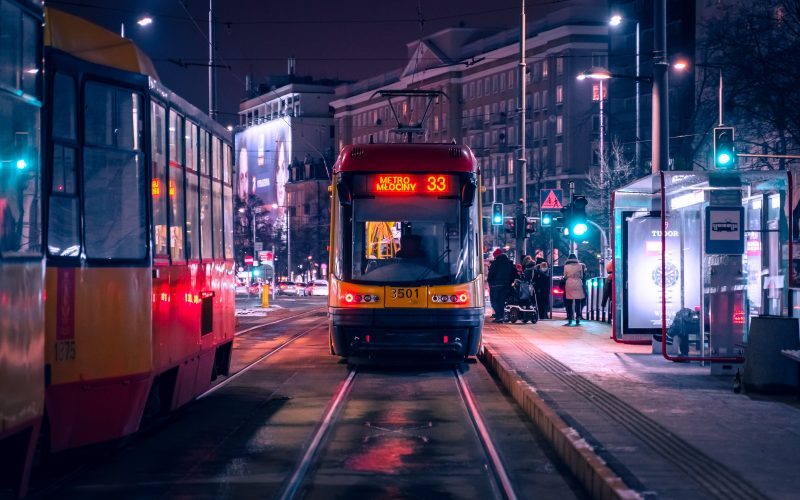
Leeds is set to get a new city-wide tram network as part of a 'transformational' mass transit plan for the region.
Incorporating historic tramlines uncovered by builders at the Corn Exchange last year, the new network will utilise some of the city's long-lost routes as well as creating some brand new ones.
According to reports, the inner-city network is being brought in instead of the long-promised High Speed 2 (HS2) railway link from Leeds to London, which was scrapped by government ministers at the end of last year.
Councillors have now been told that Leeds will now receive an inner-city tram network by way of 'compensation'.
The news follows the announcement that the Manchester to Leeds HS2 leg has officially been scrapped by government ministers, with some hoping that the new tram line will serve as an appeasement to locals.
The idea was first made public by The Mail on Sunday last November, with a government source telling the paper at the time: "We are considering improvements to bring Leeds into line with other cities.”
Back in 2019, Prime Minister Boris Johnson also said it was “madness that Leeds should be the largest city in Europe with no metro rail system”.
Now, it appears that the city is to be 'levelled up' as promised after all.
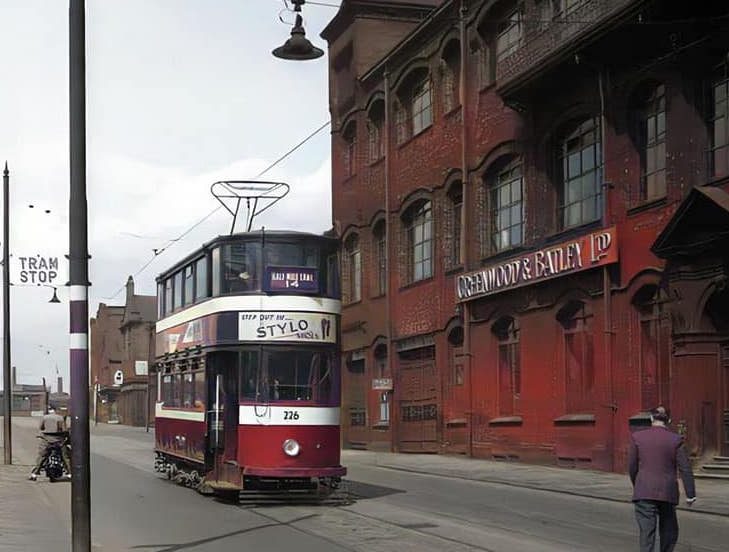
The old tram network in Leeds ran until 1959. / Image: Patrick Howley
Leeds of course did have a transit system that ran across the city from 1871 – 1959, using a combination of horse-drawn, steam and electric trams over time.
However, due to the trams being deemed unaffordable by the City Council following the Second World War, they ultimately closed – and have been missed in the city ever since.
At present, Leeds is the largest city in Western Europe without a built-in transport system, but if the Birmingham – Leeds line of HS2 is scrapped and new tram plans are approved by ministers, this could become a statistic of the past.
This is not the first time Leeds has been promised a new tram network, however. Plans for a network across the city centre have been going on for quite some time.
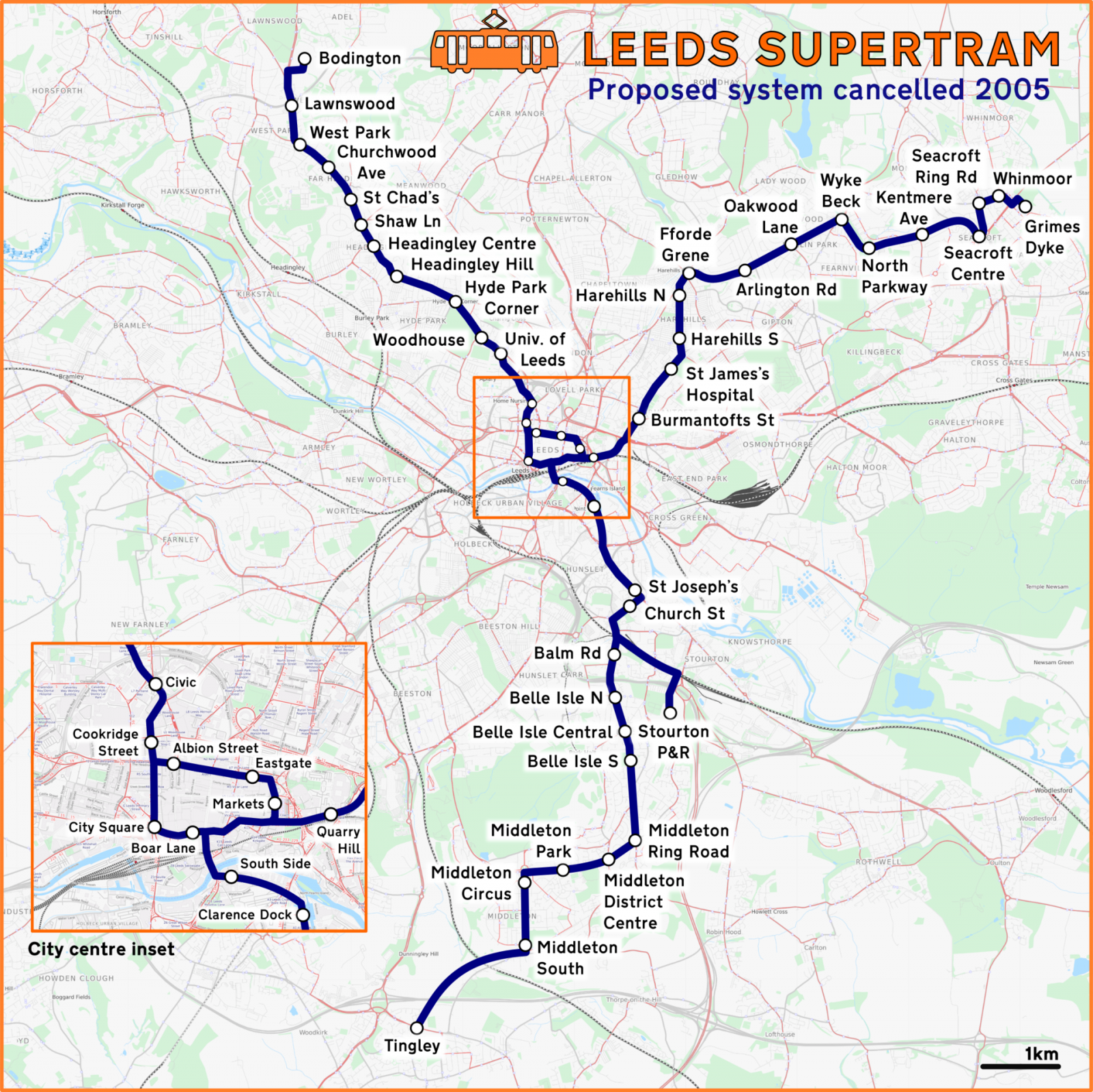
The plans were finally scrapped in 2005 by the Transport Secretary after budget issues, but the proposed track would have served the inner city, both Universities and Headingley.
Leeds supertram plans were disbanded in 2005 but the plans are still available online. / Image: Open Street Map
The three lines would have run from Tingley, Bodington and Grimes Dyke and joined in the city centre at stations on Albion Street, Eastgate, Boar Lane and City Square.
Last summer, builders unearthed historic tram tracks more than 60 years old -leading to calls from the public to restore the lines to their former glory.
Now, at last, residents' calls are being made into a reality - as Leeds City council has confirmed plans to restore the lines and bring trams back to Leeds as early as the end of 2022.
In a statement, Councillor Joe KS Mc'Gee said: "The people of Leeds have long called for the restoration of the city's historic tram lines, and today we can confirm that this desire is finally set to become a reality.
"We are thrilled that the decision has been made to reinstate this integral piece of the city's culture and Leeds is now being brought in line with other major citys across the UK."
The Government has today announced plans to tackle antisocial behaviour on public transport.
In a bid to crackdown on loud music, littering, vaping, and other threatening behaviour on buses and trains, guidance was issued by the Government today for local authorities to prosecute and even issue fines of up to £100.
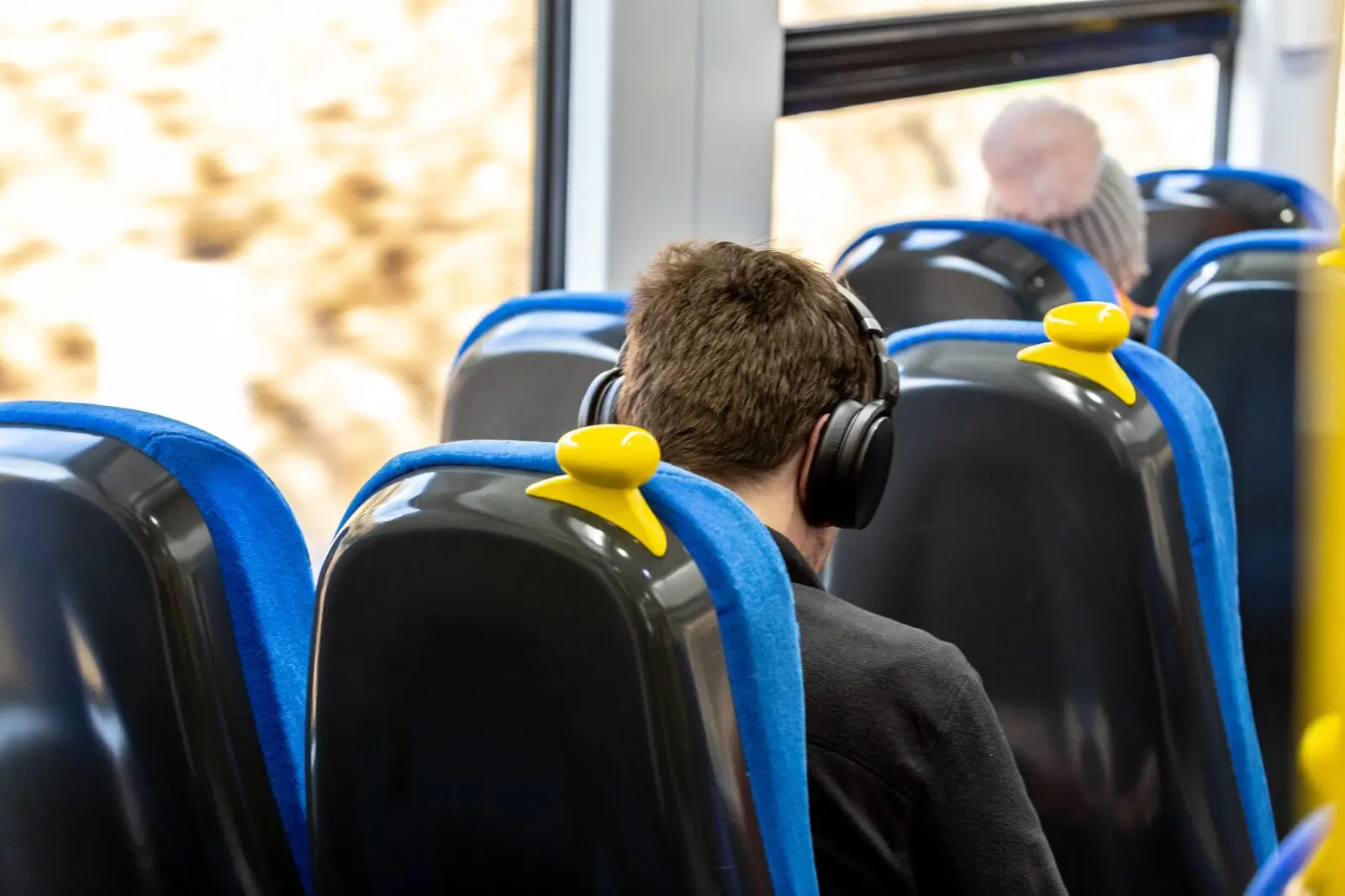
For many, playing audio out loud on public transport – also known as ‘loudcasting’ – has become one of modern life’s most irritating parts of the daily commute, but now, a new national campaign is aiming to encourage rail passengers, in particular, to ‘share the carriage, not the noise’ to improve the journey experience for all.
This will include reminders of the rules in place on the rail network and, if a passenger refuses to stop when asked by authorised rail staff, they can be removed from the train at the next station or face fines up to £1,000.
On buses, however, the powers for authorities were already made possible by the Bus Services Act 2025, meaning all local transport authorities in England are able to set and enforce their own rules.
Authorised officers – including transport safety officers and the police – will be responsible for enforcement, rather than bus drivers themselves, and they will be tasked with a three-step approach to deal with incidents. They will need to:
Engage with the person
Explain the rules and their impact on other passengers
Take enforcement action if they refuse to comply
“We’ve all been on the train when someone starts blasting music or videos from their phone,” commented Prime Minister Andy Burnham.
“It gets on your nerves and can quickly spoil the journey, so we’re launching a nationwide campaign reminding passengers to use headphones on trains. On top of that, we’re giving local leaders new powers to tackle loud music, vaping and littering on buses.
“It’s a simple thing, but one that will make journeys that little bit better for all of us.”
Ben Plowden, Chief Executive at the Campaign for Better Transport, added: “Antisocial behaviour is not just irritating, it can be a real deterrent to people using public transport – especially people with different accessibility requirements.
“If these new powers are properly and visibly enforced, they should help everyone feel safe and comfortable on public transport and enjoy the ride.”
Inside the new all-day American diner that has just opened at Leeds Bradford Airport
Clementine Hall
A brand-new American-style diner serving smash burgers, hot dogs and thick milkshakes has opened at Leeds Bradford Airport.
We all know the holiday really starts as soon as you get to the airport, and Leeds Bradford Airport has a brand-new American diner to kick start it in style.
Welcome to Monty’s American Diner, the all-day dining destination bringing a taste of the USA to Yorkshire.
Located in the airport's departure lounge, this new spot is designed to give passengers somewhere to sit back and relax whilst enjoying a proper meal before jetting off.
And just like your classic American diner, there’s plenty on the menu to get stuck into.
Images: The Hoot Leeds
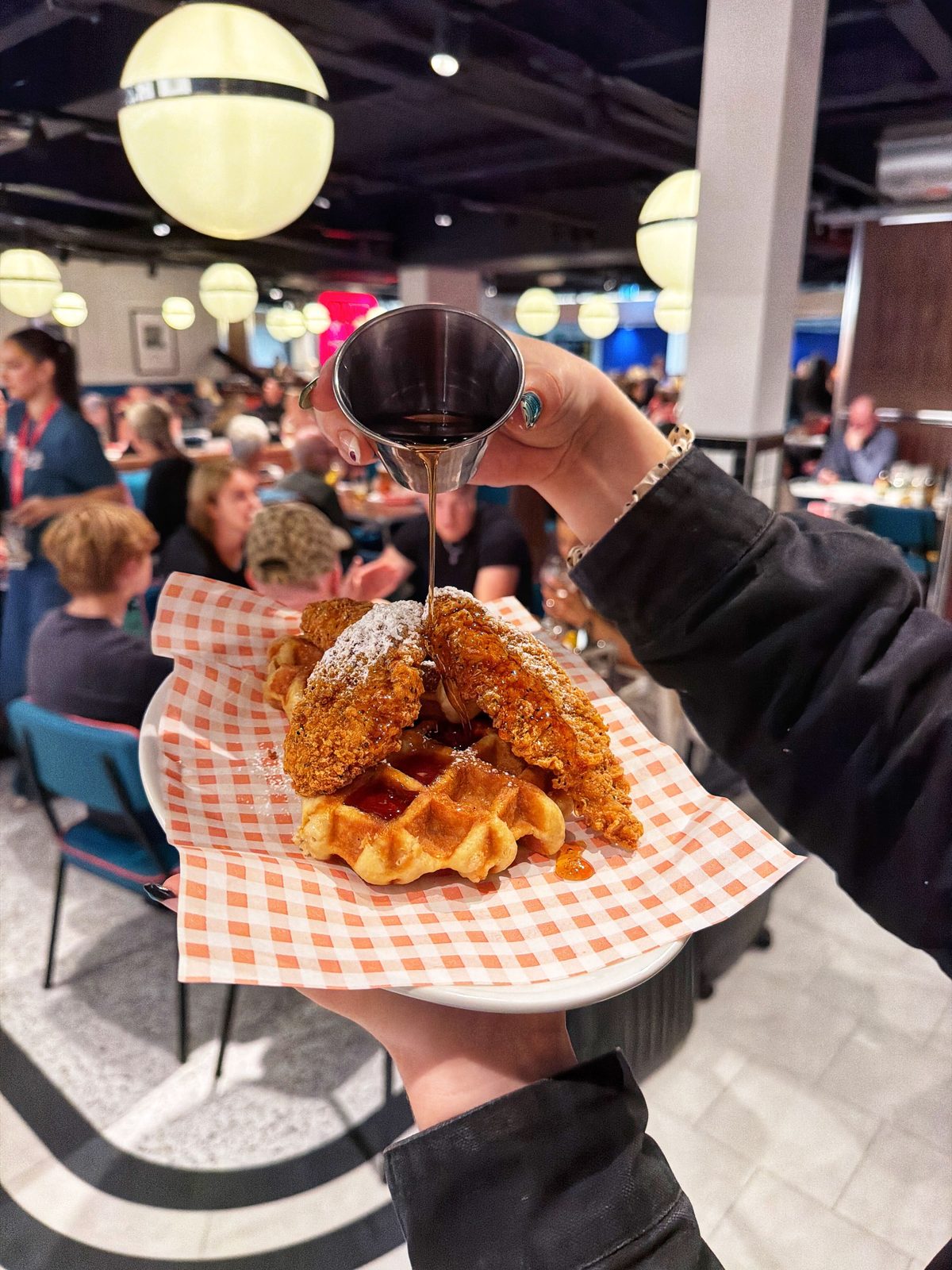
Early flight? Breakfast is available until 11am with options including fluffy waffles, French toast bites, chicken and waffles drenched in maple syrup as well as traditional cooked breakfasts and American-style bagels.
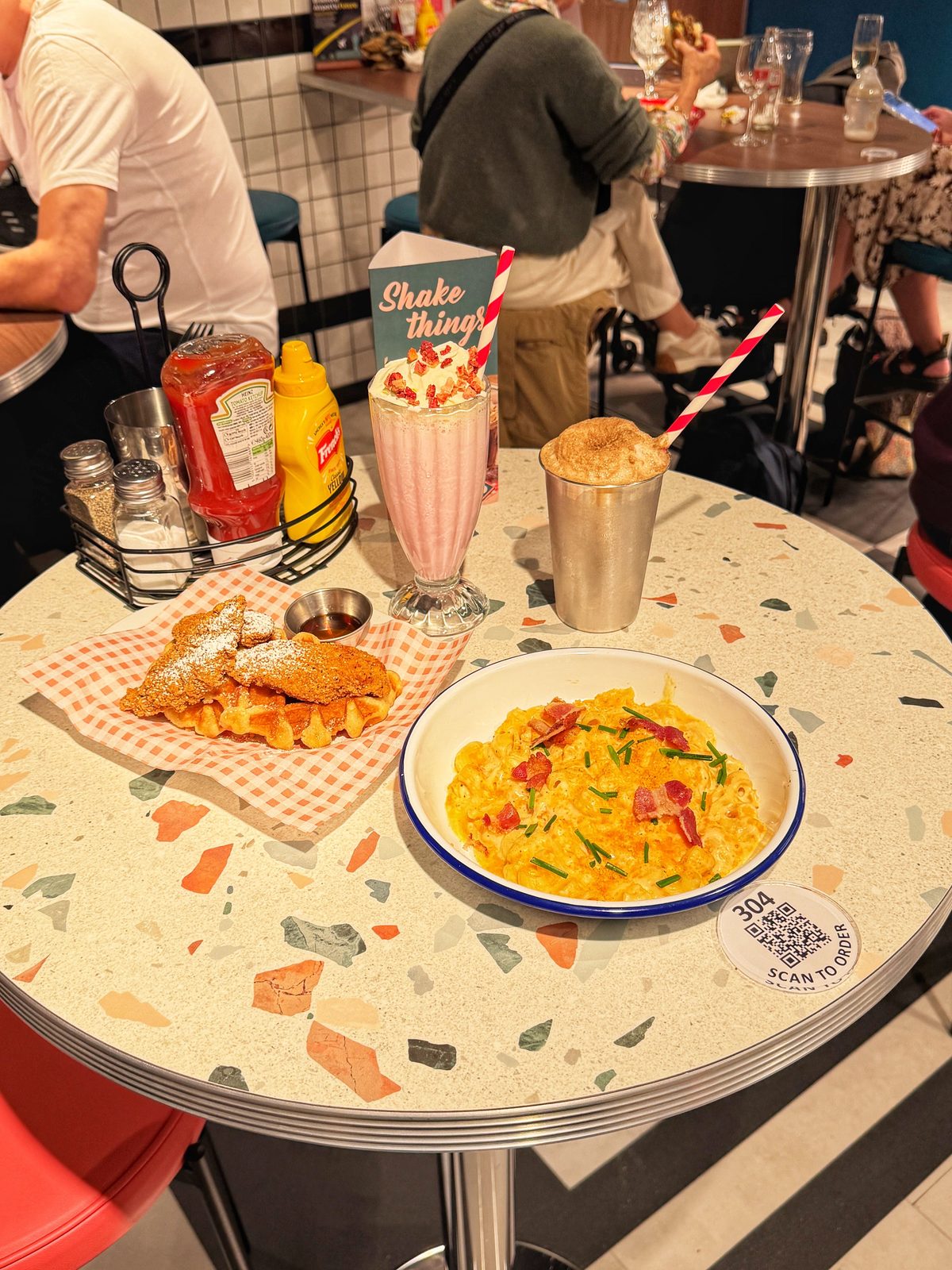
Those travelling later in the day can tuck into smash burgers, chicken wings, loaded hot dogs, gooey mac and cheese and even a BBQ platter complete with ribs, corn and wings.
There’s also a menu specifically designed for the little ones, featuring waffles, beans on toast and scrambled eggs on toast, alongside burgers, chicken tenders and mac and cheese throughout the day.
And if you fancy a drink before take-off, because it wouldn't be a trip to the airport without a tipple, Monty’s has that covered too.
There's freshly poured pints on offer as well as cocktails, or you can have the proper American experience with a 'hard shake' - their classic thick milkshakes but made boozy.
Images: The Hoot Leeds
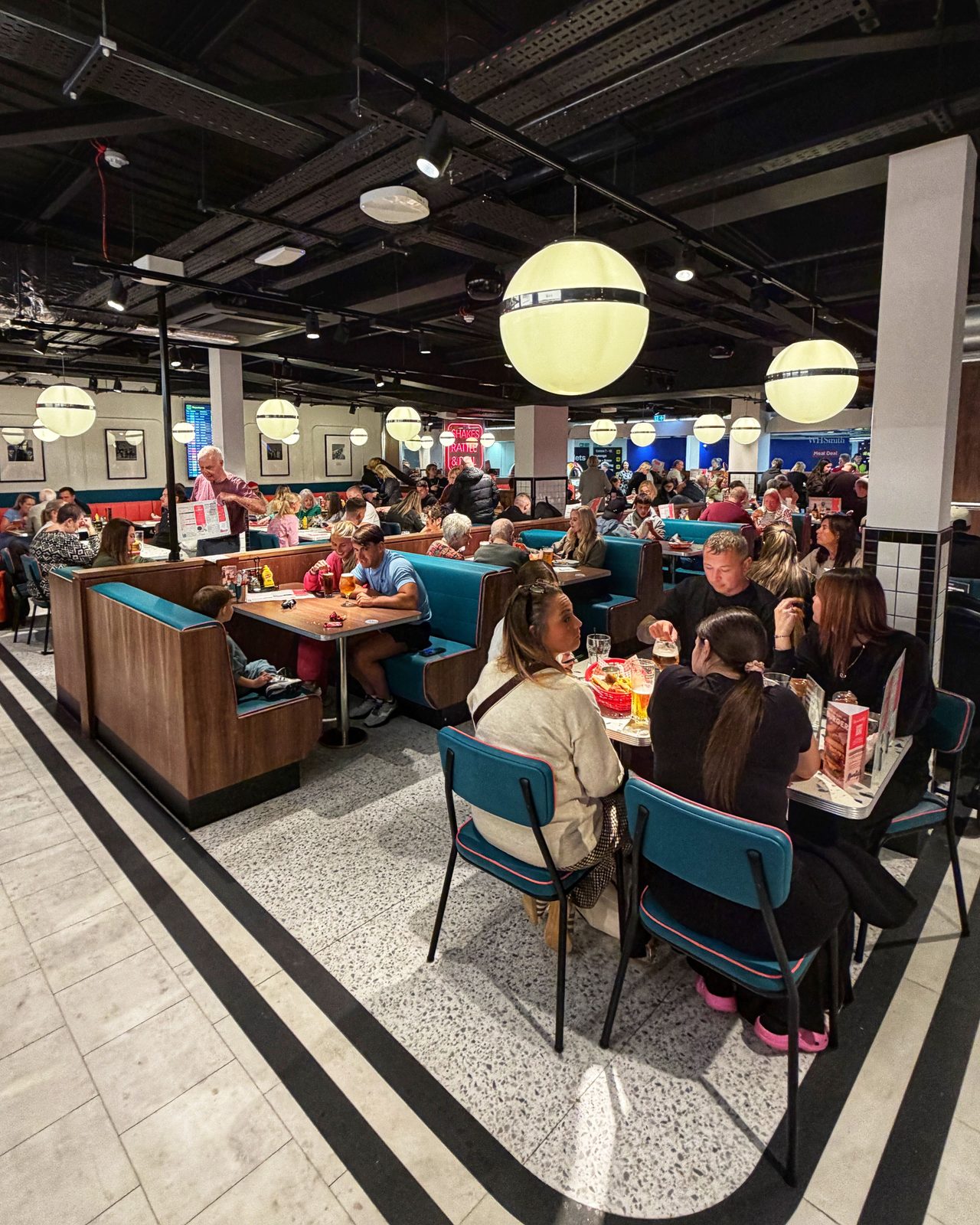
The space has been decked out in style, so much so that you'll forget you're in Yorkshire and think you've popped into a diner on Route 66.
Classic booth seating, red neon signs, hanging globe lights, all complete with a retro jukebox which you can even pop a song on.
Open all-day long, from the first flight til the last, next time you're jetting off make sure to make Monty's part of your holiday routine.
You can find out more about Monty's at Leeds Bradford Airport here.

 The Hoot -
1st April 2022
The Hoot -
1st April 2022