A new scheme has been proposed in an effort to reduce smoking trends amongst young people throughout Britain.
The possibility of banning the sale of cigarettes to those under 25 could well be on the cards as a way to dramatically reduce the number of smokers in certain age groups.
The scheme comes as an anti-smoking tsar has been recently commissioned, with their main aim being to create a "smoke free" country.
According to The Times, an upcoming independent review commissioned by Health Secretary Sajid Javid and led by former Barnardo's CEO Javed Khan OBE is expected to launch England into its "smoke free" future by the goal of 2030 - which would mean that fewer than 5% of the adult population smokes.
The reported raising of cigarette sale age would be similar to a ban that is already initiated in New Zealand.
Currently in New Zealand, anyone who was born after 2008 is not able to buy tobacco items, and because of this, Mr Khan is reportedly considering whether an argument could be made for "raising the age to 19, 20, 21, or even 25" in the UK.
Britain has set the target of being a smoke-free nation by 2030 / Credit: lilartsy | Julia Engel (via Unsplash)
"We are thinking seriously about the age of sale," Mr Khan told The Times.
He continued: "Just look at the COVID experience, mass marketing has a big effect, it really works... the government went hell for leather, it made an enormous difference in vaccination rates.
"So why not do something like that again, if we really want to save people’s lives."
Echoing the sentiment and speaking on the intent to make Britain a smoke-free nation by 2030, Health Secretary Sajid Javid said in a statement on the government's website: "The pandemic has shown the resilience of the British public and brought communities together to look after each other in the most challenging times.
"But it has also exposed chasms in our society - particularly in health."
Mr Khan added: "I am very pleased to be leading this review into such an important area of public health [and] my independent findings will help highlight key interventions, which can help the government achieve its ambitions to be smoke-free by 2030 and tackle health disparities."
Banning the sale of cigarettes to those under 25 in England is now believed to be "on the table" / Credit: Flickr
In England, there are currently said to be about six million smokers.
Tobacco is also found to be the biggest cause of preventable death in the UK, and in the most-recent data from 2019, a recorded 64,000 smokers died from smoking, according to the Office for National Statistics (ONS).
Cancer Research estimates that the UK is currently set to miss the target of being smoke-free by 2030.
The charity says the country is not expected to smoke-free until at least 2037, as there is said to be a 20-year gap in smoking rates between the least and most deprived people, meaning the richest are expected to achieve smoke-free status in 2025, but the poorest are not expected until the mid-2040s.
A £1.6m grant has been given by the government to Leeds City Council to help tackle rough sleeping.
The funding has been allocated to Leeds City Council as part of the Government’s national Rough Sleeping Programme.
The overall target is to help rough sleepovers off the streets by Christmas through providing safe accommodation.
The council have said that voluntary organisations and charities will be able to help them reach this target.
The council report said: "This funding will be used for immediate interventions to ensure all those rough sleeping have an offer of accommodation by Christmas and support longer term sustainment of accommodation.
“The initial target is to provide a suitable offer of accommodation for everyone who is rough sleeping by Christmas 2026.
“Providing a path into supported accommodation and independent living is the key objective and sustaining this independent living with, where necessary, ongoing support to prevent any return to rough sleeping and homelessness.”
The government announcement spoke of the scheme: "The programme is intended to support people experiencing rough sleeping.
"People experiencing rough sleeping may have differing entitlements to housing and support depending on their individual circumstances, including their immigration status and eligibility for public funds."
The funding is intended to help provide immediate support for people currently sleeping on the streets, while also helping them access longer-term accommodation and the support needed to maintain independent living.
By working with local charities and voluntary organisations, the council hopes to ensure people are not only offered a place to stay but are also given the help they need to avoid returning to the streets.
M&S launches massive recruitment drive in Leeds with hundreds of jobs available
Emily Sergeant
M&S has launched a massive recruitment drive across Yorkshire.
With the festive season fast approaching, and most British stores having already unveiled their Christmas ranges for 2026, one of the country’s largest brands has launched a massive UK-wide seasonal recruitment drives to gear up for what is always one of the busiest times of the year for the retail industry.
M&S has announced it will recruit for plenty of new colleagues across the UK.
As mentioned Christmas is one of the busiest moments of the year for M&S, and seasonal colleagues play a ‘vital’ part in delivering that.
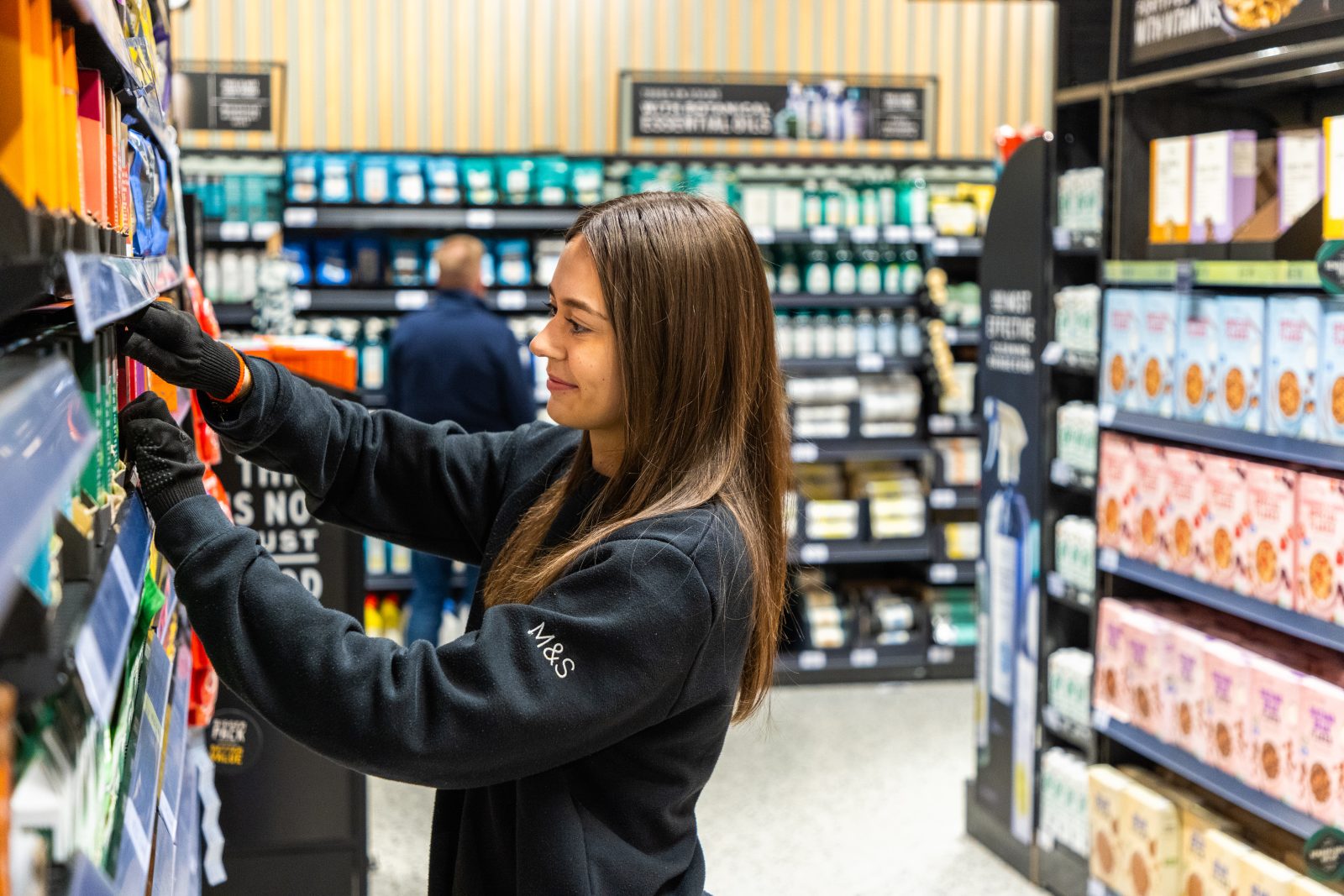
Image: Supplied
New recruits will be tasked with helping M&S deliver a ‘brilliant’ service for customers.
Stores with vacancies span the whole of Leeds - including city centre, Moortown, Crown Point, White Rose Shopping Centre and Pudsey.
M&S says the roles are ‘fast-moving and hands-on’, with colleagues required to work together to make sure customers still get the very best of M&S, even at its busiest.
The roles will pay £13.41 per hour, with successful applicants receiving the training, tools and support needed to get up to speed quickly.
“We can’t wait to welcome over 300 new colleagues to our store teams here in Greater Manchester,” commented Zeba Khan, who is the Regional Manager at M&S.
“As we get ready for our busiest time of year, it’s a great opportunity to join us and help bring a magical M&S Christmas to our customers.
“We have a range of opportunities available, whether joining our city centre flagship or our fresh market-style foodhalls. We’re looking for colleagues who are passionate about delivering great customer service and being part of a team.”
Fancy it then? Applications are now open, and you can find out more and apply on the M&S Christmas careers page here.

 The Hoot -
15th March 2022
The Hoot -
15th March 2022