A new survey has revealed the UK regions which are most likely to call in sick at work.
And it seems us Northern folk are a big fan of it.
It’s our first few weeks back at work after the festive break, and let’s be honest, you’d be lying if calling in sick one day hadn’t crossed your mind by now.
If that’s you, don’t worry as new research has suggested that regionally, the Yorkshire and Humberside ranks in third place for likeliness to call in sick to work compared to anywhere else in the country.
The study from personal injury experts claims.co.uk analysed the Office of National Statistics (ONS) sickness absence data from 2018 to 2022, and they identified a range of demographics – which recorded where, when, and why Brits are prone to ‘pulling a sickie’.
Image: Unsplash
Every year, the UK workforce loses on average 146.6 million days due to sickness, which equates to approximately 4.5 days per worker, or almost a full working week, and in January especially, employers pay particular attention to absences, as workers often contend with flu season, as well as post-holiday blues, and holiday-related illnesses.
Understandably, there’s no way to record how many of these requests were genuine or whether they just fancied hitting snooze for an extra three hours on a Monday morning after a heavy weekend… but hey, we’ve all been there, right?
In our corner of the country, people in Yorkshire are losing a combined 16.5 million working days a year, which equates to a slightly above-average 4.8 working days per person.
Image: Wikimedia Commons
Taking the top spot is the North East, with 5.1 days lost annually, while the the East Midlands finished in a close second with 4.9 days off per year, and then just marginally-below us is the North West in fourth place with 4.7 days lost.
When we break down the stats, there’s some interesting variables that people might not expect.
You’d think the age group most likely to ring in sick would be the youngest, but it turns out that’s not the case, as the young’uns are only losing an estimated 10.2 million days per year – which is 65.2% lower than the average, and instead, with an average of 56.3 million total days lost per year, it’s the 50 to 64-year-olds who come out on top.
Research also shows the highest-cause of sick leave is due to minor illnesses, like coughs and the common cold.
A new index has revealed the best cities for pet owners in the UK, and it’s great news for Leeds.
Millions of us share our home with a pet, and making sure we give them the best possible life is often at the forefront of our minds, right?
While there’s a lot people can control about their pet’s lifestyle, many of the factors that affect their happiness are determined by location, and sadly for the 83% of the UK population who live in more urban areas, the challenges to give a pet a good life can feel even greater – with less access to green space, and fewer social spaces to take dogs, for example.
But when it comes to cities, which are the best ones to own a pet in? Well, pet insurance firm Lassie has decided to get to the bottom of this and do some updated research.
Lassie analysed data across nine metrics that determine a pet’s wellbeing to create a ‘Pet-Friendliness Index’, and using this index, the UK’s five most populous cities were each assigned a score out of 100 and ranked to determine which is the most and least pet-friendly.
The index looks at four main categories to gauge how suitable each city is for pets – green space, environment, health, and infrastructure.
Then, within these, experts compared a range of measures, including air quality, temperature, costs, access to vets, road safety, pet-friendly rental housing, social opportunities, and many others.
And Leeds has taken the fourth spot.
The UK’s Most Pet-Friendly Cities
Manchester
Birmingham
Liverpool
Leeds
London
“We tend to think that being a good pet owner comes down to what we do at home, but your postcode could be playing a much bigger role in your pet’s happiness and health than you realise,” commented Hedda Båverud Olsson, who is the CEO and co-founder of Lassie.
“Our findings show that not all cities are created equal when it comes to pets. The difference between living in Manchester and London isn’t just about green space or somewhere to walk your dog, it can mean higher vet bills, poorer air quality and fewer veterinary practices nearby.”
Leeds Railway Station entrance FINALLY reopens after four-year delay
Clementine Hall
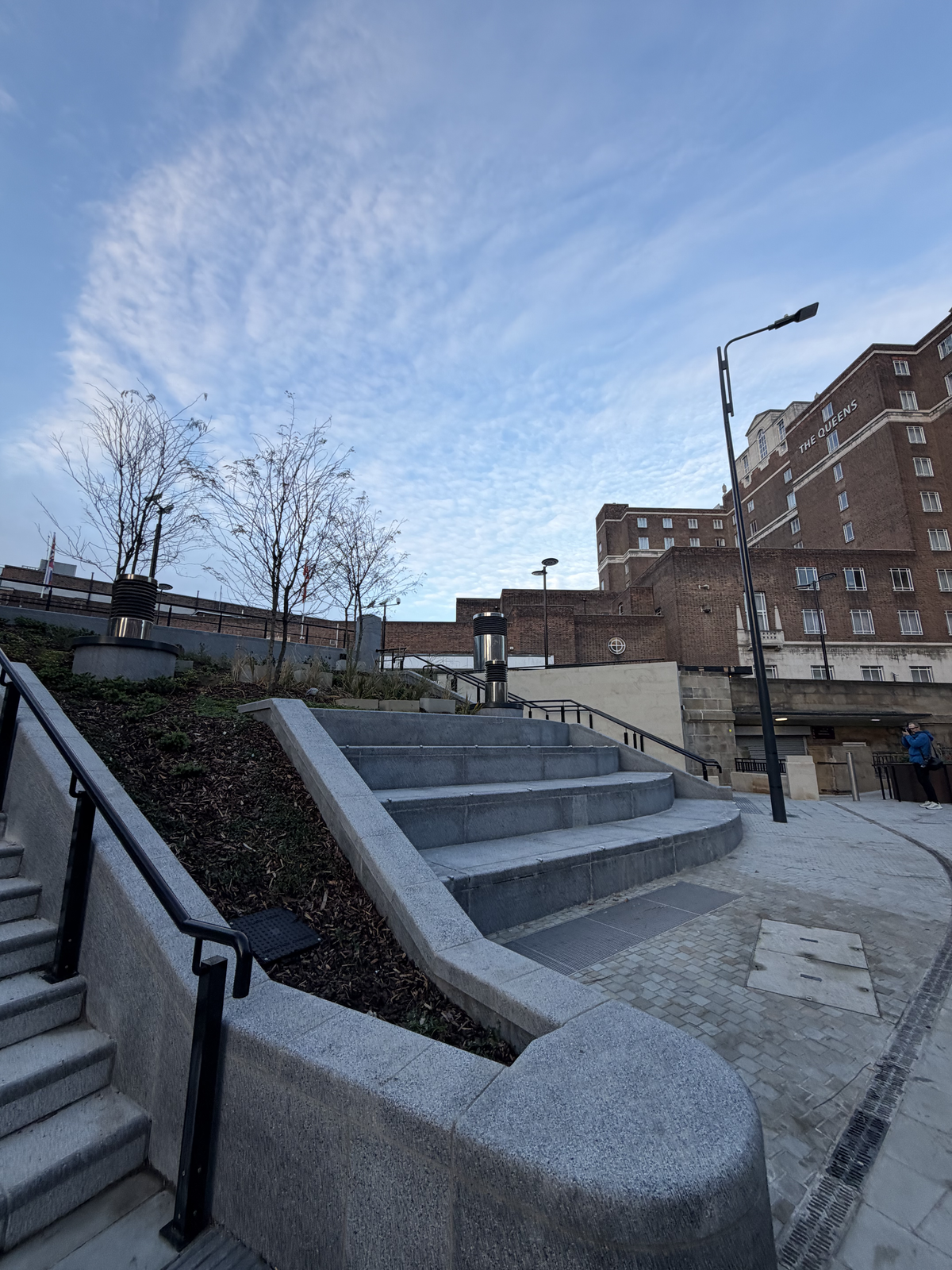
It's the moment we have all been waiting for...the entrance to Leeds station has finally reopened.
The £46.1m Leeds Station Sustainable Travel Gateway has been in the works since 2022, with the original target for completion set for autumn 2025.
A number of set backs meant that the opening was delayed time and time again, with the most recent hurdle being that one of the lifts was broken.
But now, all the hard work and patience (or lack thereof) has paid off because the entrance has finally reopened.
Images: The Hoot
Other than the swanky new stairs and lift that will take you straight to Bishopgate Street from the front of the station, there's also a new taxi rank that will also come into operation today.
The new taxi rank will allow hackney carriages to pick up there as well as the current location on Princes Square at the rear of the station.
The Leader of Leeds City Council, Councillor James Lewis, said: "Leeds as a city is booming, and one of the truest indicators of our ongoing growth and appeal is the ever-rising number of people using our railway station. Currently, Leeds Station handles more than 27 million passengers a year, with footfall inside the station rising six percent year on year and is now busier than before COVID.
“It is fundamental that we have a station that is not only easily able to meet current demand but is also fit for the future, providing a welcoming gateway for the many millions of passengers travelling into our city.
Images: The Hoot
“At the same time, it is vital that our station gateway is a safer and more accessible environment for everyone who uses it. We have worked in close partnership with groups from across our city to ensure that these new facilities provide a much-improved experience which is more pedestrian-friendly and allows people to board taxis much more safely.”

 The Hoot -
12th January 2024